
Buescher New Aristocrat 265659

Buescher
SUMMARY: Introduced in 1932, the Aristocrat line would be Buescher’s mainstay line of saxophones until well after Selmer USA bought the company in 1963.
COLLOQUIAL NAMES: New Aristocrat
DATE: 1933
MANUFACTURER: The Buescher Band Instrument Company
PRODUCTION LOCATION: Elkhart, IN, United States
PRODUCT LINE: Aristocrat
MODEL: 127
TYPE: Tenor
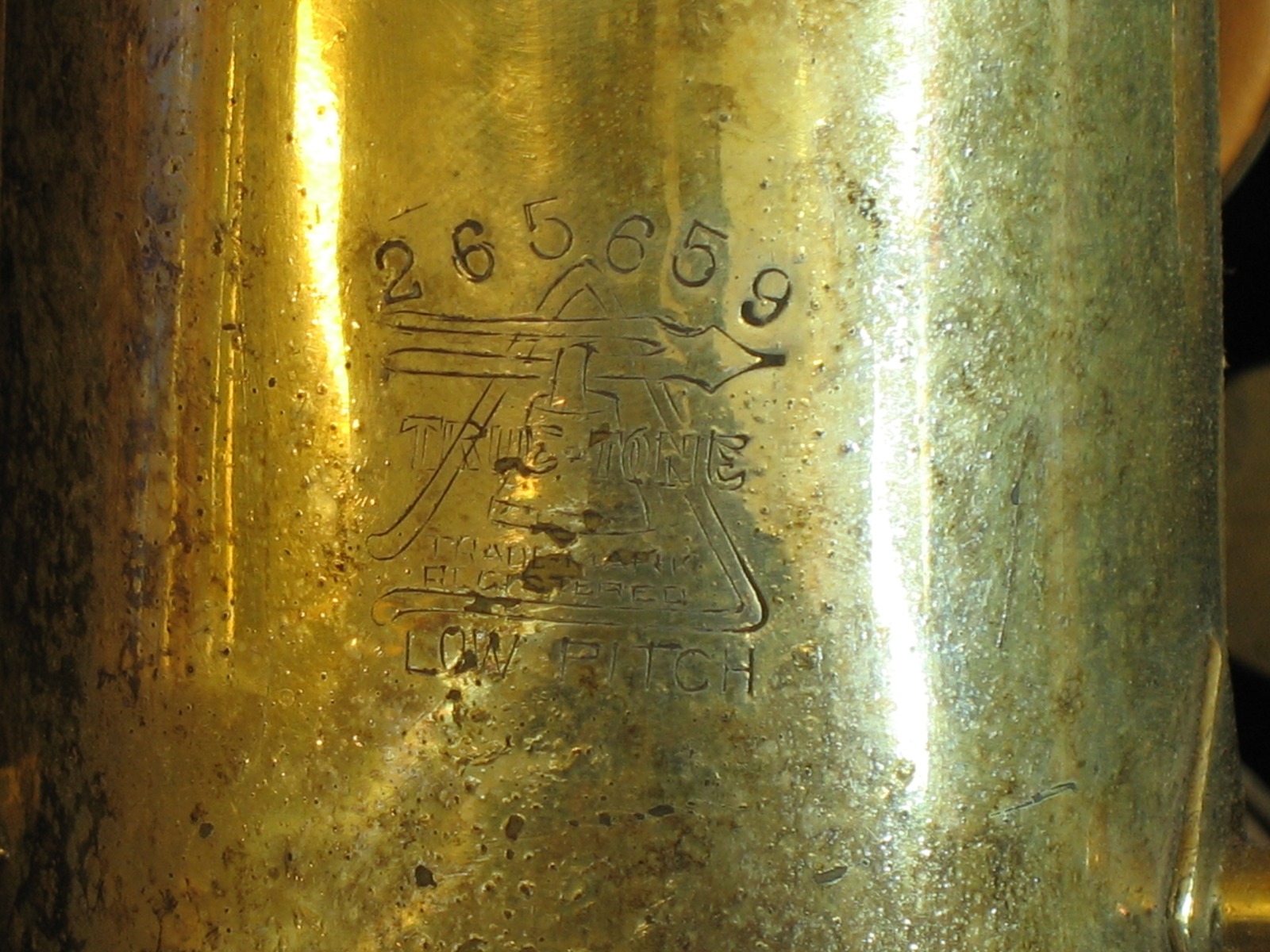
SERIAL NO.: 265659
FINISH: Burnished Gold Plate, "Finish K"
CATALOG NO.: BR265659BbTC
PROVENANCE:
On Loan From 
History
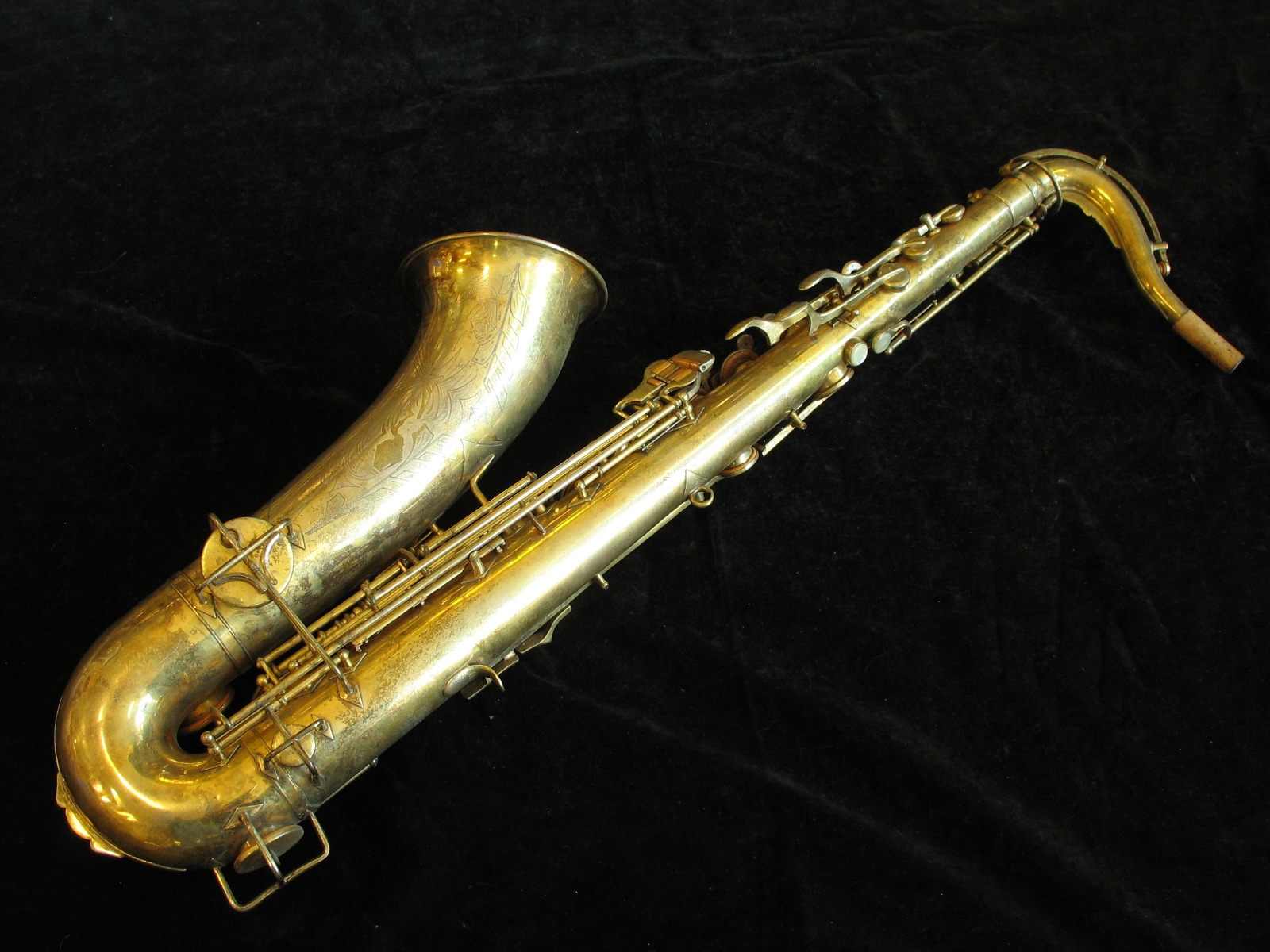
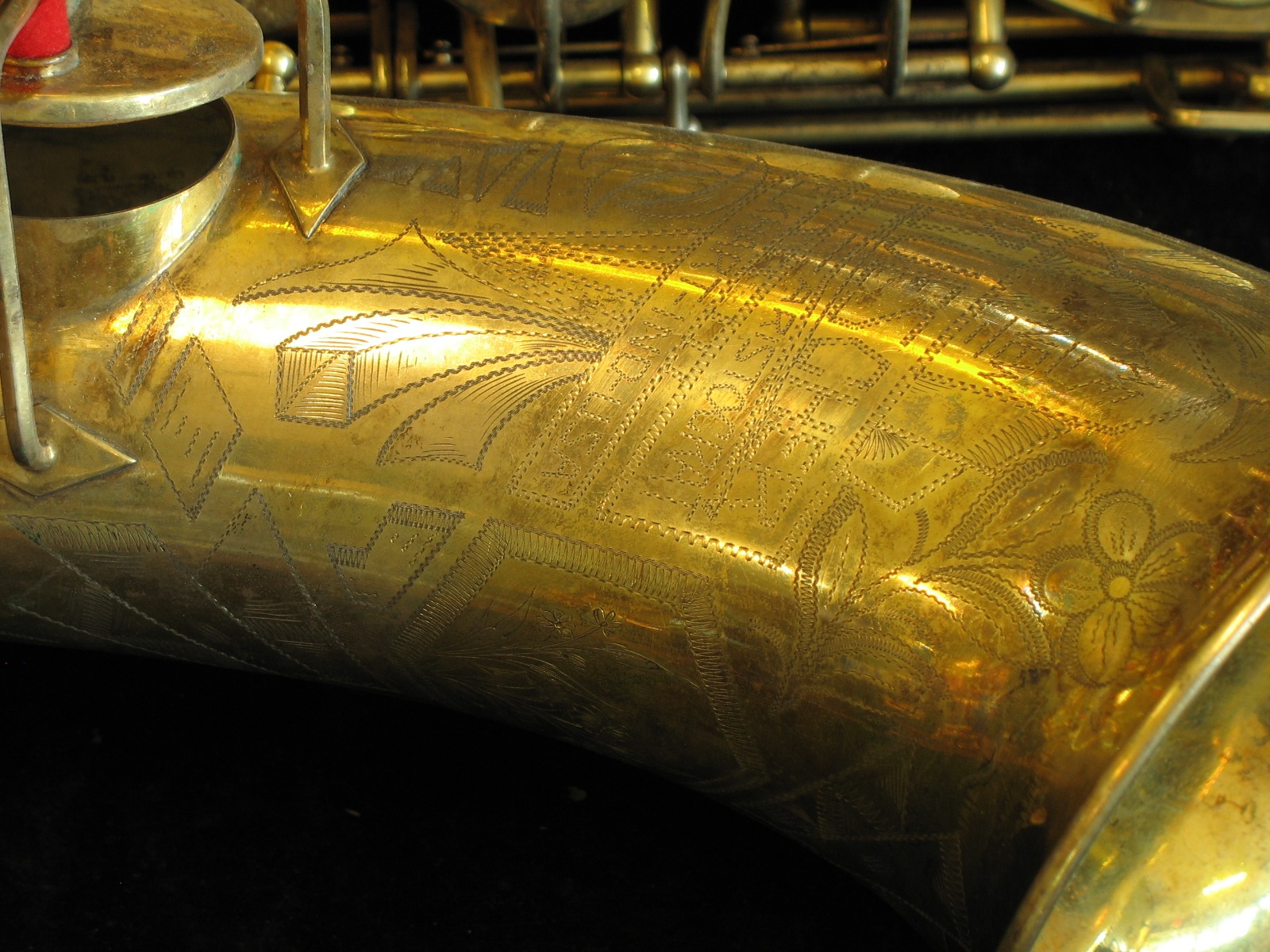
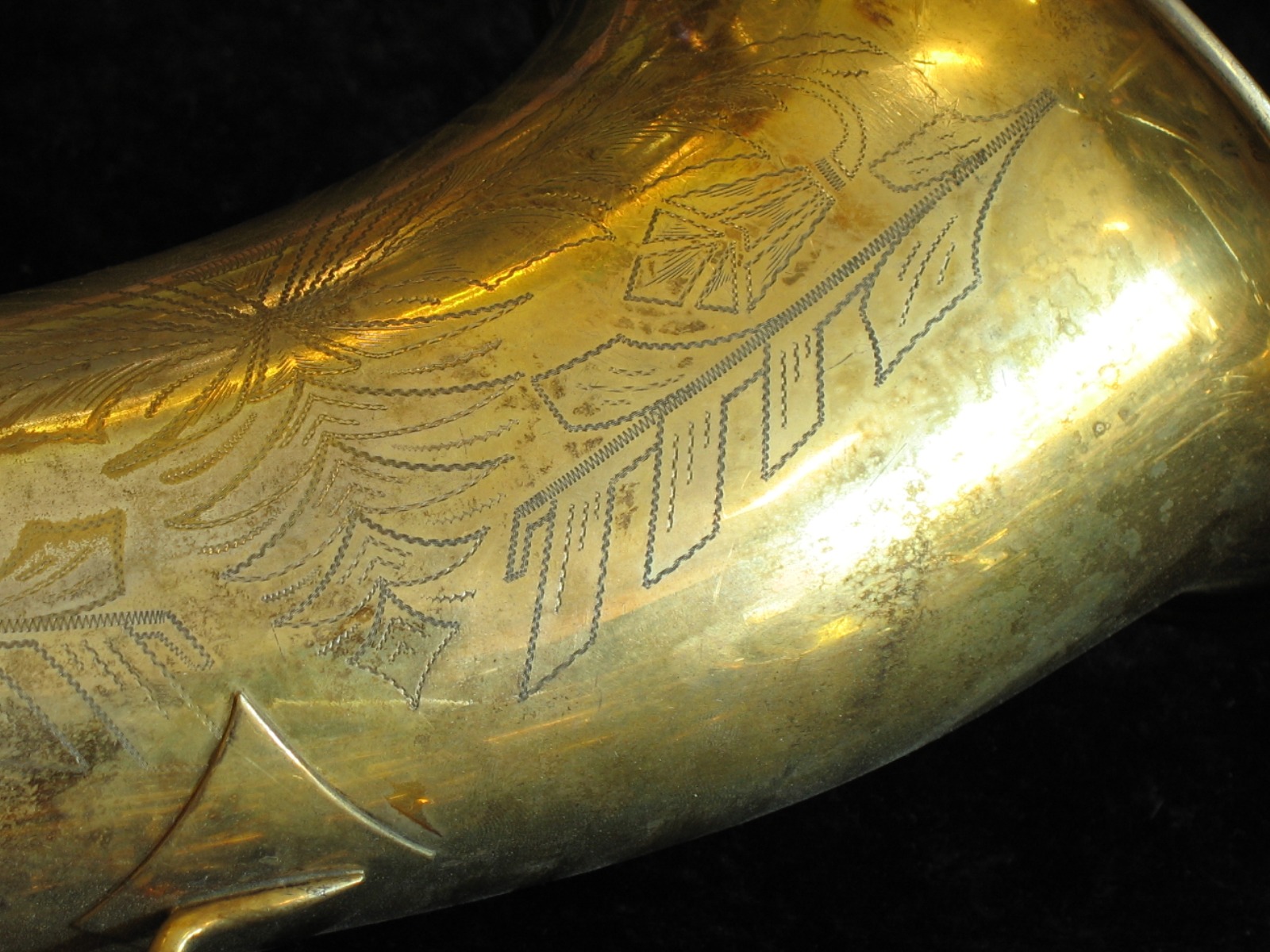
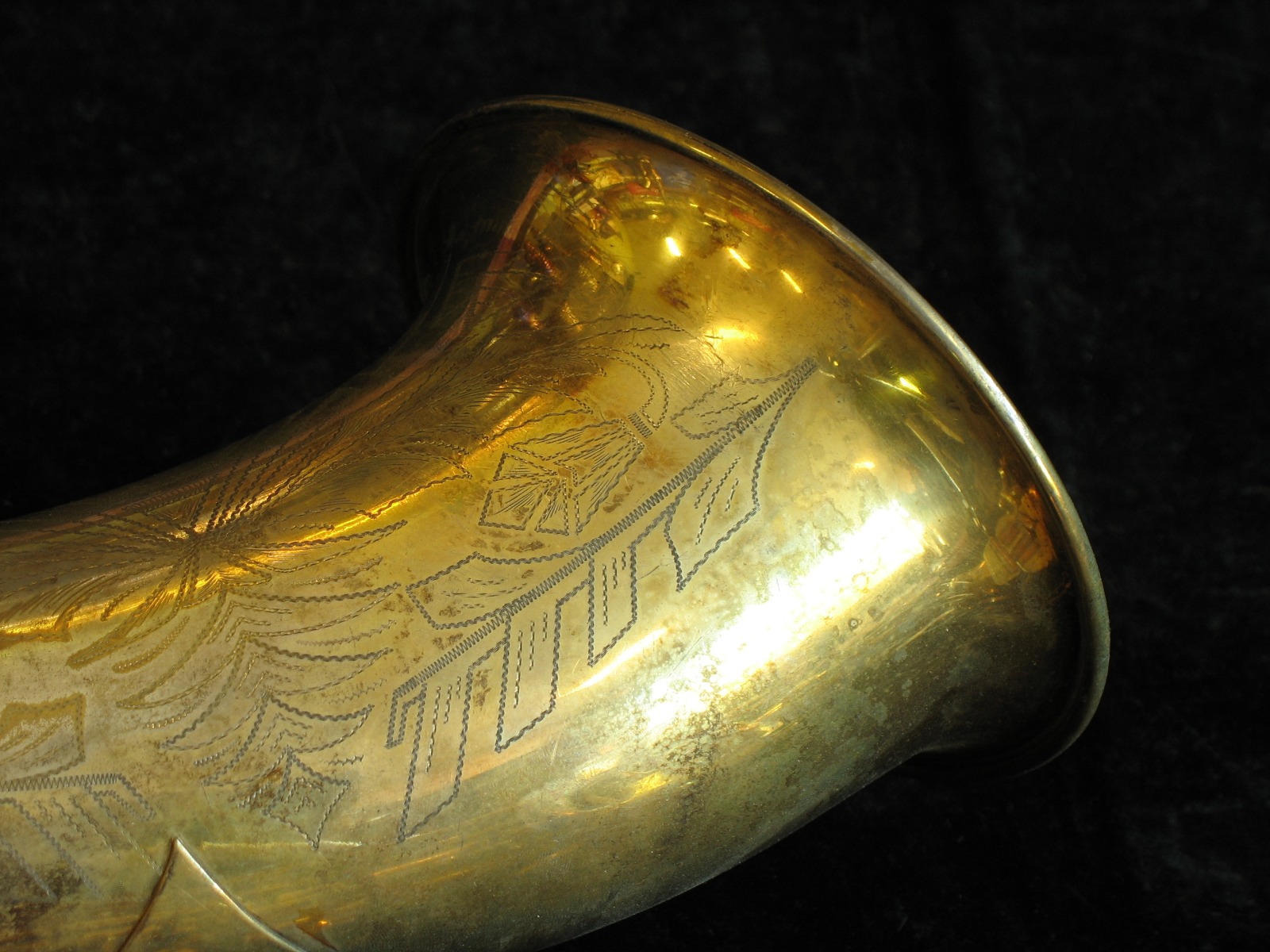
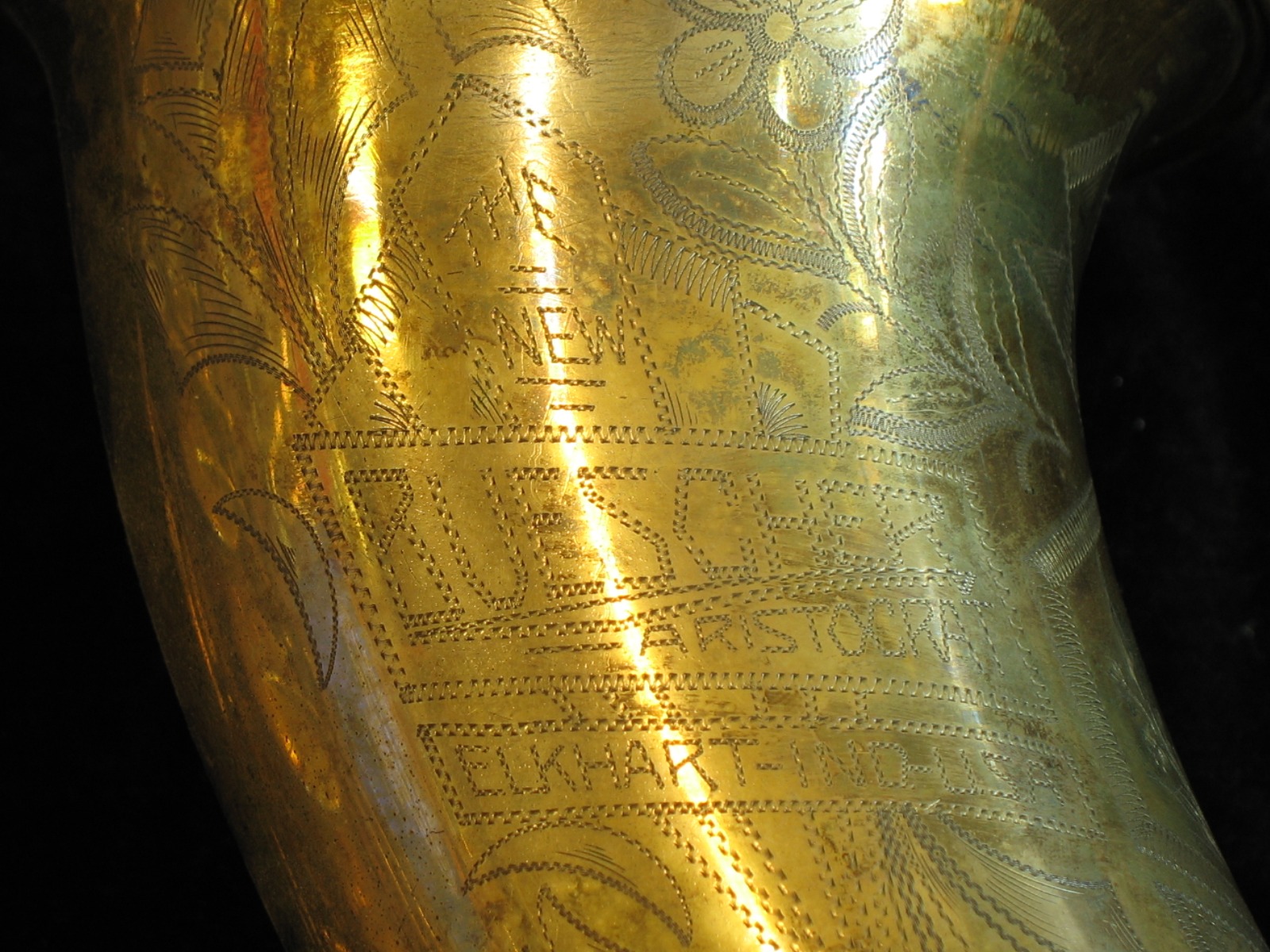
The “New Aristocrat” model 127 tenor represents a transitional model between the prior "True Tone" model 127 and the later "Aristocrat" model 127. The “New Aristocrat” moniker exists in the vernacular because of the bell’s engraving. Well known players of the Aristocrat Saxophones include Sonny Rollins and Johnny Hodges.
Features
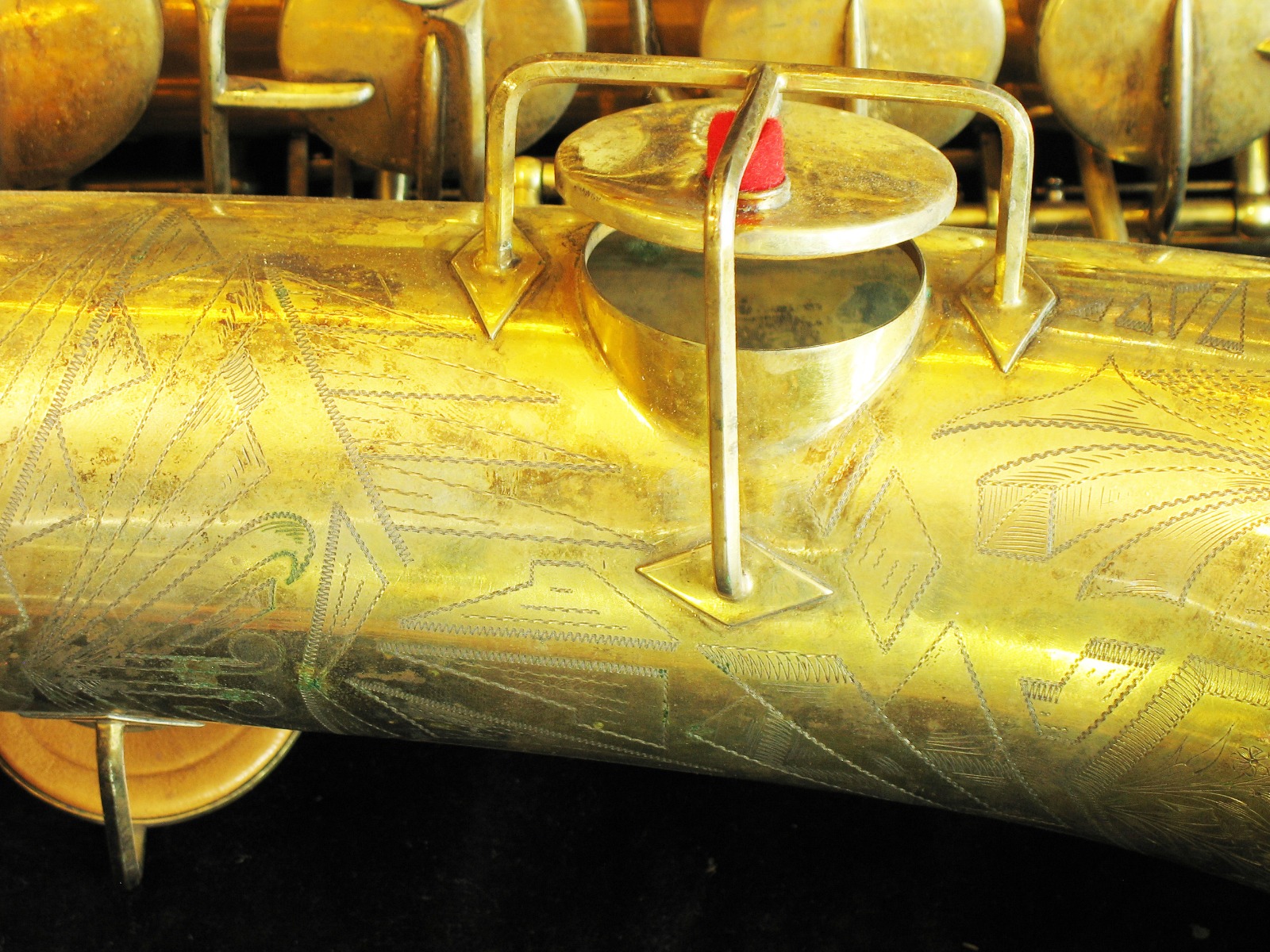
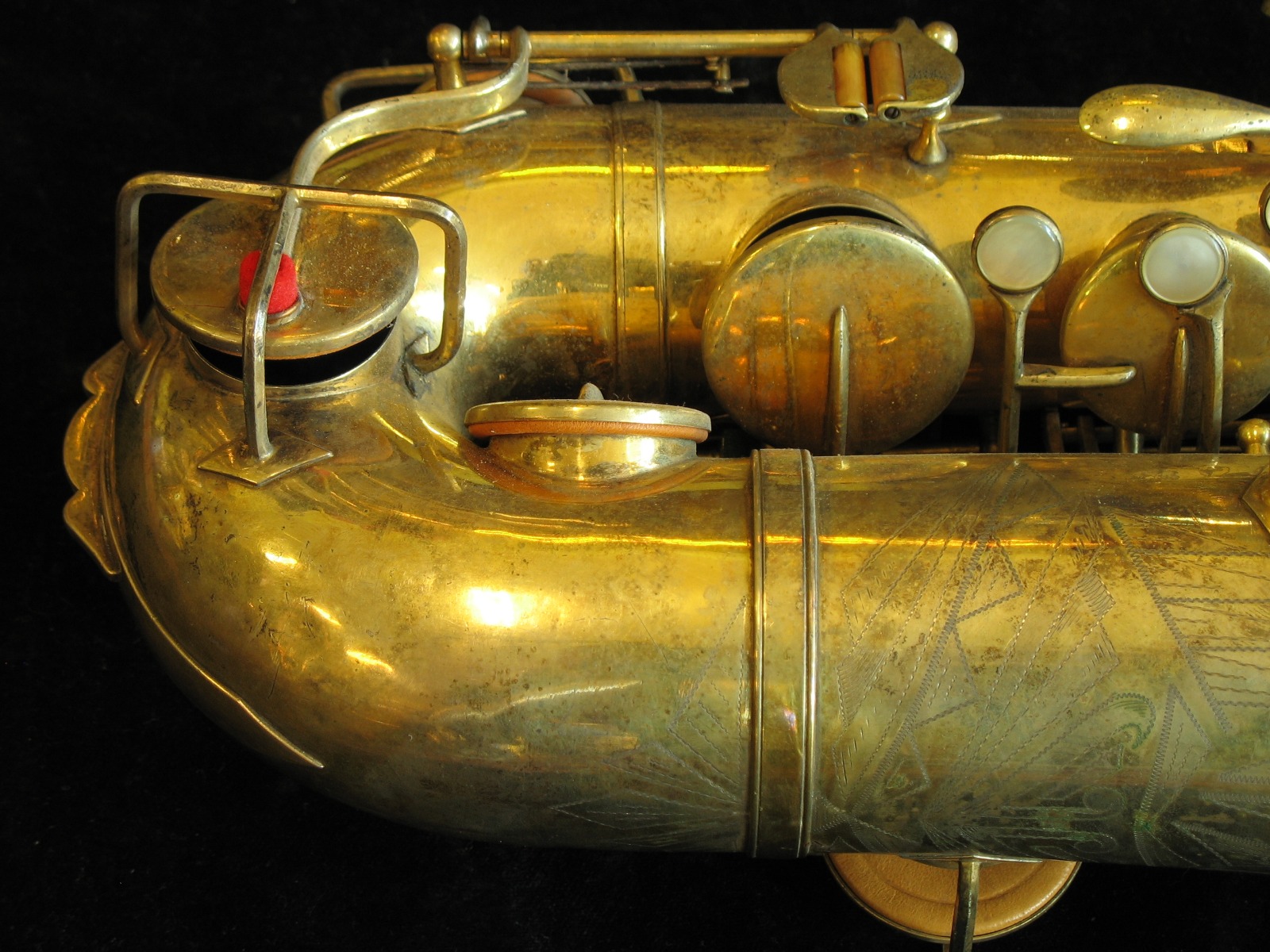
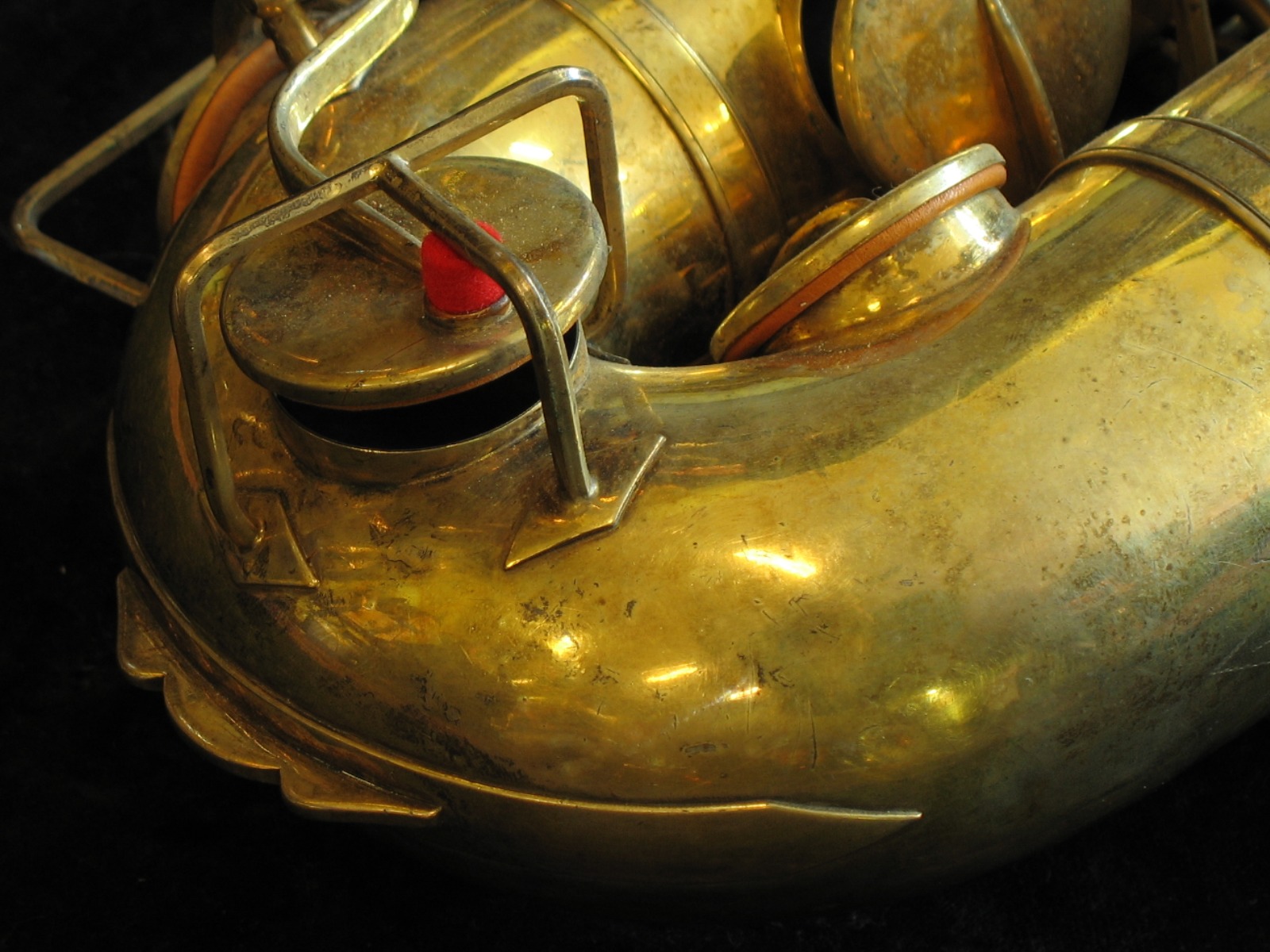
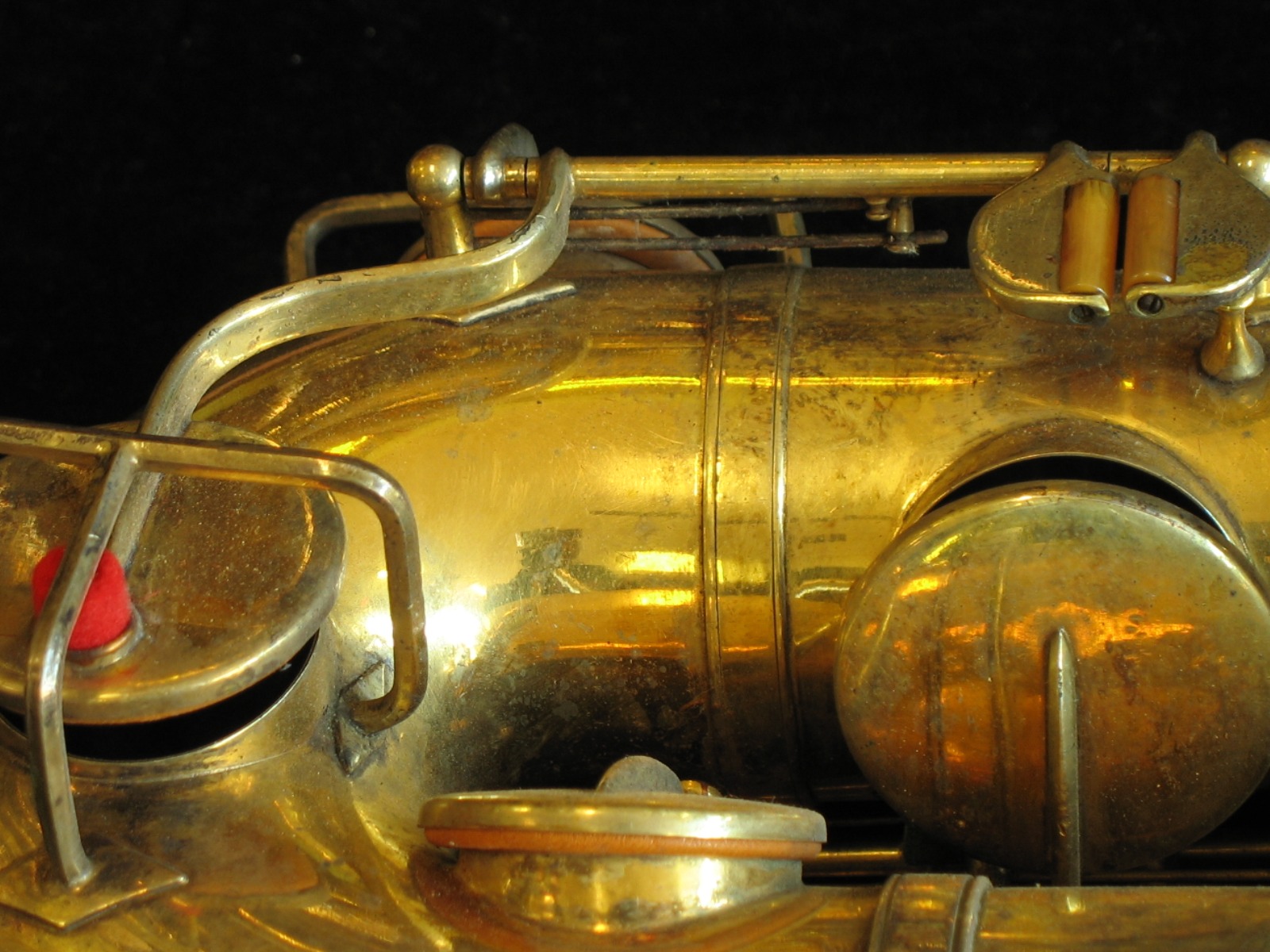
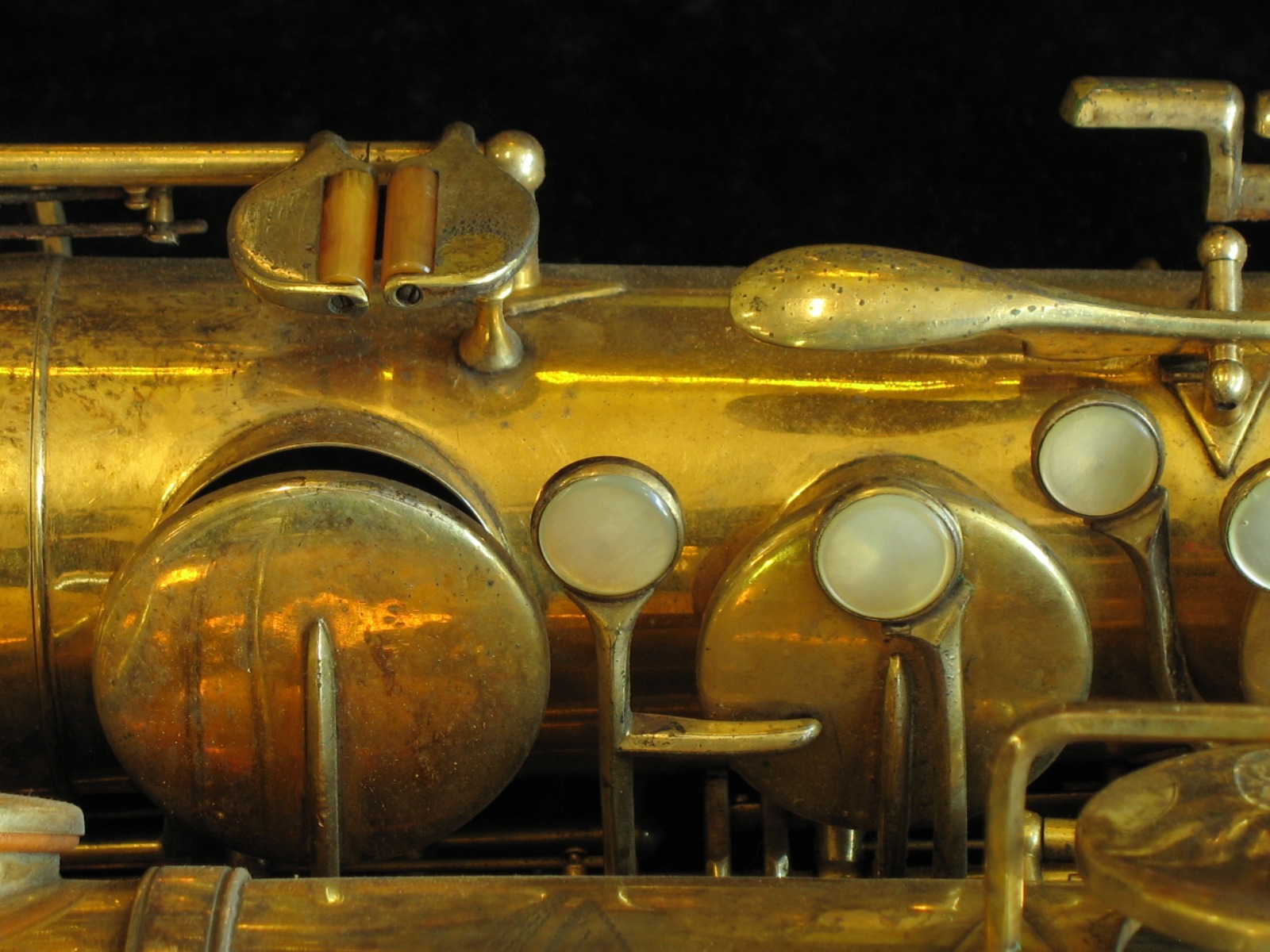
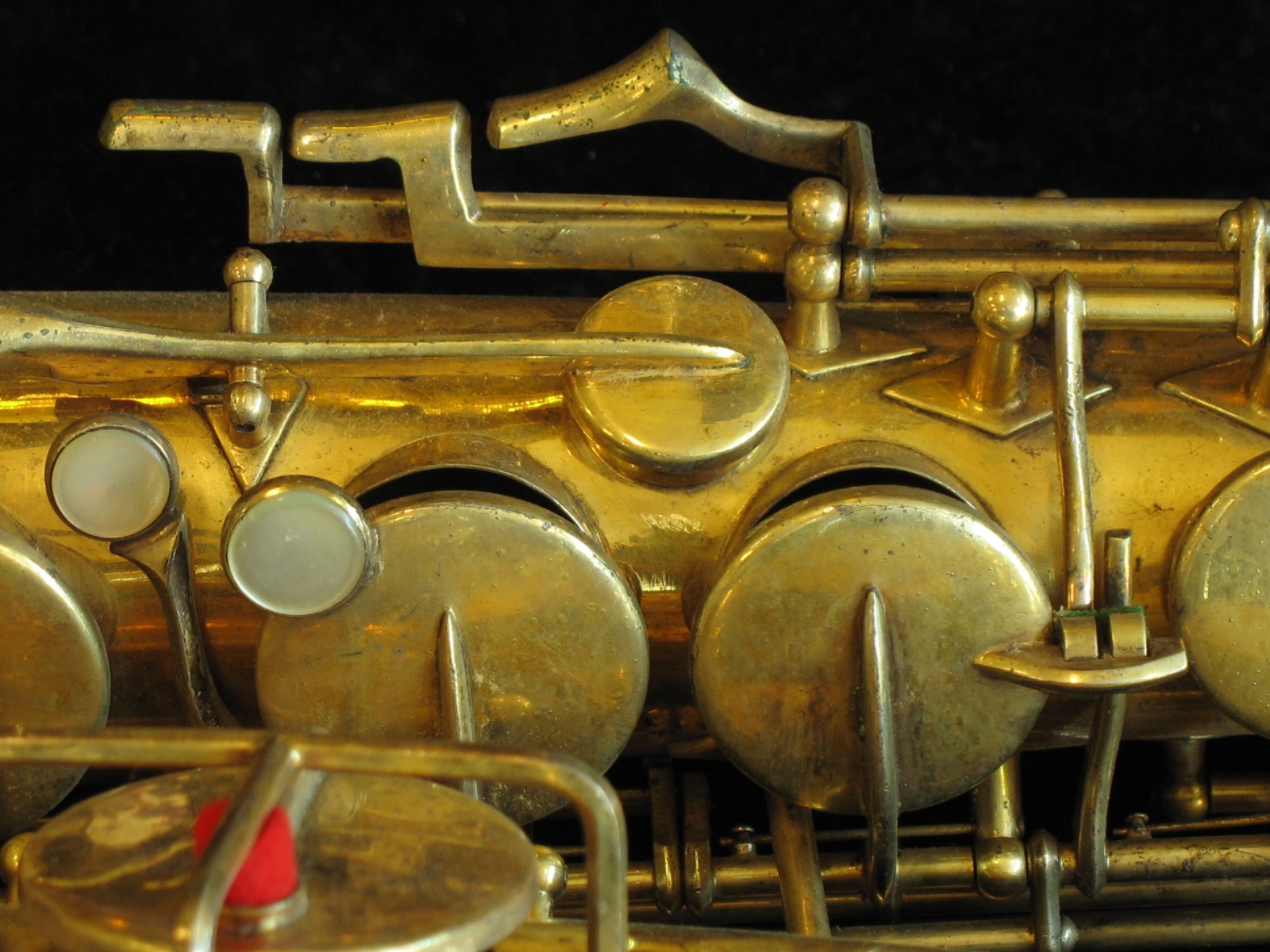
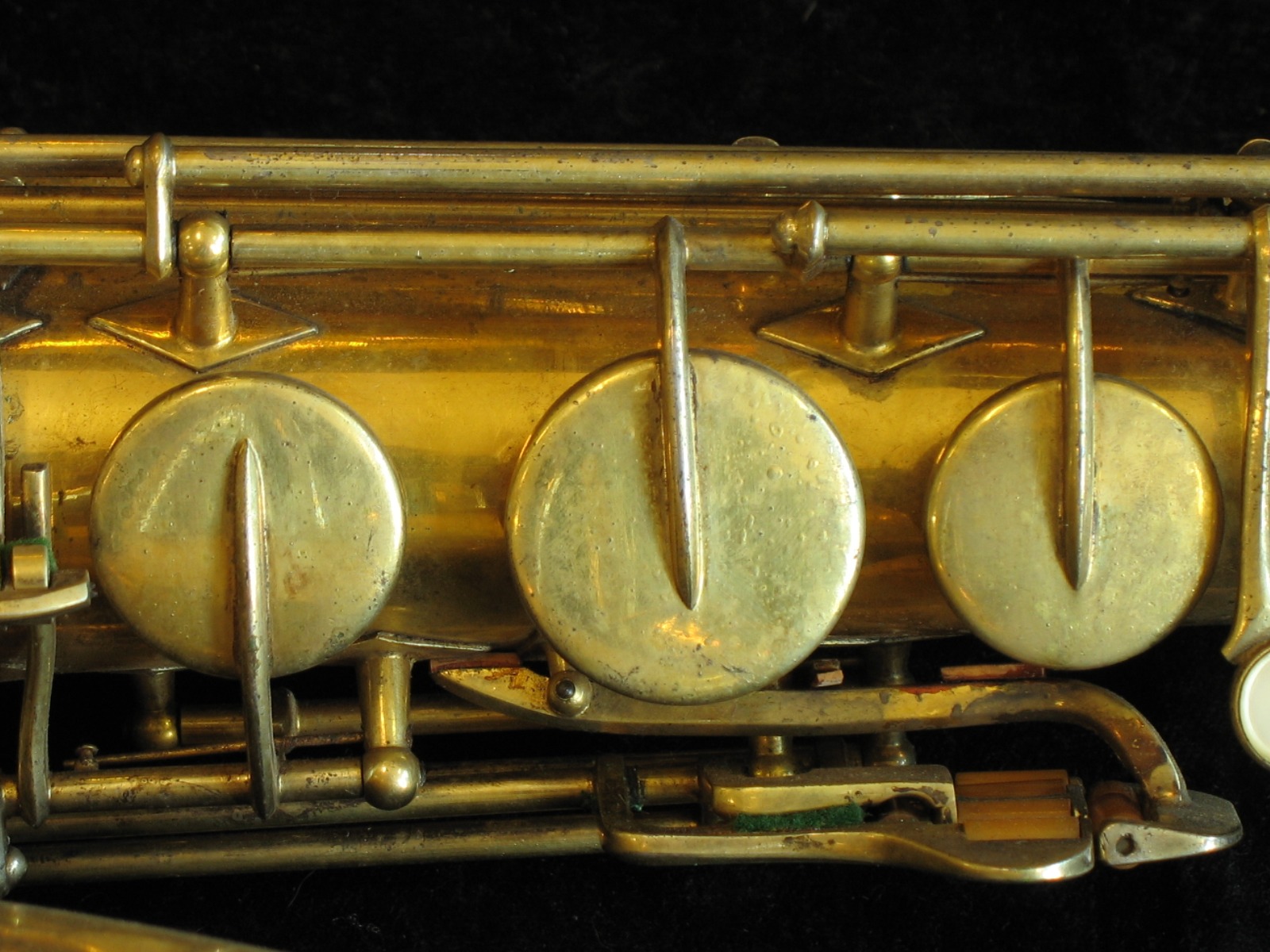
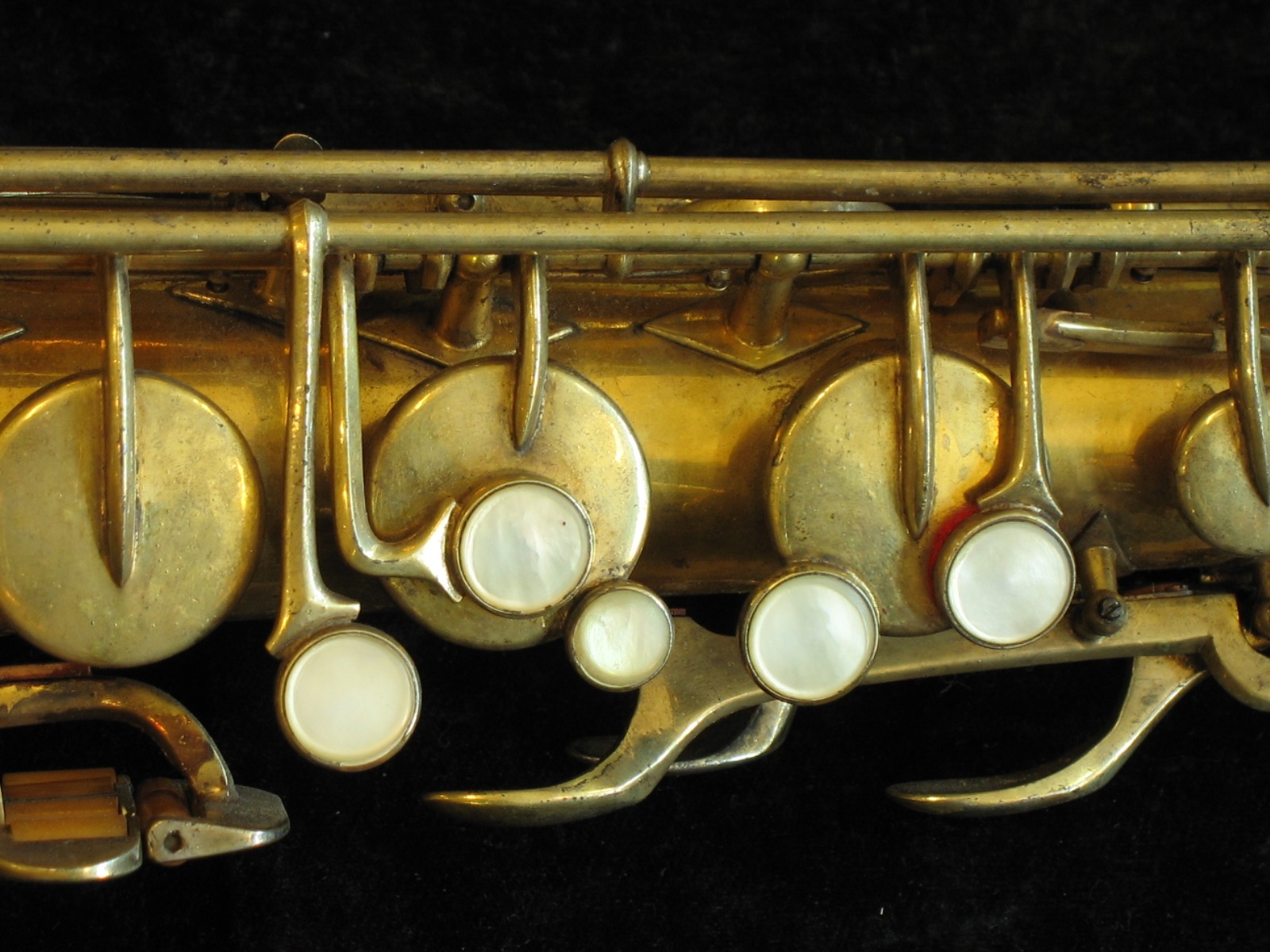
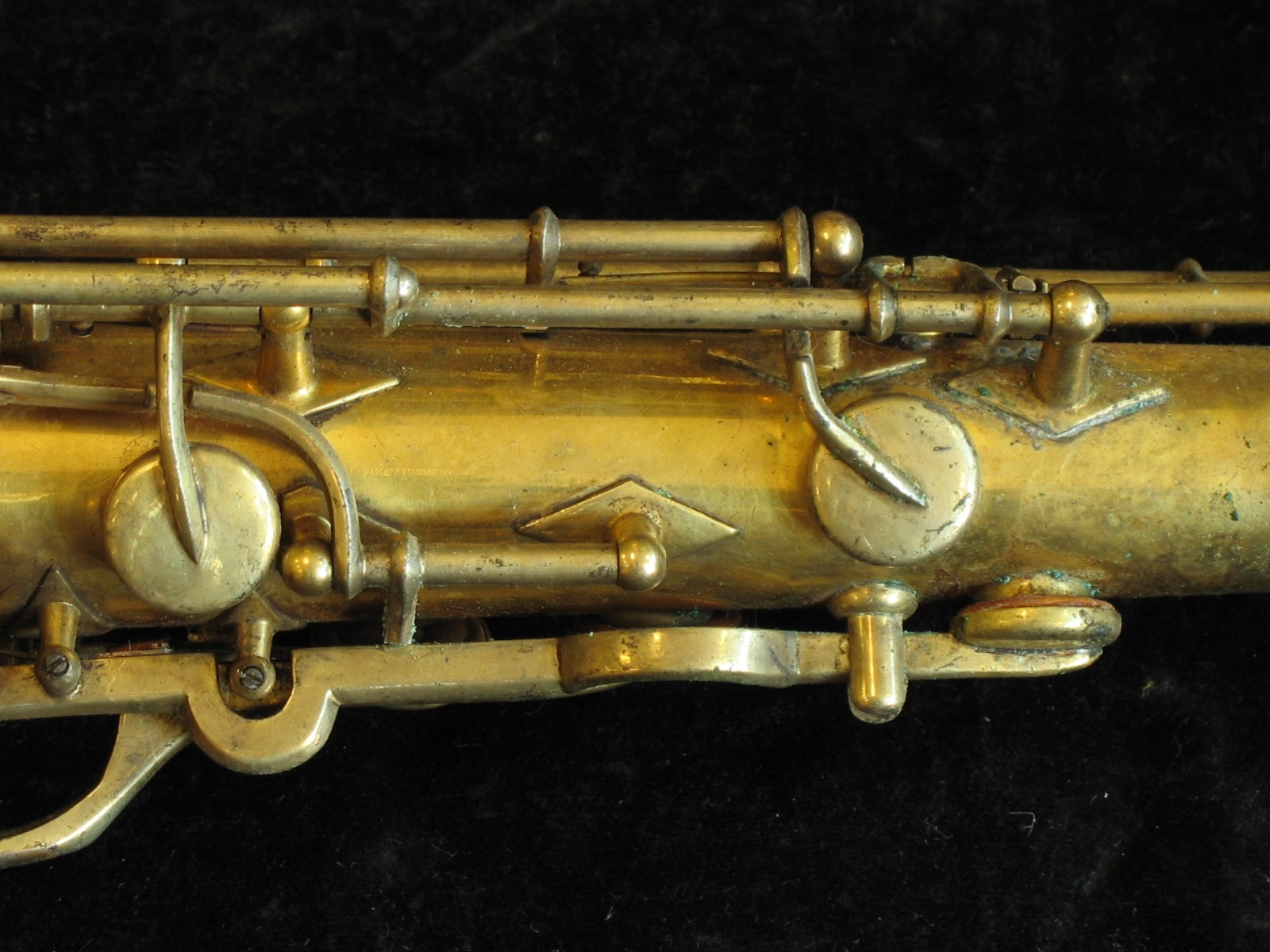
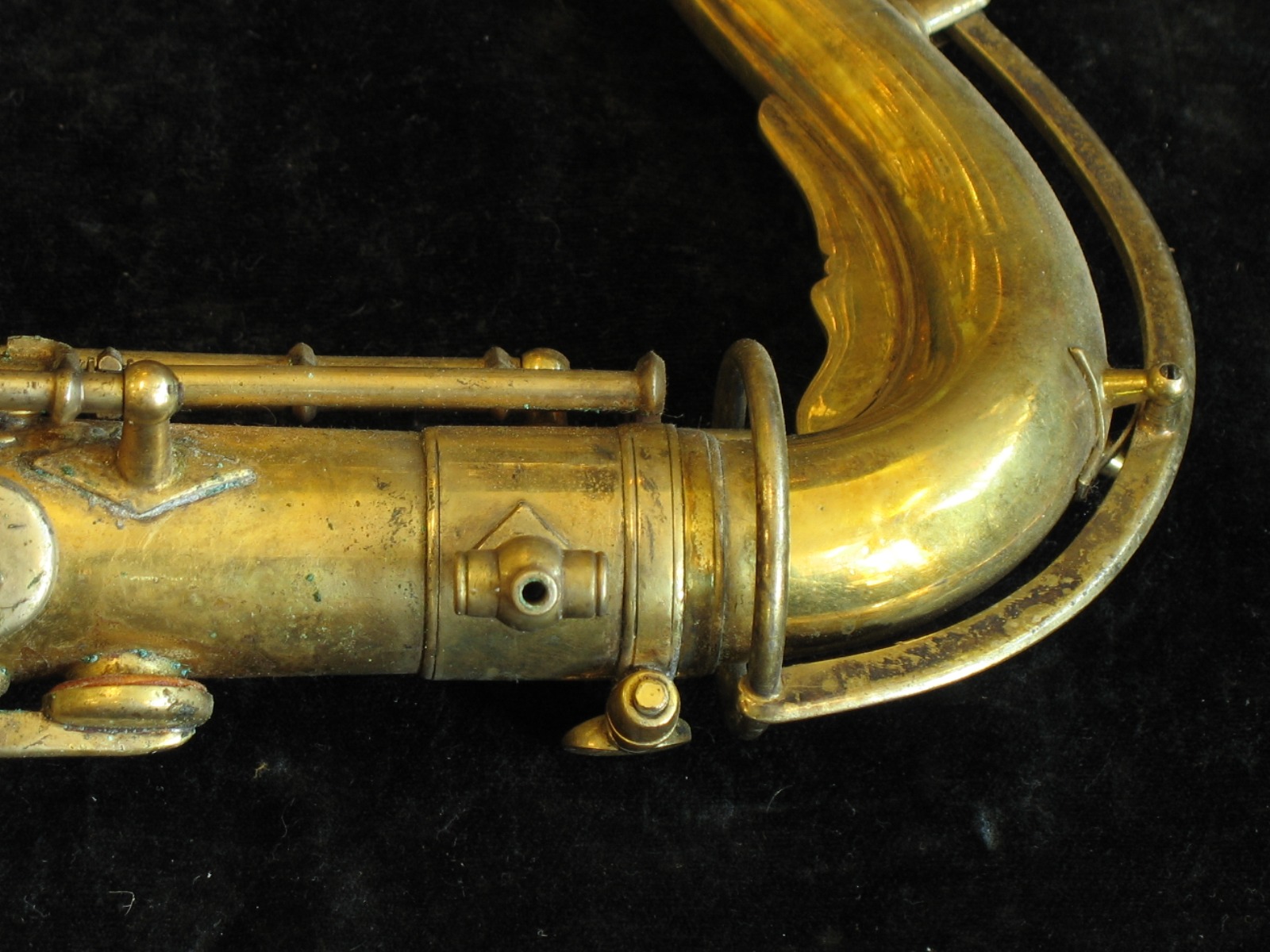
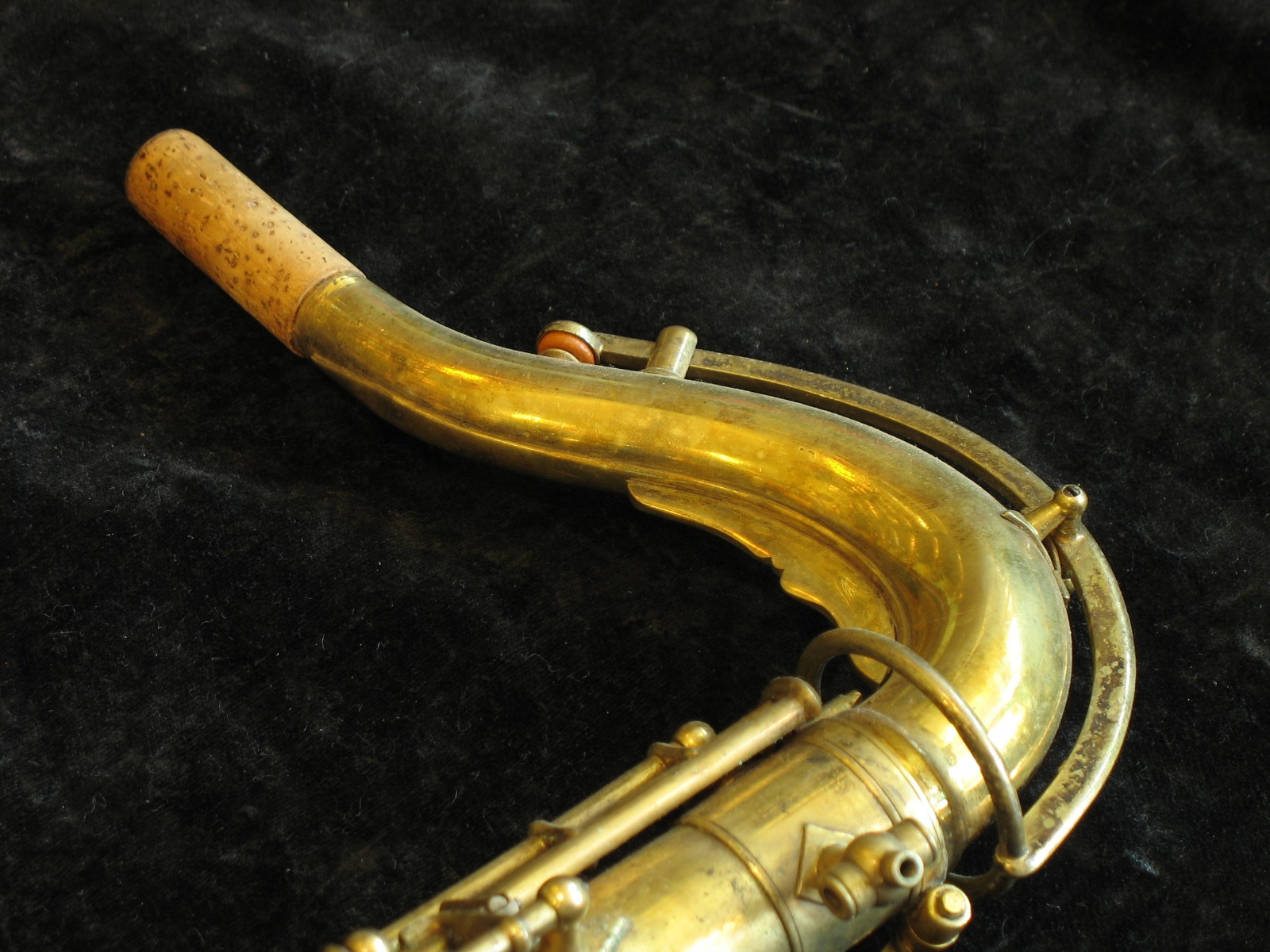
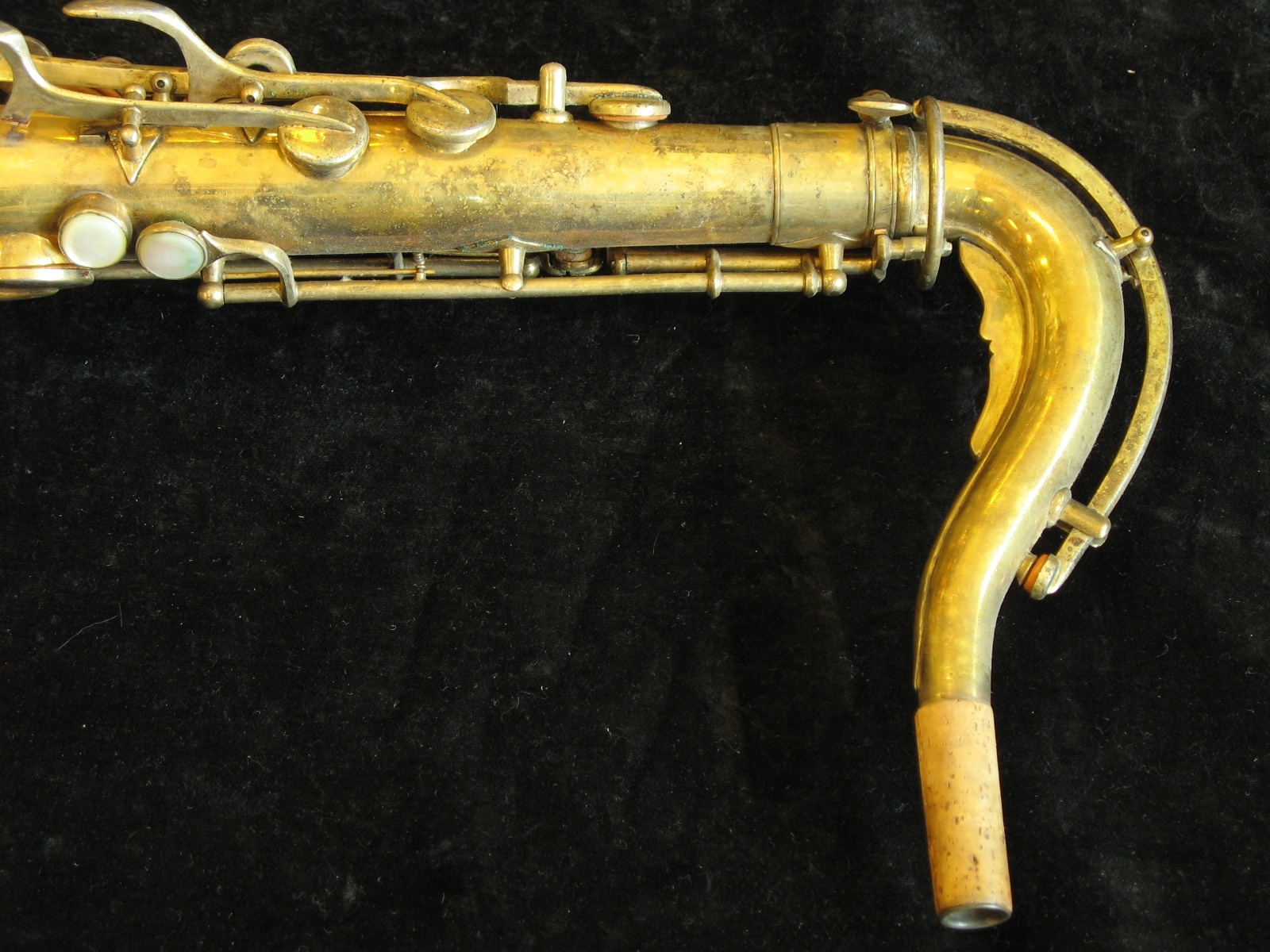
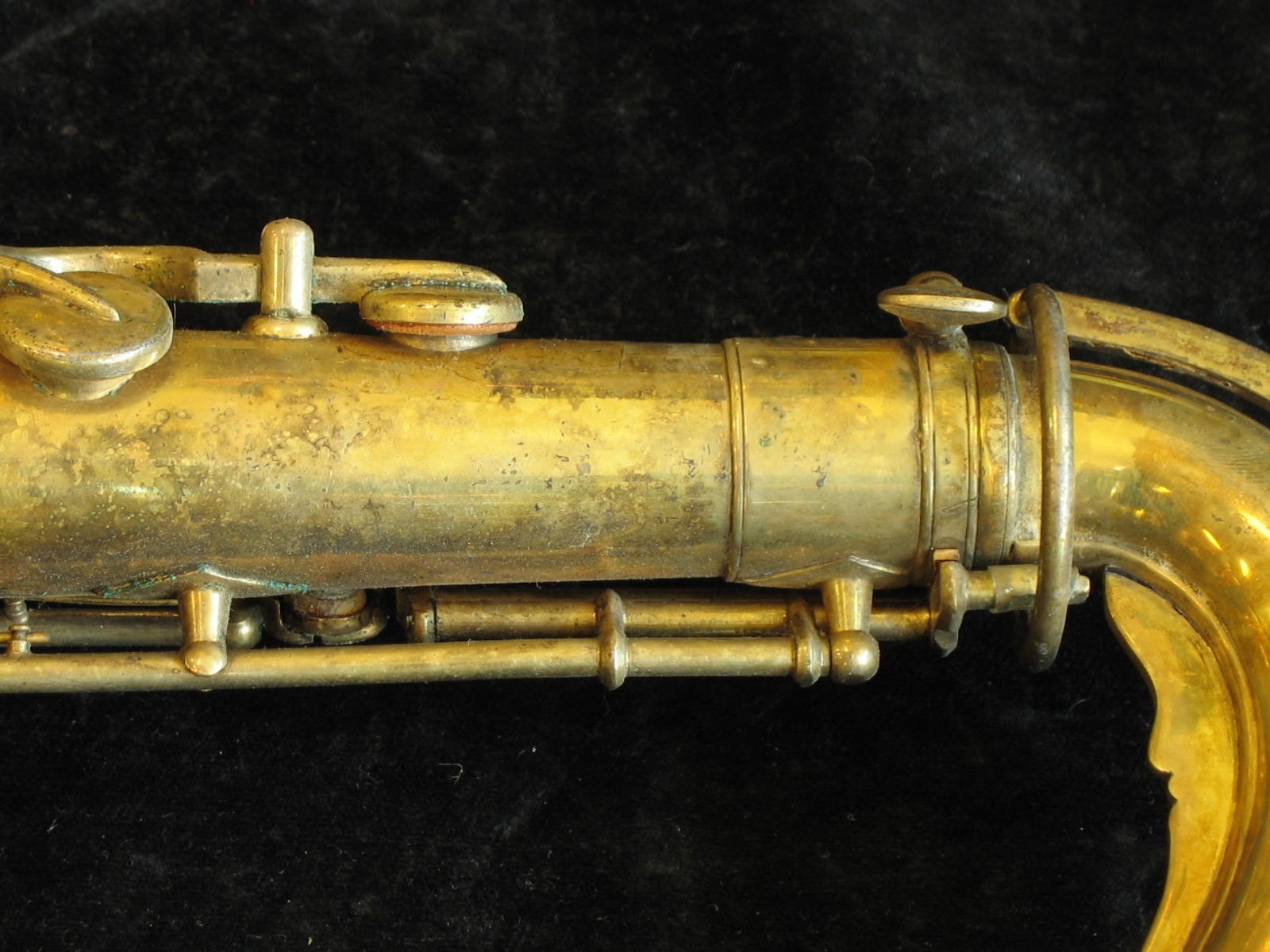
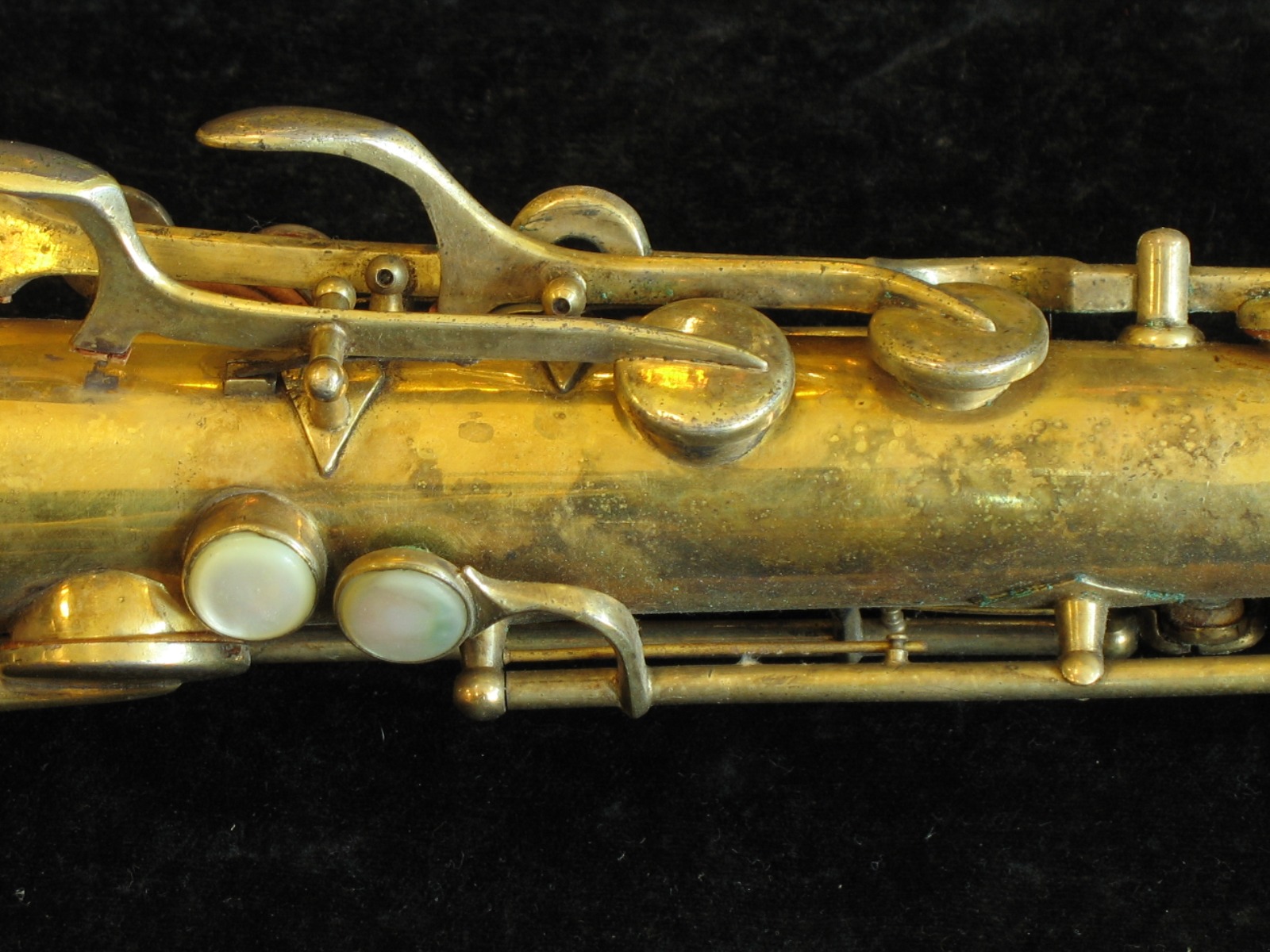
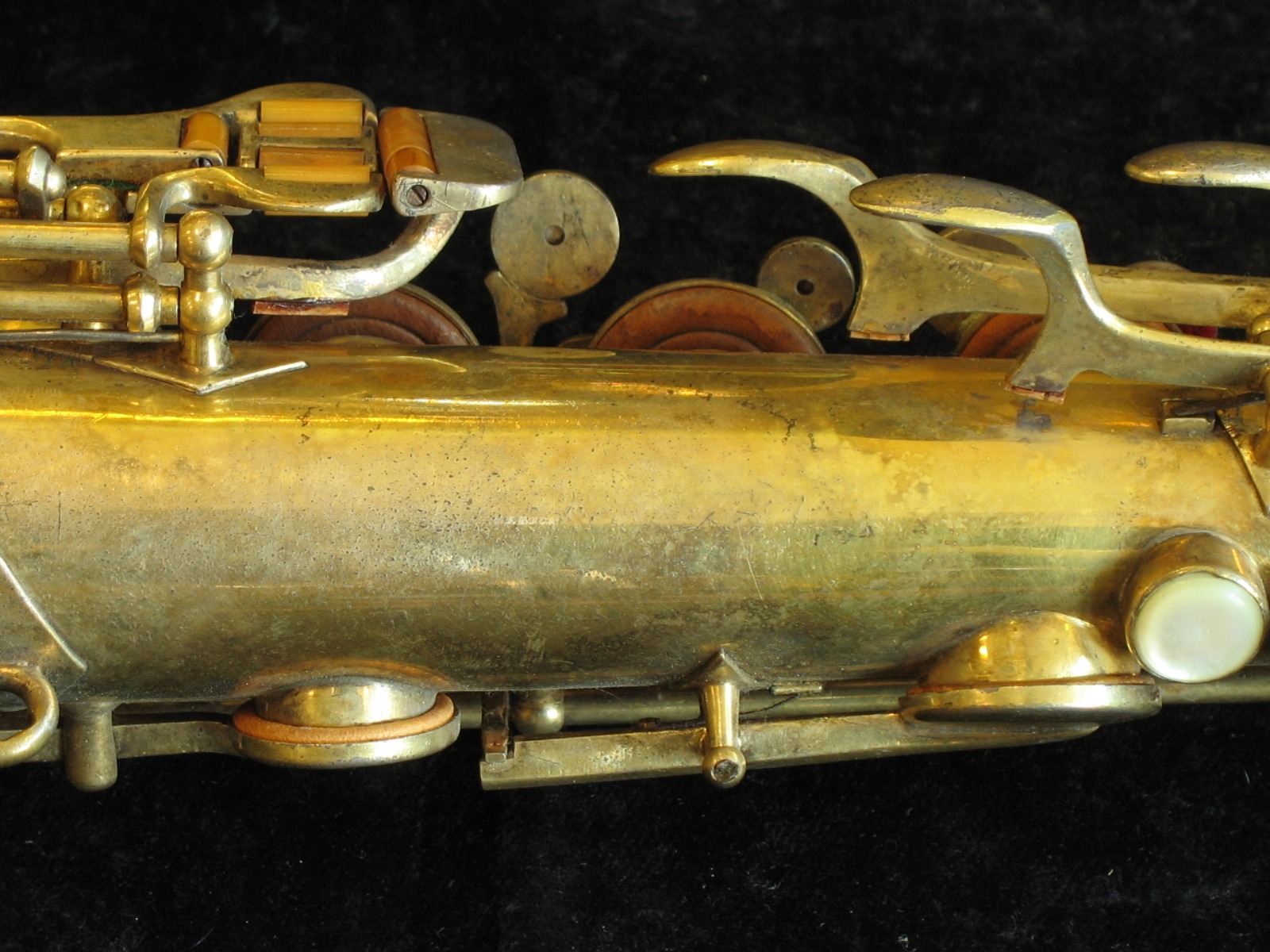
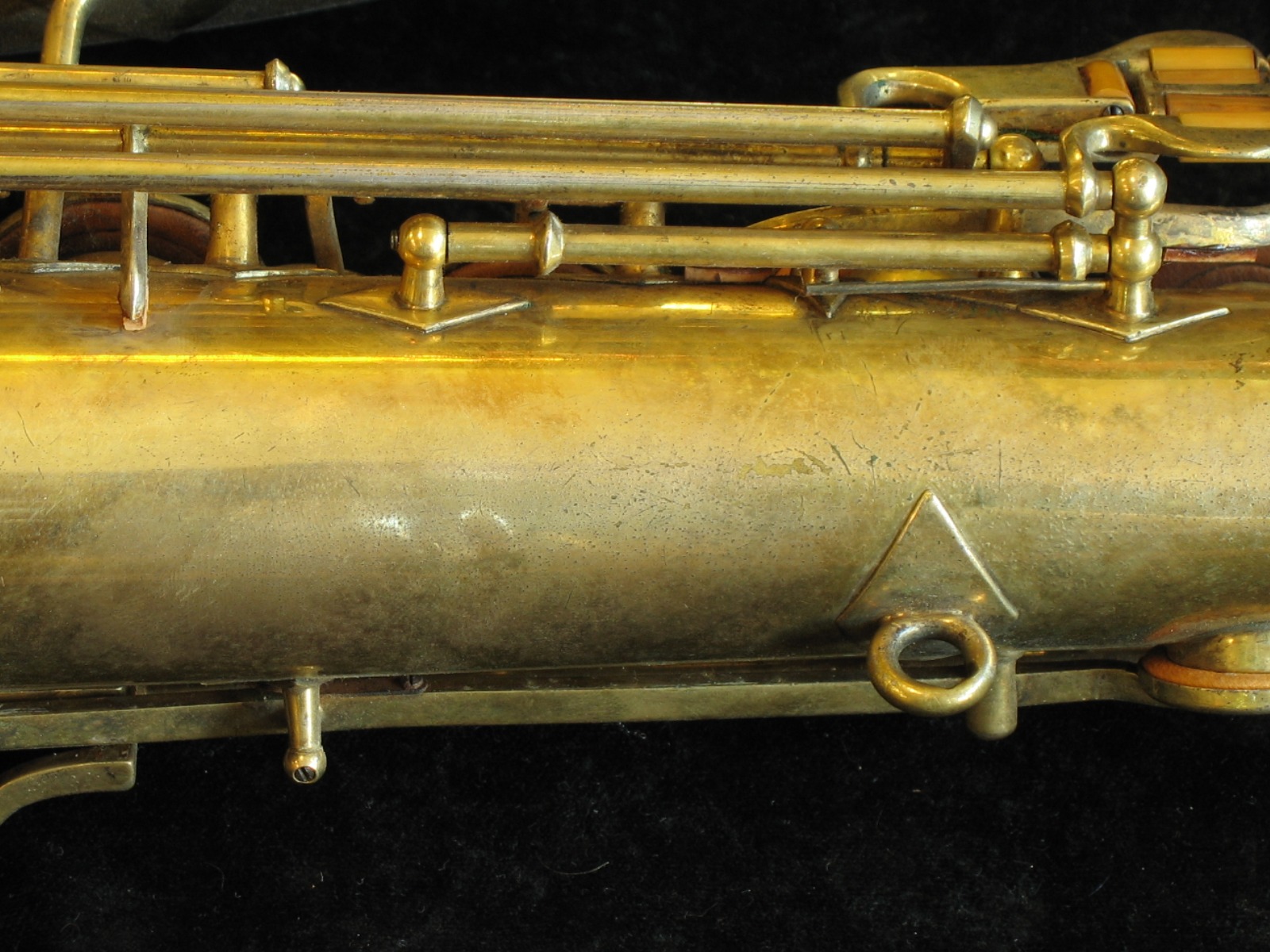
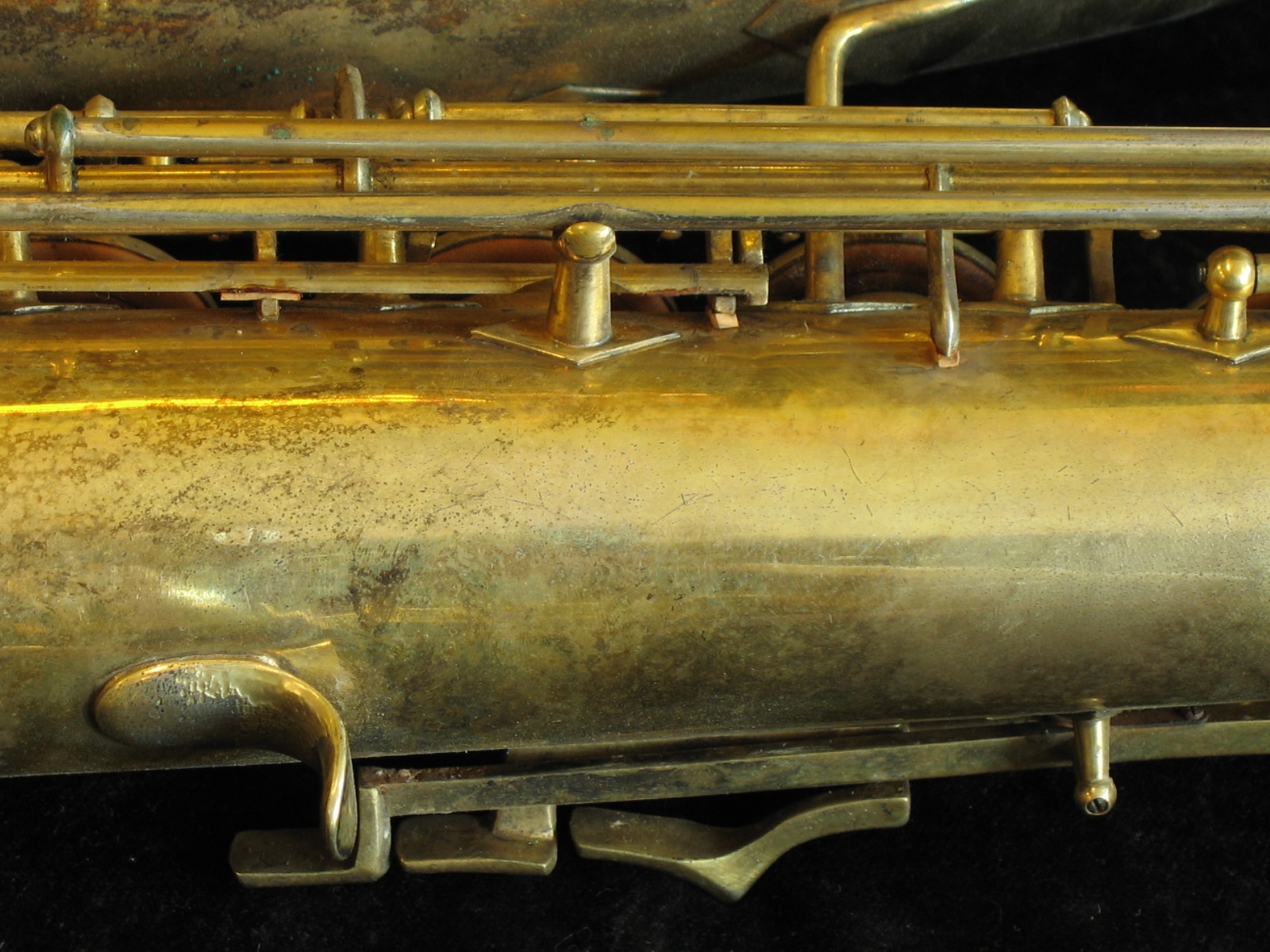
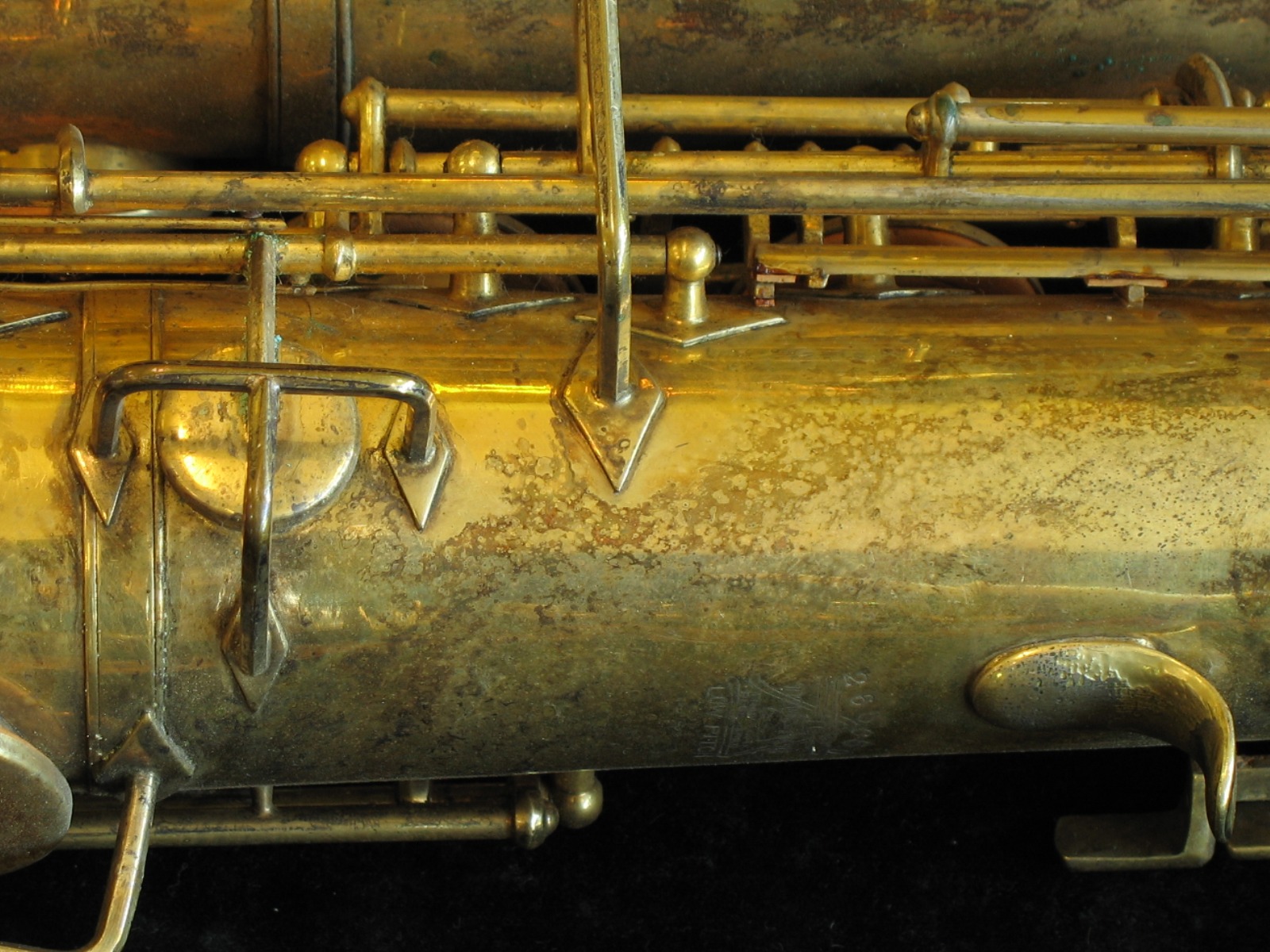
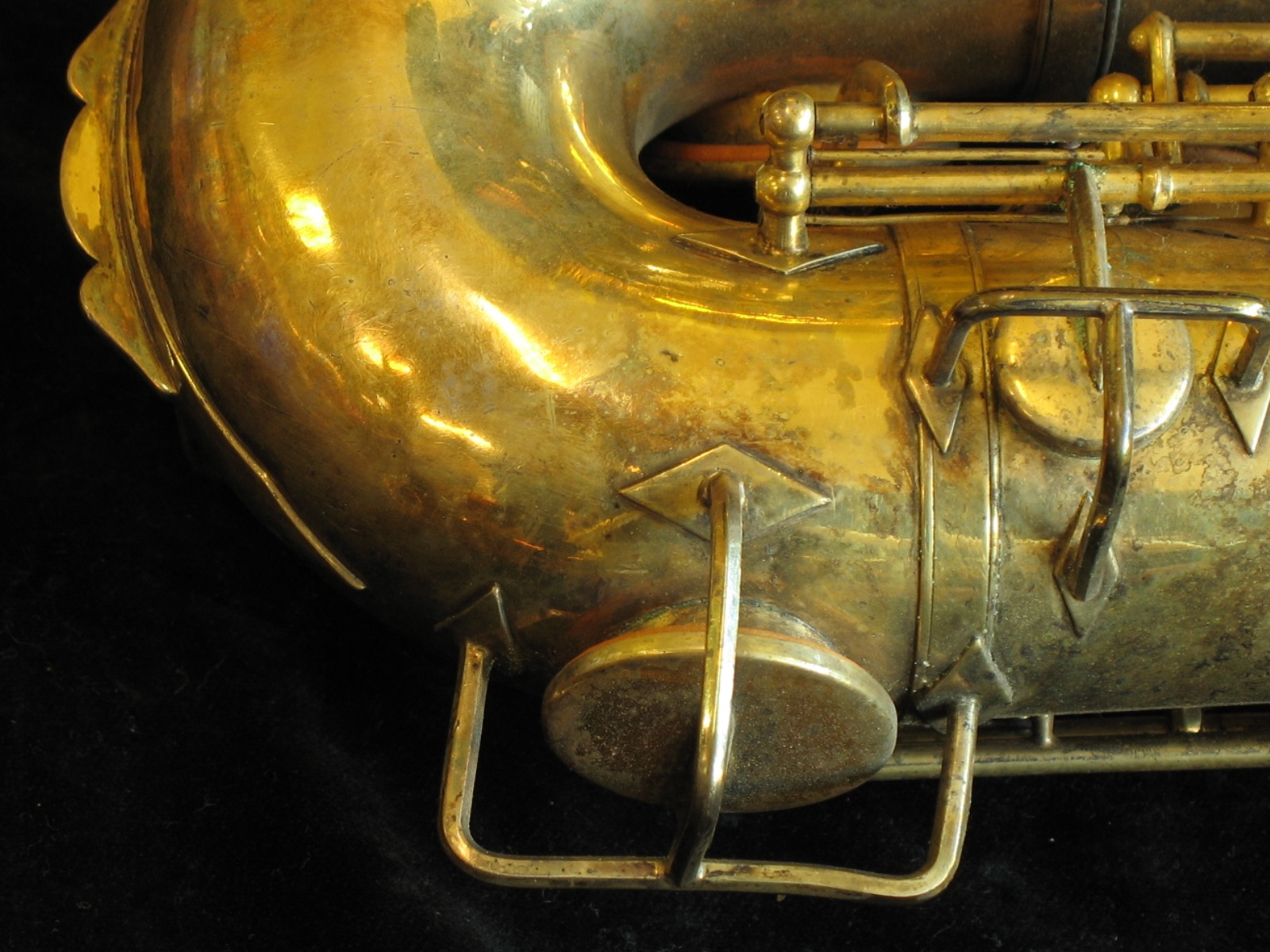
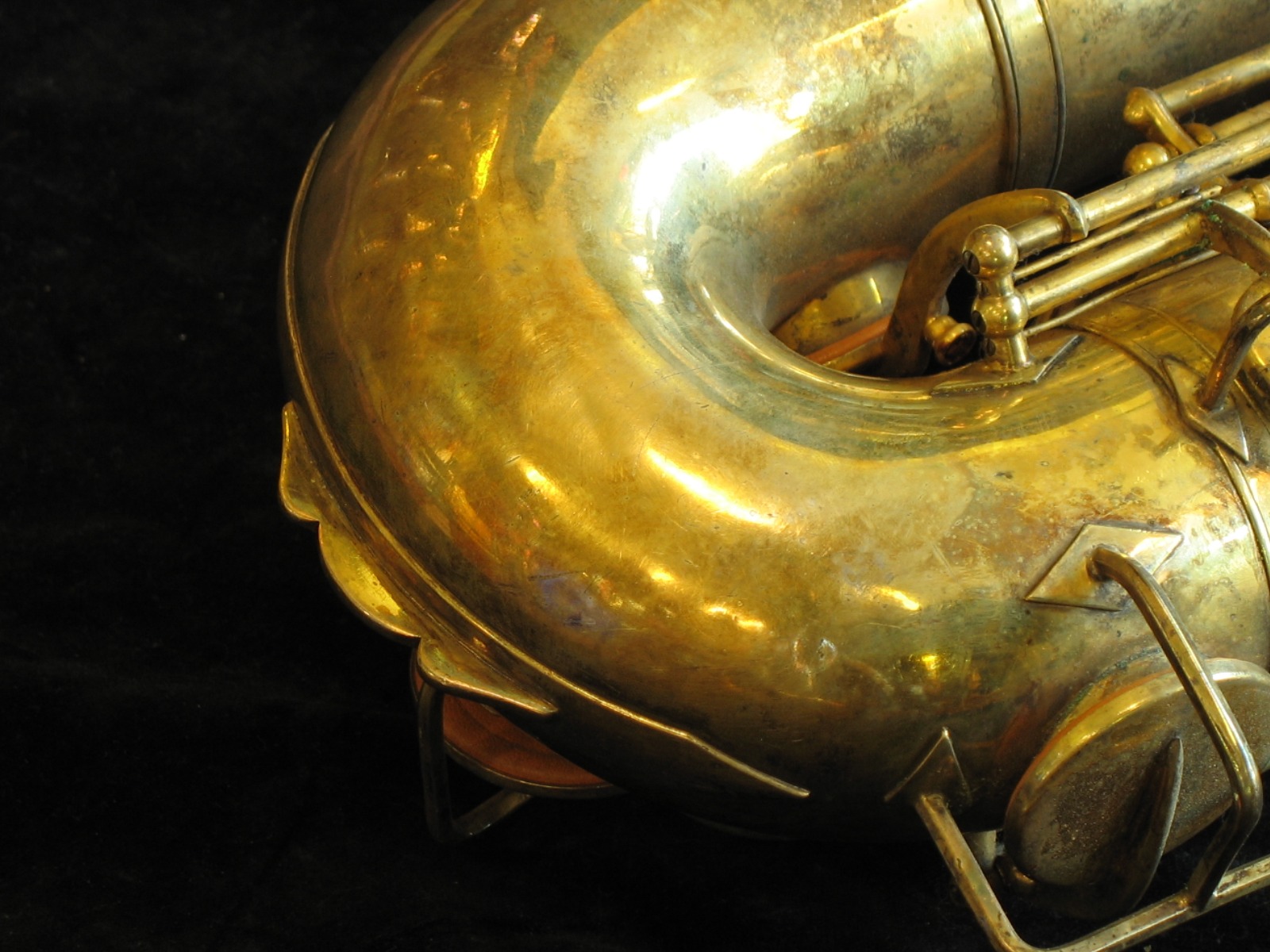
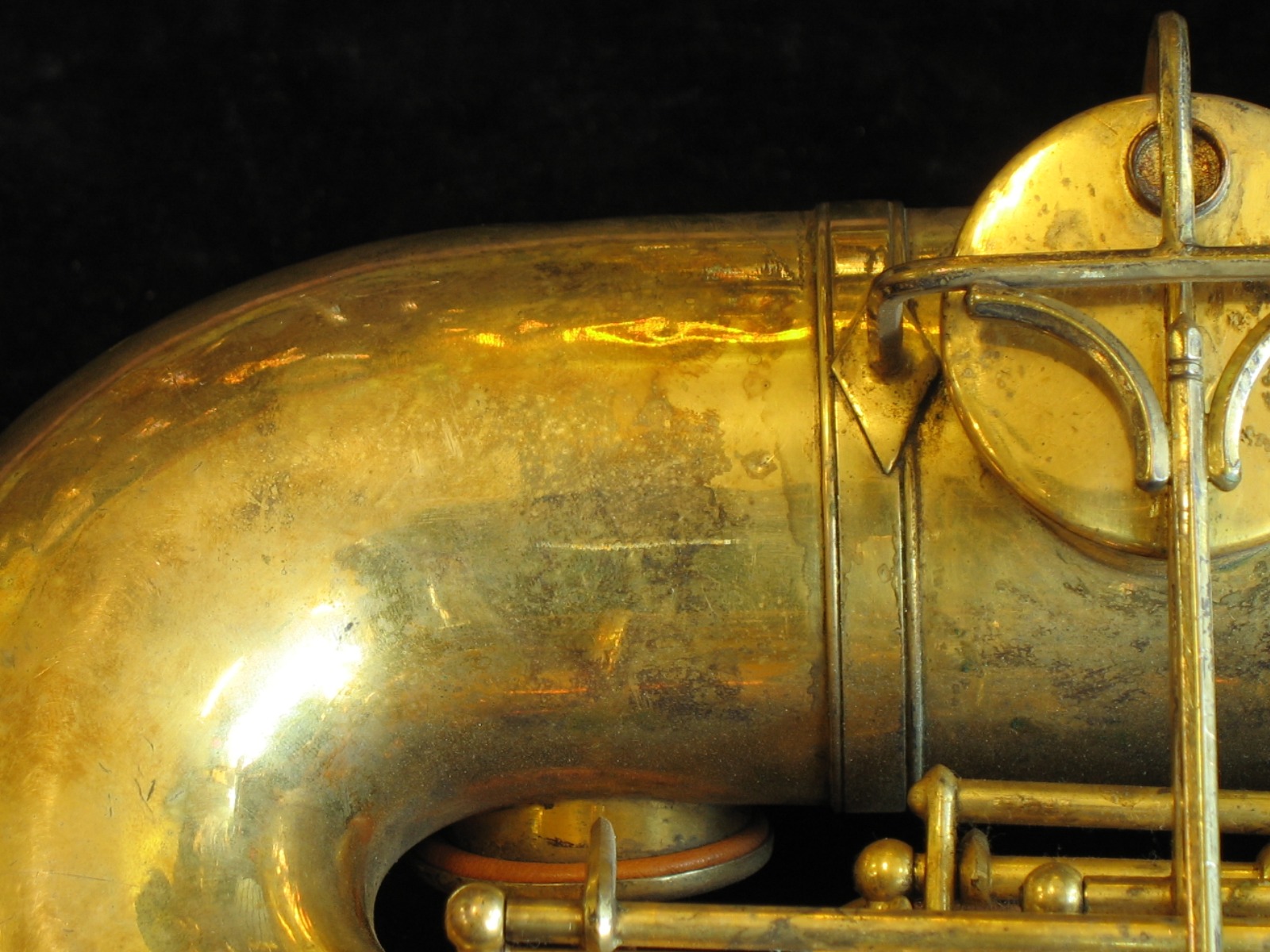
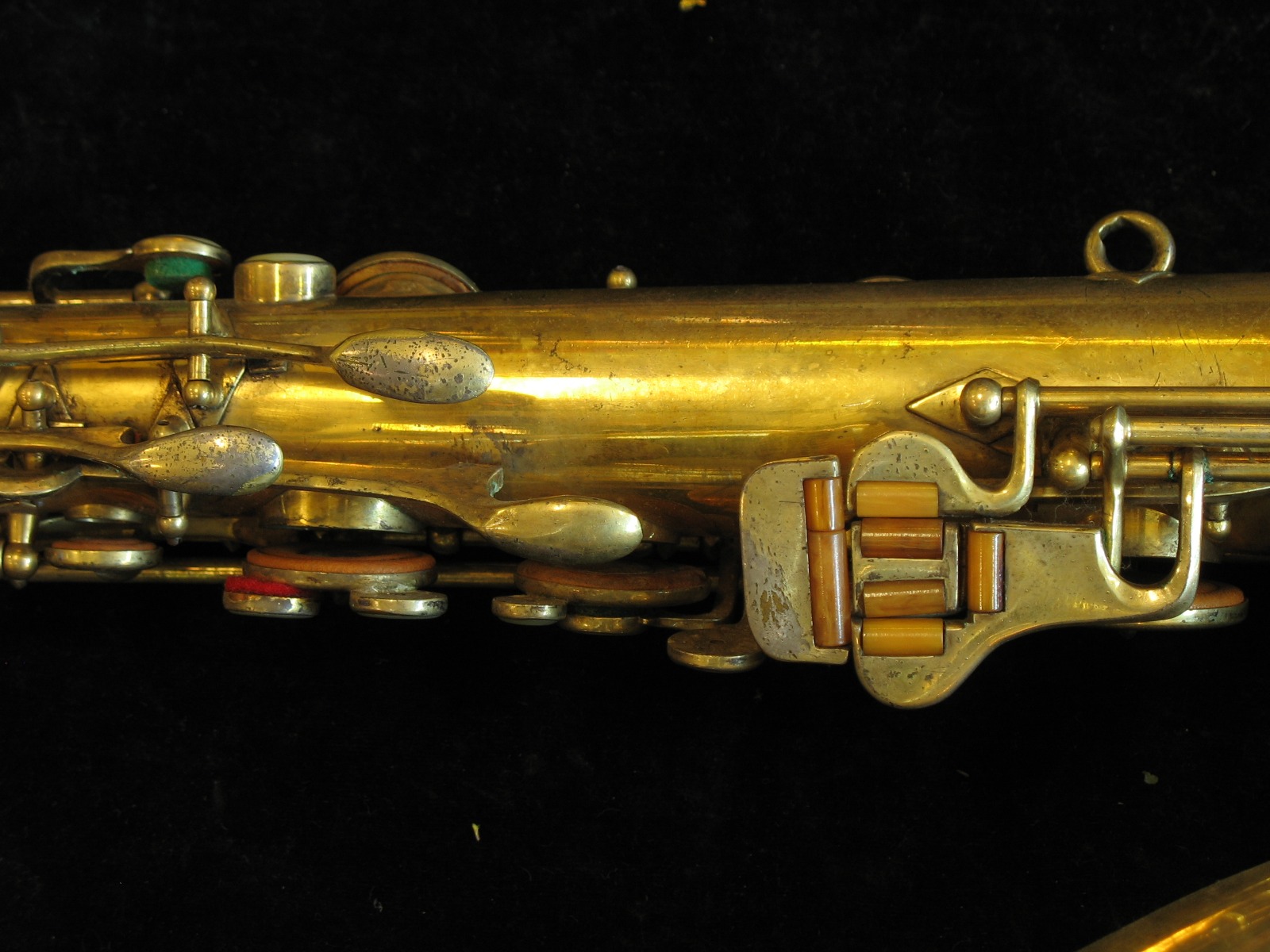
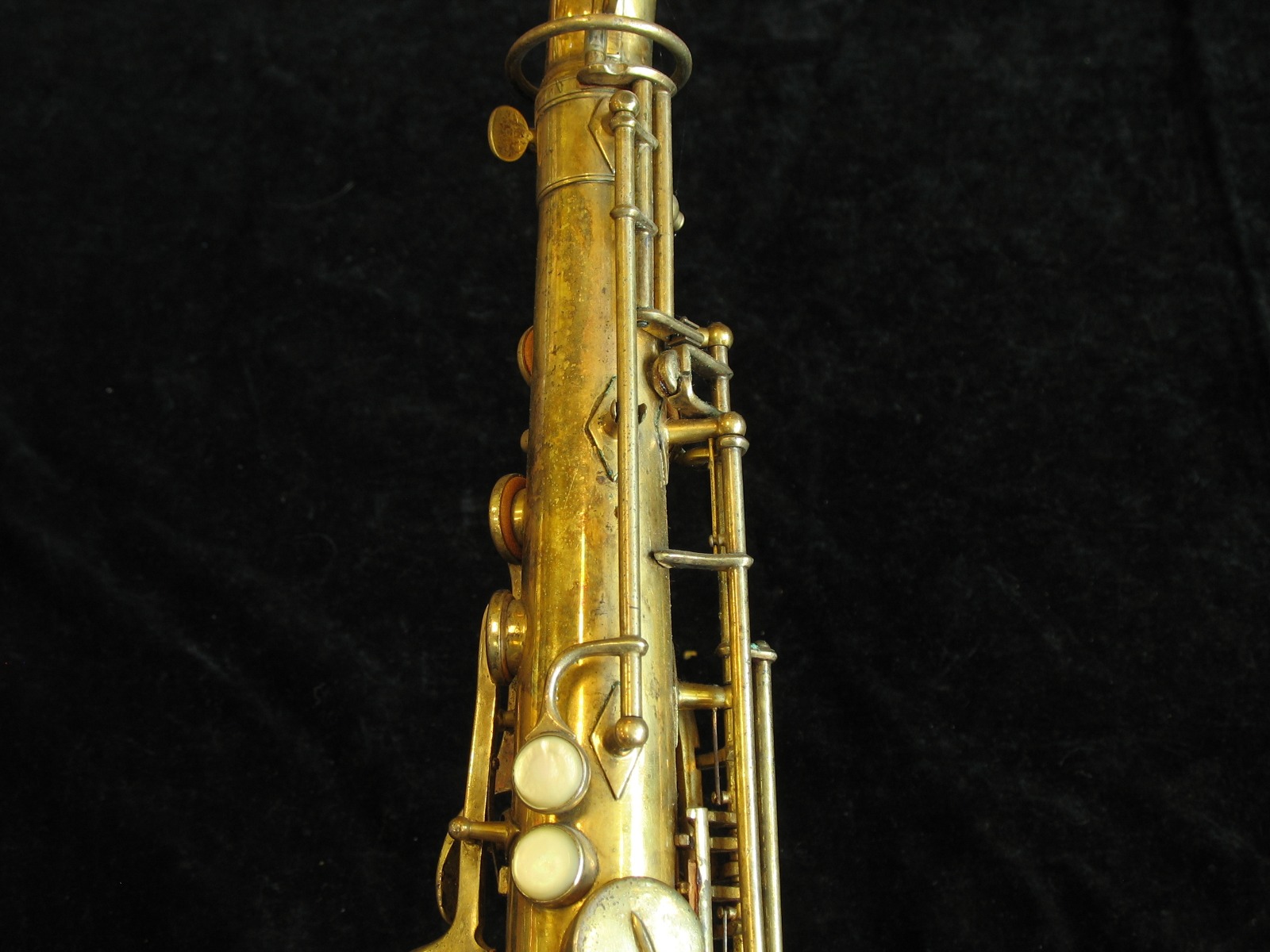
The "New Aristocrat" line was the first model line to use Norton screw-in springs. They retained Buescher's Snap-On pads. The neck and bore of the instruments underwent slight redesign. Several mechanical improvements were made including the introduction of the sculpted palm E key touch, the new shape of the left hand pinky keys that included enlarged Bb and C# touches and additional rollers, and the addition of a clothes guard between the body tube and the low B keyguard. Many of the features of the late-model "True Tone" 127 tenor carried over into the “New Aristocrat” such as the improved octave mechanism, the rocker on the F#-to-Bis and G# key linkage, the roller G# key touch, and the front F mechanism. The Man-in-the-Moon neck brace and raised bow brace are retained. The pinky key rollers were changed from black to the amber-colored rollers that would be synonymous with Buescher’s professional model saxophones until the late 1960s. The model 127 was available in all of Buescher’s standard finishes.
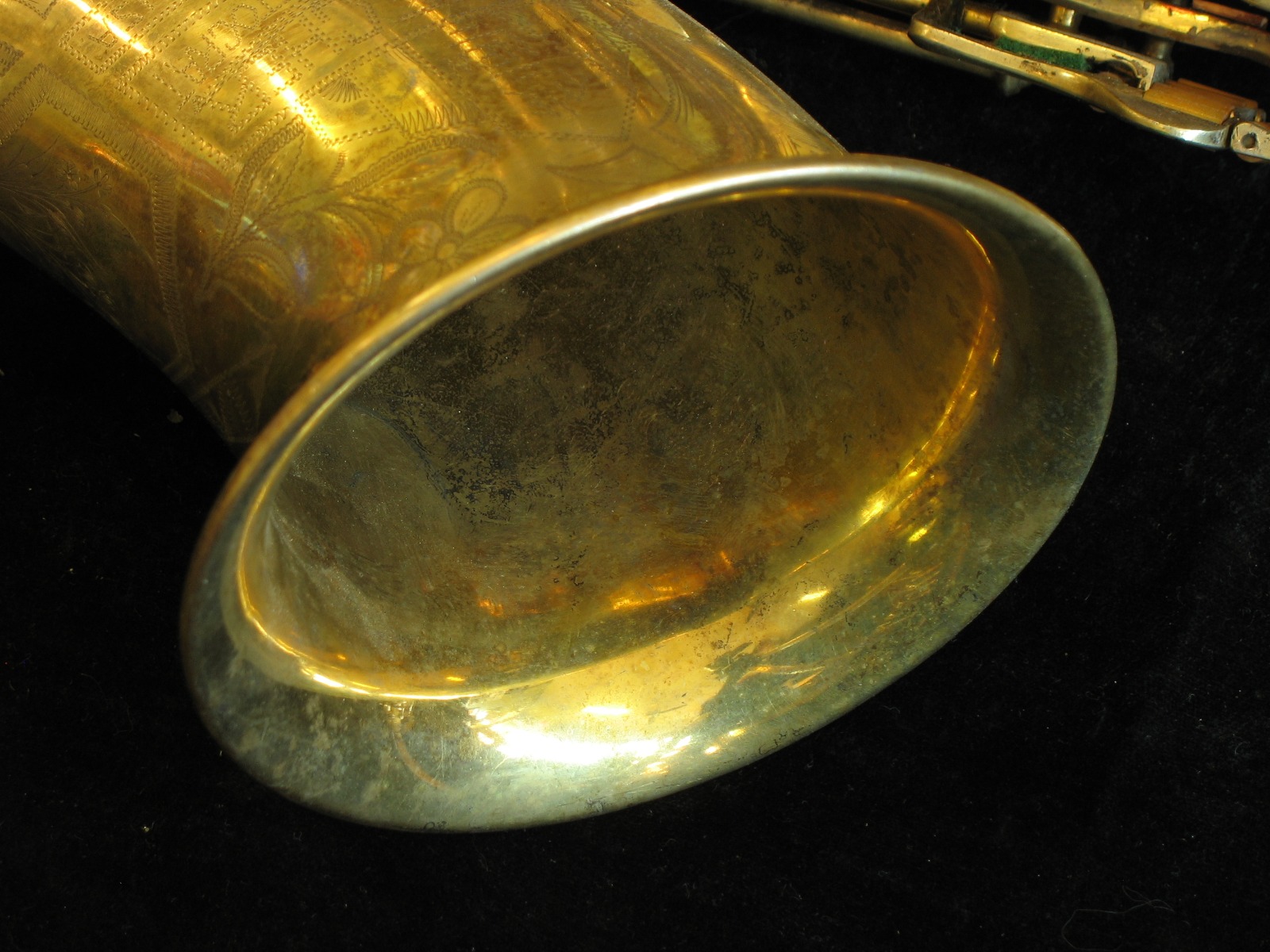
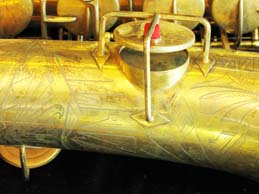
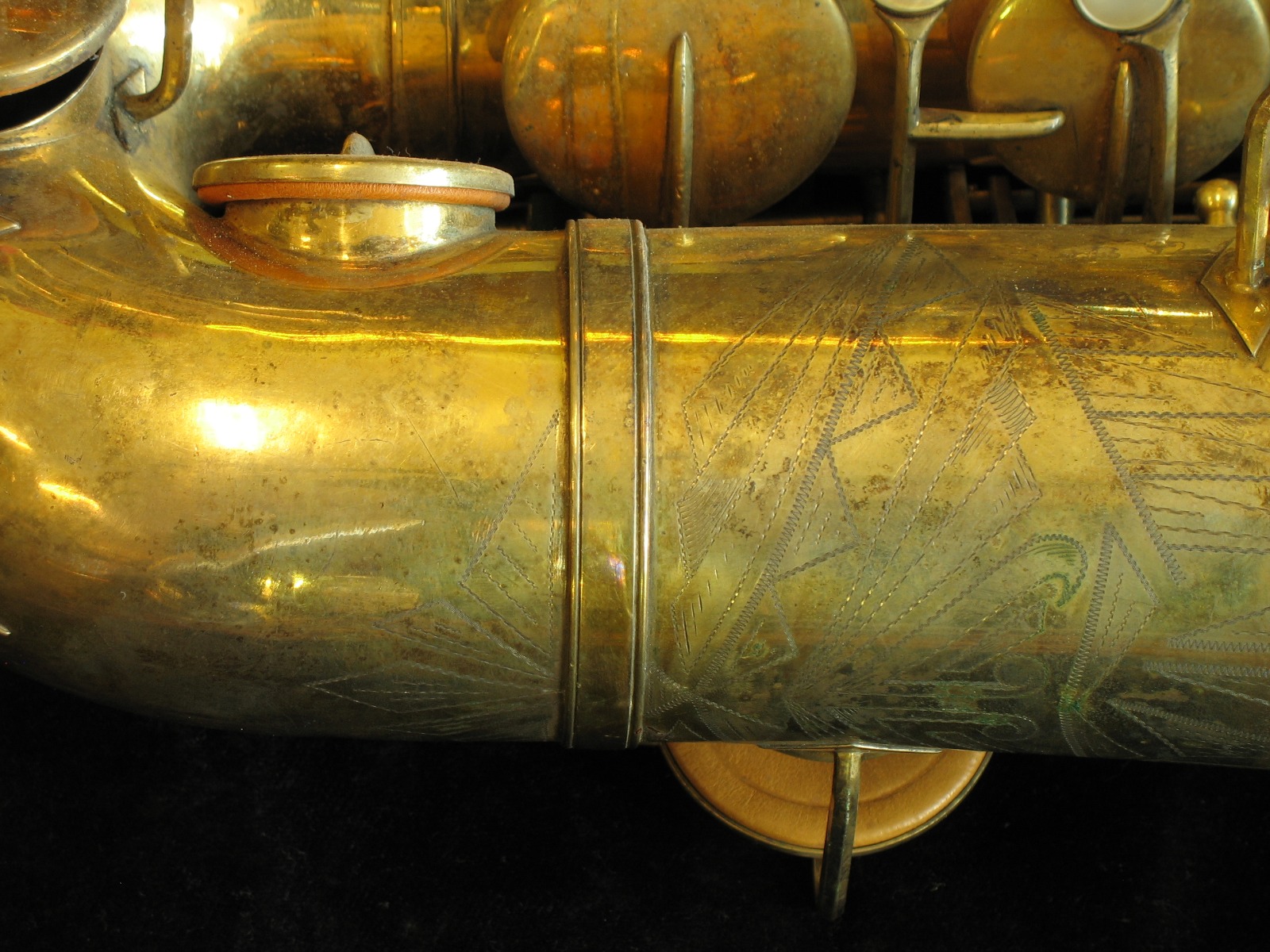
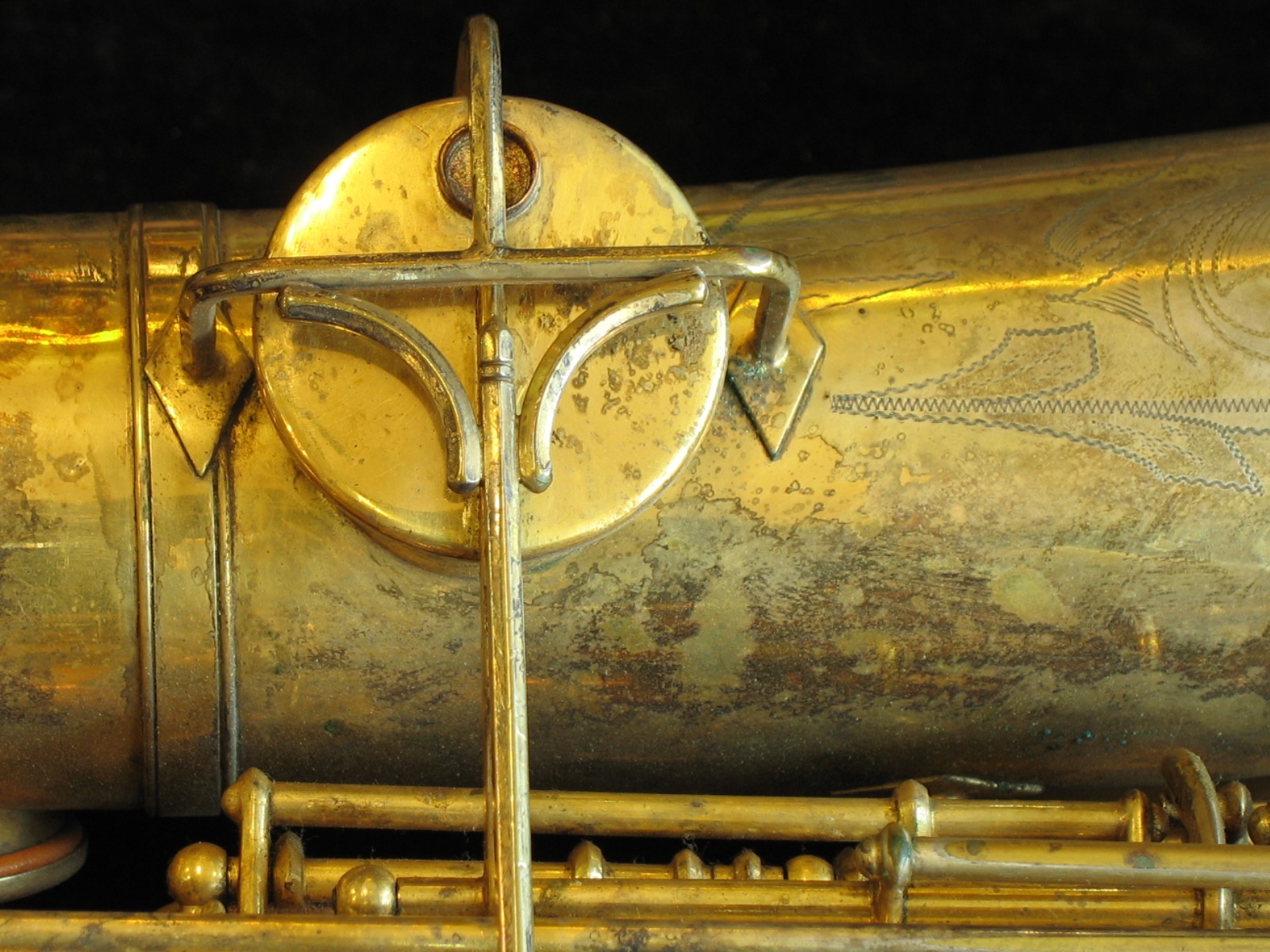
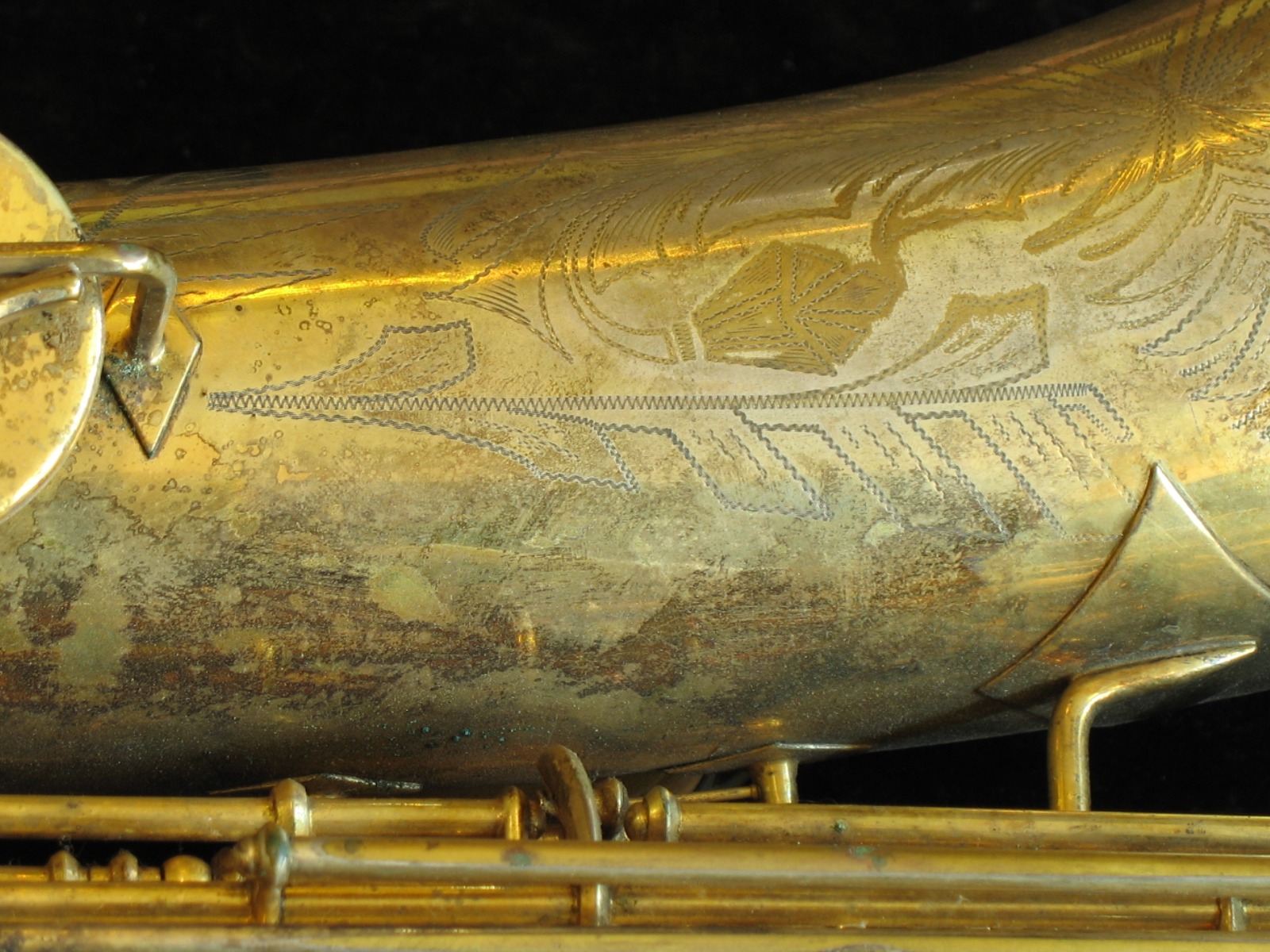
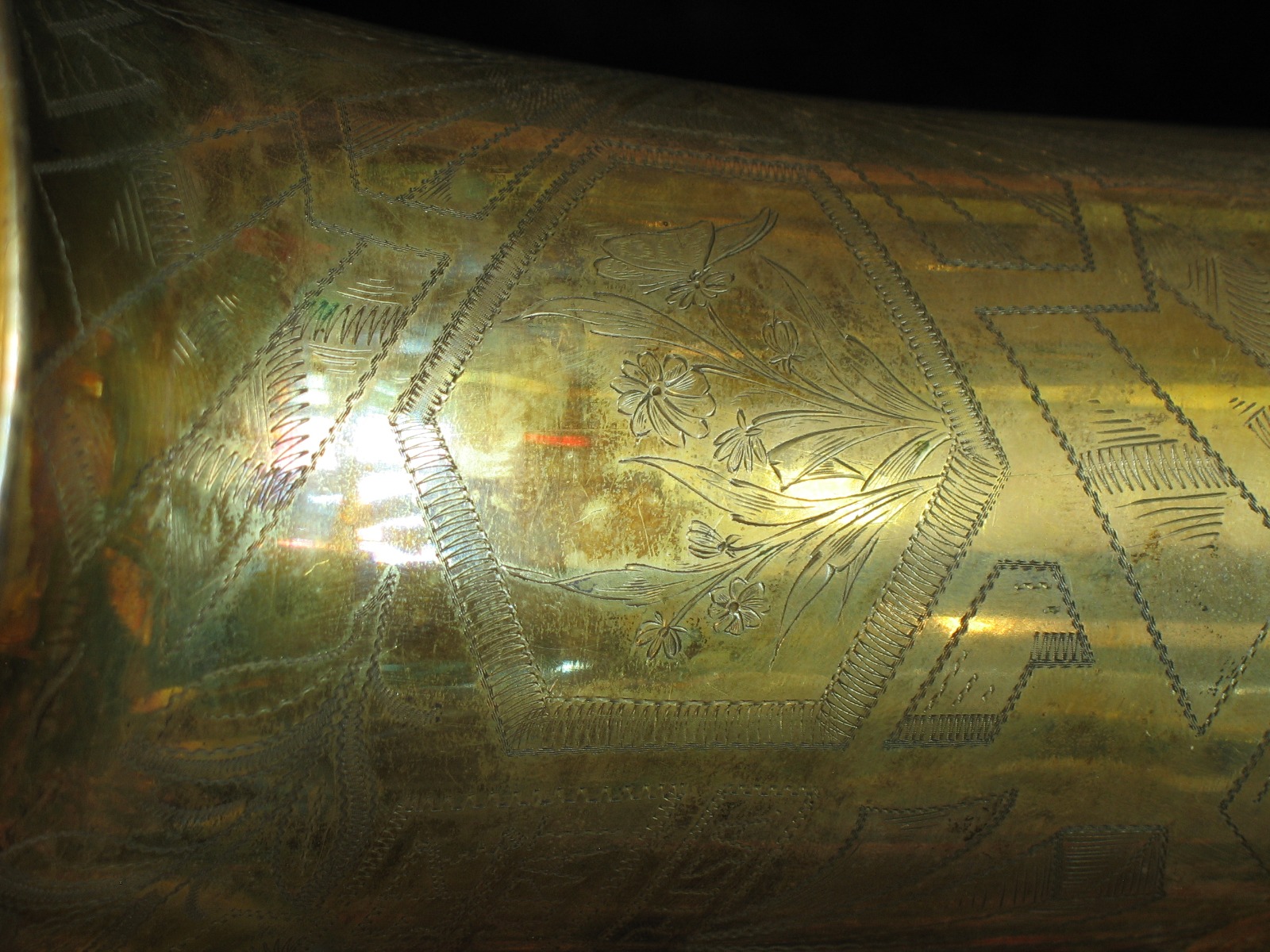
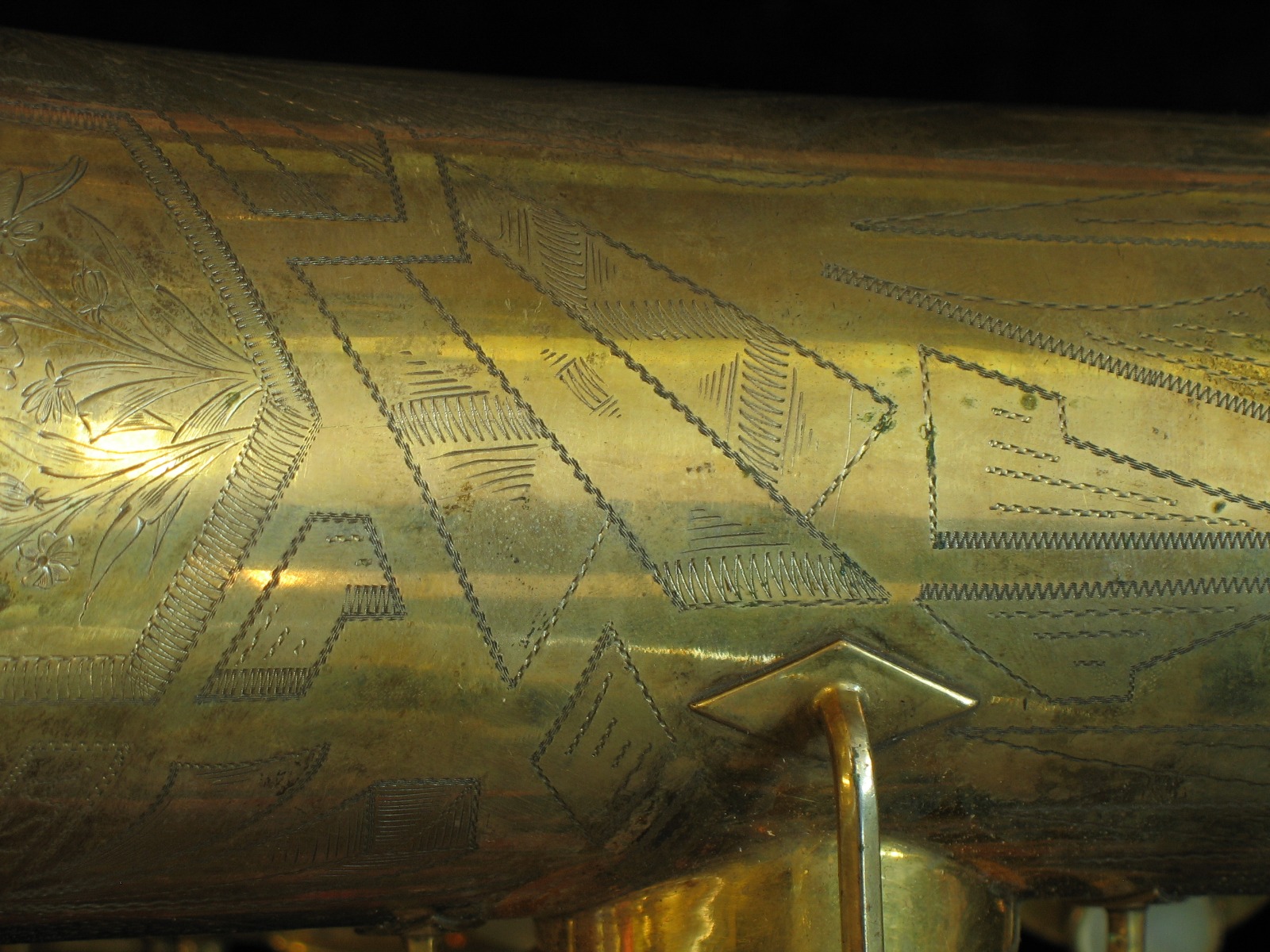
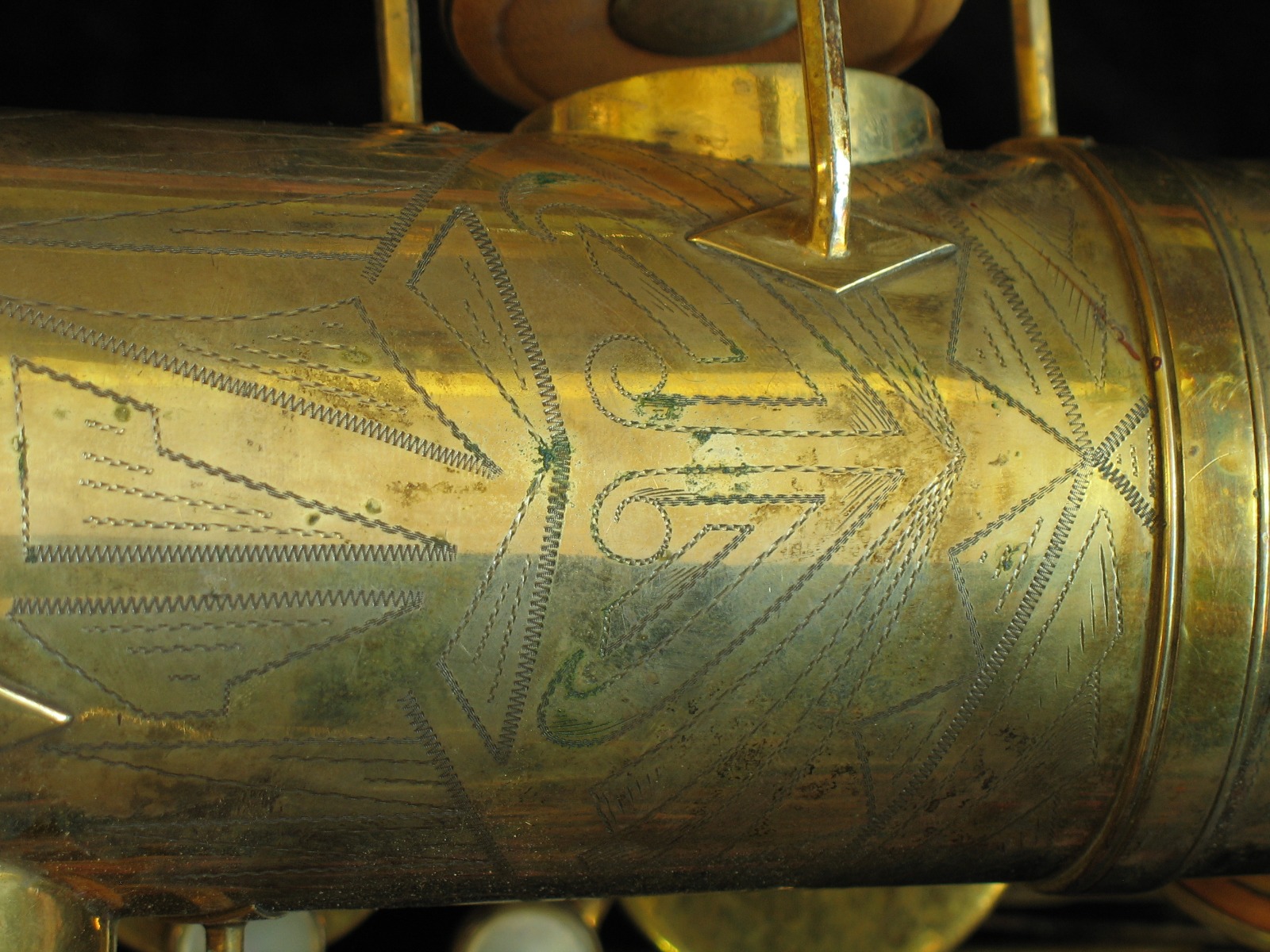
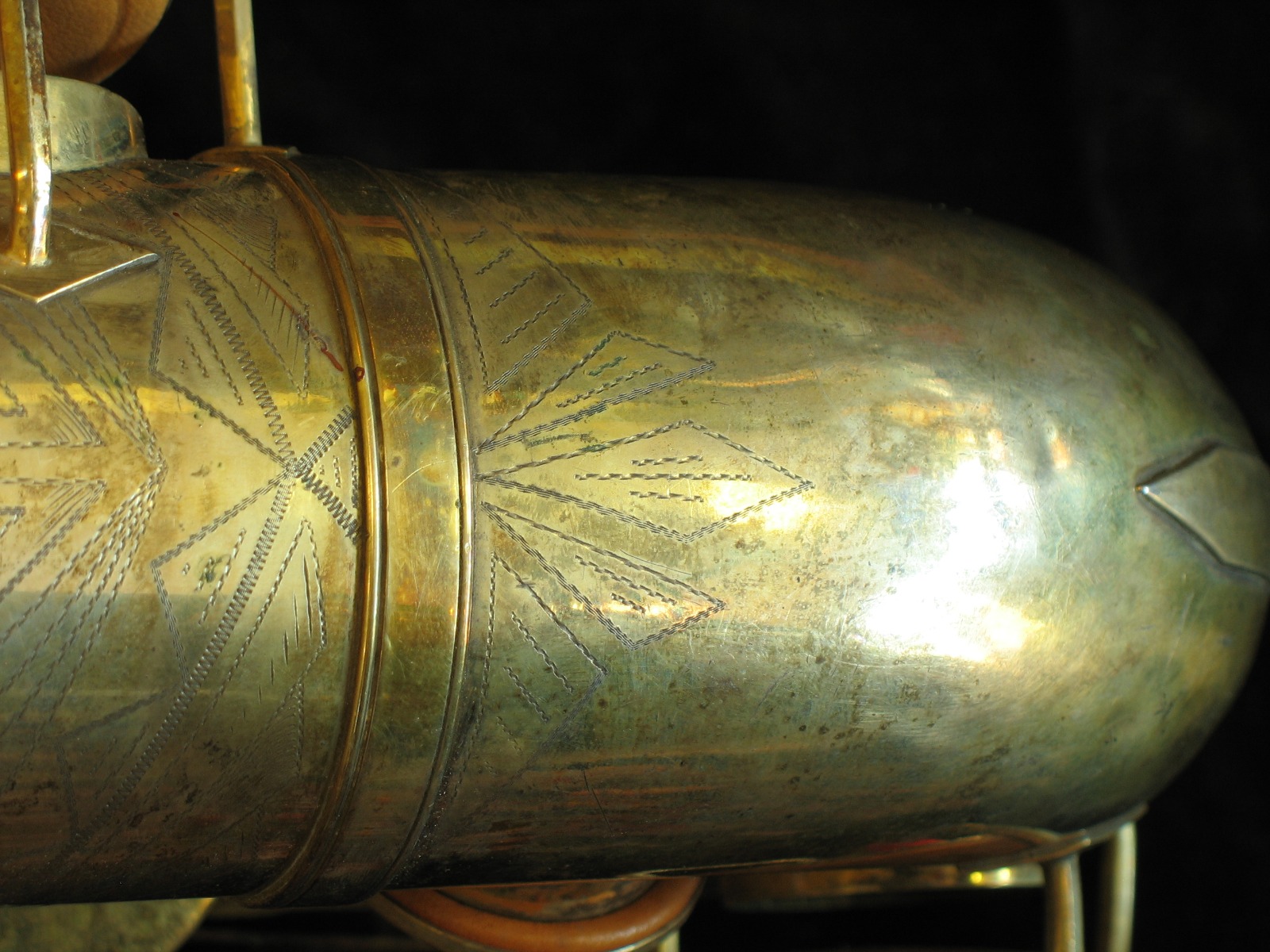
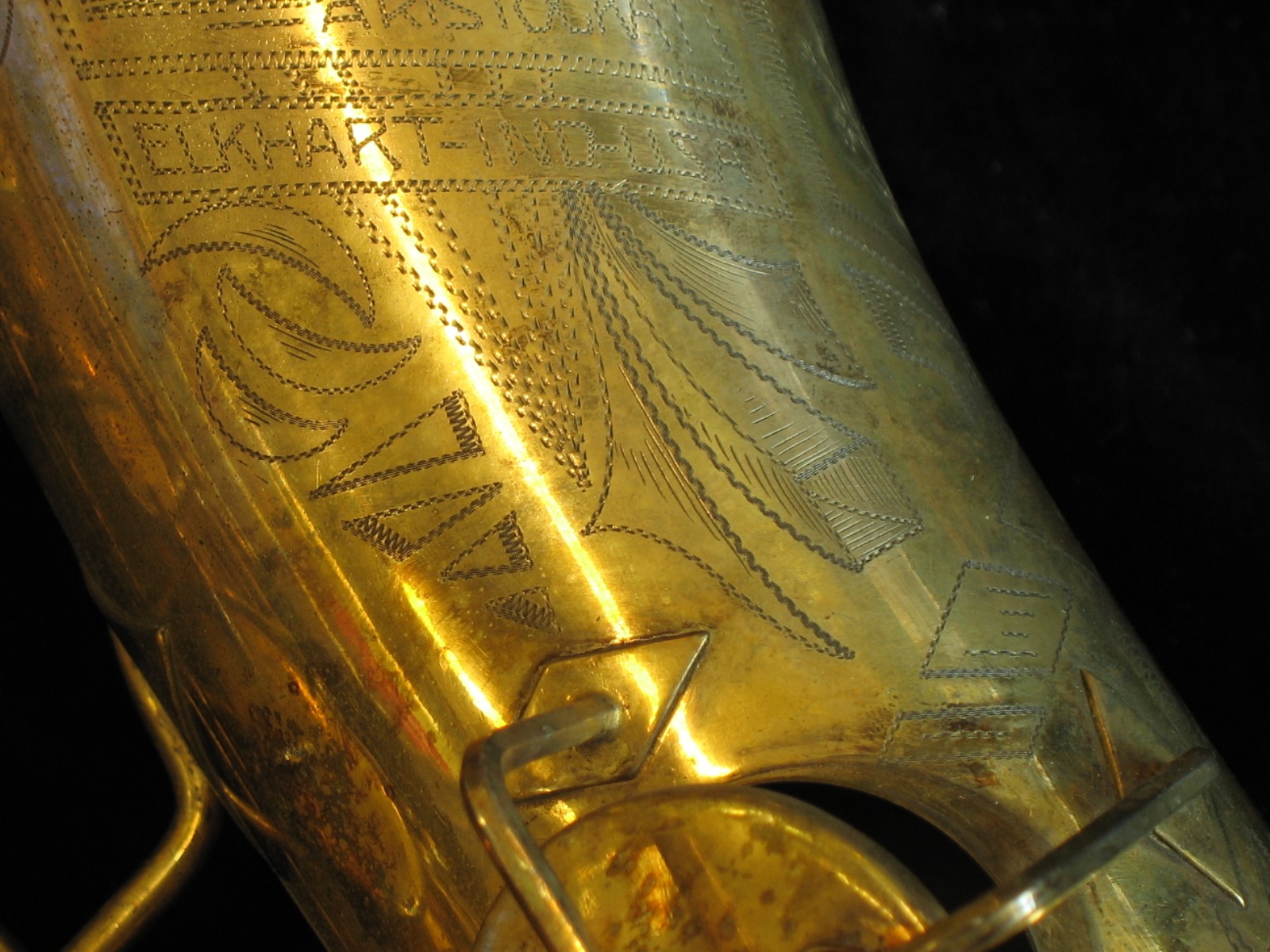
This example is in its original burnished gold plated finish. The engraving reads “The New Buescher Aristocrat Elkhart - Ind. - US.” The text is surrounded by a floral-influenced Art Deco motif which extends around the bell and down onto the bow. There is a portait of flowers within the larger engraving.
Additional Resources
- Norton Spring Patent: US1572675A
- Snap-On Pad Patent: US1702692A
- Haynes patent: US1119954A
- Loomis Octave Mechanism Patent: US1662196A