
Selmer

RESPONSIBLE FOR THE LEGENDARY MARK VI, THE CIGAR CUTTER, THE BALANCED ACTION, AND THE MODERN SUPER ACTION 80, SELMER HAS MADE AN UNDENIABLE IMPACT ON THE DEVELOPMENT OF THE SAXOPHONE
In 1885 Henri Selmer, founded H. and A. Selmer & Cie. Henri Selmer had graduated from the Conservatoire de Paris as an already accomplished clarinetist in 1880. He joined the Garde Republicaine but soon left for the orchestra of the "Opera Comique.' While playing at the opera he began making his own reeds in response to his own needs as well as those of his fellow musicians. His reeds were soon in such a great demand that he was able to open a small workshop to manufacture reeds and eventually mouthpieces, too. These were the small beginnings from which the instrument manufacturing megalith grew.
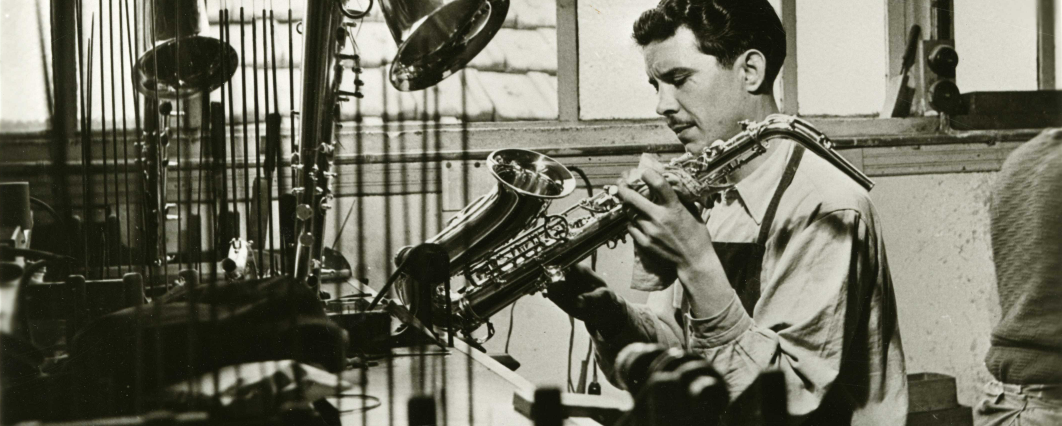



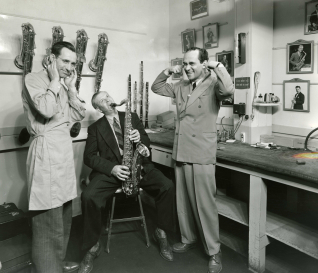

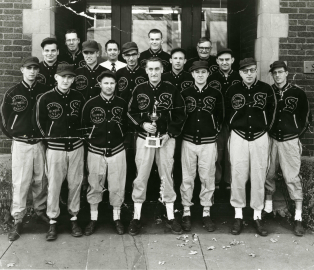
Custom Reeds to Saxophones and More
In 1900, encouraged by continuing demand, Henri also undertook adjustment, modifications and repair work which led him rapidly to the conception and manufacture of clarinets, and soon set himself up with about 20 workers in a workshop at Place Dancourt in Paris. Soon after, with the help of his clarinetist brother Alexandre Selmer, he opened a retail store in New York and managed additional international sales with an agent in London. In 1910, Alexandre Selmer returned to France but left the shop in New York to one of his students - George Bundy. It was at this stage Henri Selmer decided to take things a step further, to diversify and industrialize his production.
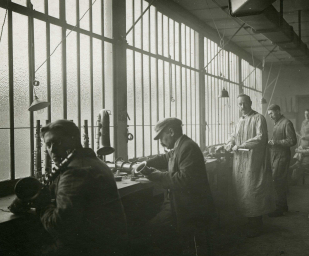
From 1910 to 1920 Henry extended his production to the whole woodwind family of clarinets, bassoons, and oboes by opening a new workshop in Meru and a steam factory in Gaillon. For some years, the Lefevres, Paul, and father, and his two sons Maurice and Henri, had been working for Henri Selmer. At the beginning of the war in 1914, Henri Lefevre was mobilized and left for the front with a saxophone of his own making. The instrument attracted the attention of Henri Selmer for, since its creation by Adolphe Sax, it had changed little and was declining in popularity. The Gaillon factory was too small to complete the transition from clarinet to saxophone, so in 1919 Henri Selmer decided to open a new factory at Mantes where the other saxophone makers, Dolnet and Evette-Shaeffer, were already established. The Lefevres were responsible for production, while Henri Selmer looked after all the management aspects with his brother Alexandre who also tested the clarinets. Maurice Selmer, Henri's son, began to look after commercial and artistic affairs and some adjustment of instruments.
At the end of 1921, the first Selmer saxophone was born, the Model 22, an alto. Continuing the manufacture of clarinets, reeds and mouthpieces, the Mantes factory was enlarged and in 1928 Henri Selmer took over the Adolphe Sax workshops, thus extending the brass manufacture to trumpets and trombones and lifting Selmer-Paris to the top levels of world production of wind instruments. In particular, they gained acclaim with the introduction of a new saxophone, the model 28 "Cigar Cutter". Then in 1933, after a detailed technological study of all saxophones on the market, Selmer presented his model 35/36 "Balanced Action" sax, an extremely refined model both mechanically and acoustically.
The war years were very difficult for all manufacturing businesses. There were few raw materials, exporting almost impossible, and many other problems. The company was almost put into "hibernation" and temporary activities had to be adopted, even the manufacture of bicycle pumps! After the war Maurice Selmer, son of Henri Selmer, revived the firm with a complete range of instruments. Assisted by the momentum brought to jazz by the influx of American troops and the simultaneous development of classical studies of the saxophone, the instrument evolved rapidly, bringing us to 1954 and the Mark VI model which saw the modification of the position and size of the holes, the key mechanism, and above all the change in position for each hand. The Mark VI remained in the front line for many years, until 1974 when a new model, the Mark VII was presented at the Saxophone Congress in Bordeaux, bringing important acoustic improvements. Finally, in 1981, the "Super Action 80" made its appearance and is still the principal model today, when it is more important than ever to produce an instrument as perfect as possible, and this as cheaply as possible in order to remain competitive on the modern market. But Selmer-Paris has always continued to develop its potential.
History of Selmer
Conn-Selmer gradually became one of the giants of musical instrument manufacturing. Get the complete history.
Coming Soon