
Holton
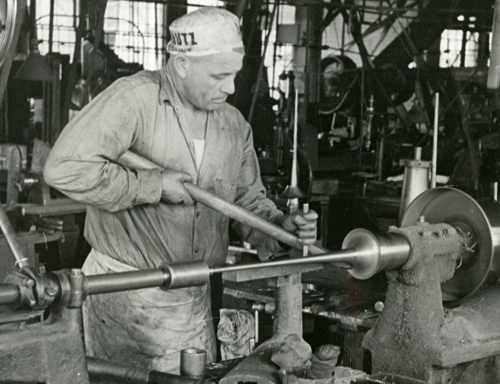
FRANK HOLTON PERFORMED FOR EVERYTHING FROM BARNEM AND BAILEY’S TO SOUSA. AT 40 YEARS OLD, HE USED HIS CONNECTIONS AND KNOWLEDGE AS THE FOUNDATION FOR A BUSINESS.
The Holton manufacturing business started small in 1898 with a trombone lubricating oil. At 40 years old, Holton was a well-connected musician who had played in everything from a small traveling circus to Barnum and Bailey’s and the Sousa band. His fellow musicians found his animal and mineral oil mixture effective, so it became quite popular. Despite this, the first two years of his trombone oil business netted a loss.
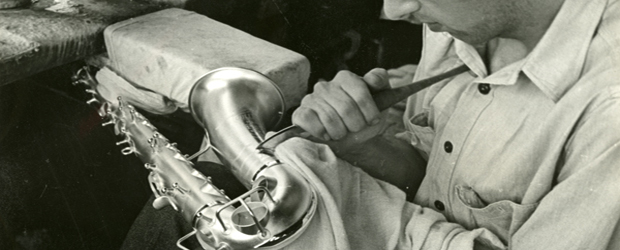
Custom Reeds to Saxophones and More
Once the company saw some financial success, Frank Holton was able to hire an instrument maker to work on an improved trombone. This first trombone built was called the “Holton Special.” Soon the company could hire someone for office work and marketing. When they first published the Holton Harmony Hints catalog in 1904, they had trombones, valve trombones, cornets, and mellophones. The catalog style allowed them to build on Holton’s connections with endorsements from well-known musicians.
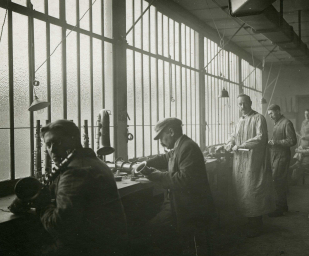
In 1915, Holton built its first saxophones - starting with altos, c-melodies, and tenors. By 1918, the company had outgrown its factory in Chicago. A much larger factory would be established in the small town of Elkhorn, WI, with help from its citizens; this would set Holton up well for the early 1920s when the explosive popularity of the saxophone would bring the company’s income to over half a million dollars for the first time.
The 1920s was an era of change in music, strongly influenced by the development of radio broadcasted music and the progressive education movement. As electives were introduced to the curriculum of many schools, music programs began to develop in schools across the country. Holton created a plan to sell instruments to school bandmasters and superintendents. Their guarantee was that the newly formed band would have “a playing band within twelve weeks” or they would take back all the instruments and refund all payments. This would also lead to their Collegiate line of saxophones whose instruments aimed to be less expensive to produce and purchase, but still of a high build quality.
At the same time, since people could now listen to the radio, the heyday of the professional band would soon be over and there would be fewer jobs for professionals as your average person no longer needed to go to a live performance to hear music. Between this and the poor handling of the Rudy Wiedoft model saxophone in the 1930s (While Frank Holton was on temporary leave due to poor health, the manager of Frank Holton and Company reneged on the agreement to pay Wiedoft a stipend to advertise and play the instrument for 6 to 10 weeks a year by developing the very similar Revelation model and refusing to continue the stipend with the saxophonist. This had to be adjudicated in court.), the company would face significant losses on their professional line saxophones. These losses would help push Holton to focus on their student line instruments.
In 1942 Frank Holton passed away at age 84. After his death, ownership of the company passed to a long-time employee. Although there continued to be improvements, such as standardizing dimensions for keys and key spacing to expedite saxophone assembly in 1956, Frank Holton and Company did not make many major industry-changing advancements after the founder’s death, largely due the difficulty of manufacturing non-essentials during World War II. In 1964, the company was sold to Leblanc, which would later be sold to Conn-Selmer. It is still possible to buy Holton-brand French horns, baritones, euphoniums, and tubas through Conn-Selmer.
History of Holton
From meager beginnings to the entrapment of corporate takeovers, the Frank Holton Company's rise and fall mirrors that of most of the major American band instrument makers.
Coming Soon