The pitch that a musical instrument produces is primarily determined by the length of the vibrating element. On stringed instruments, it is the effective length of the string. Wind organs have lengths of tubing and brasswinds have tubing of varying lengths that are changeable either by redirecting air through other tubes via the valves or sliding the tubes themselves. When playing a woodwind instrument, the opening and closing of the keys determine the cutoff length of the pressure wave inside the instrument. More open keys mean a shorter wave and higher pitch, conversely more closed keys mean a lower pitch.
When “tuning up” a saxophone, the usual method to alter the overall effective length of the vibrating pressure wave inside of the tube is to move the mouthpiece further on or off of the neck. While this method alters the length of the wave, it also alters the overall volume of the saxophone’s bore. A saxophone is a conical-bored instrument. It is, however, a truncated cone, which is to say that the top end of the instrument is an incomplete cone terminating before coming to a point. In order to complete the cone, the internal volume of the mouthpiece should hypothetically match the missing volume of the cone.
That hypothetical volume matching creates an issue when tuning the saxophone via the usual push-on/pull-off method: not only is the instrument’s length altered, the mouthpiece volume is also altered. As the neck enters the mouthpiece, it reduces the chamber volume and the opposite happens as it is pulled out.
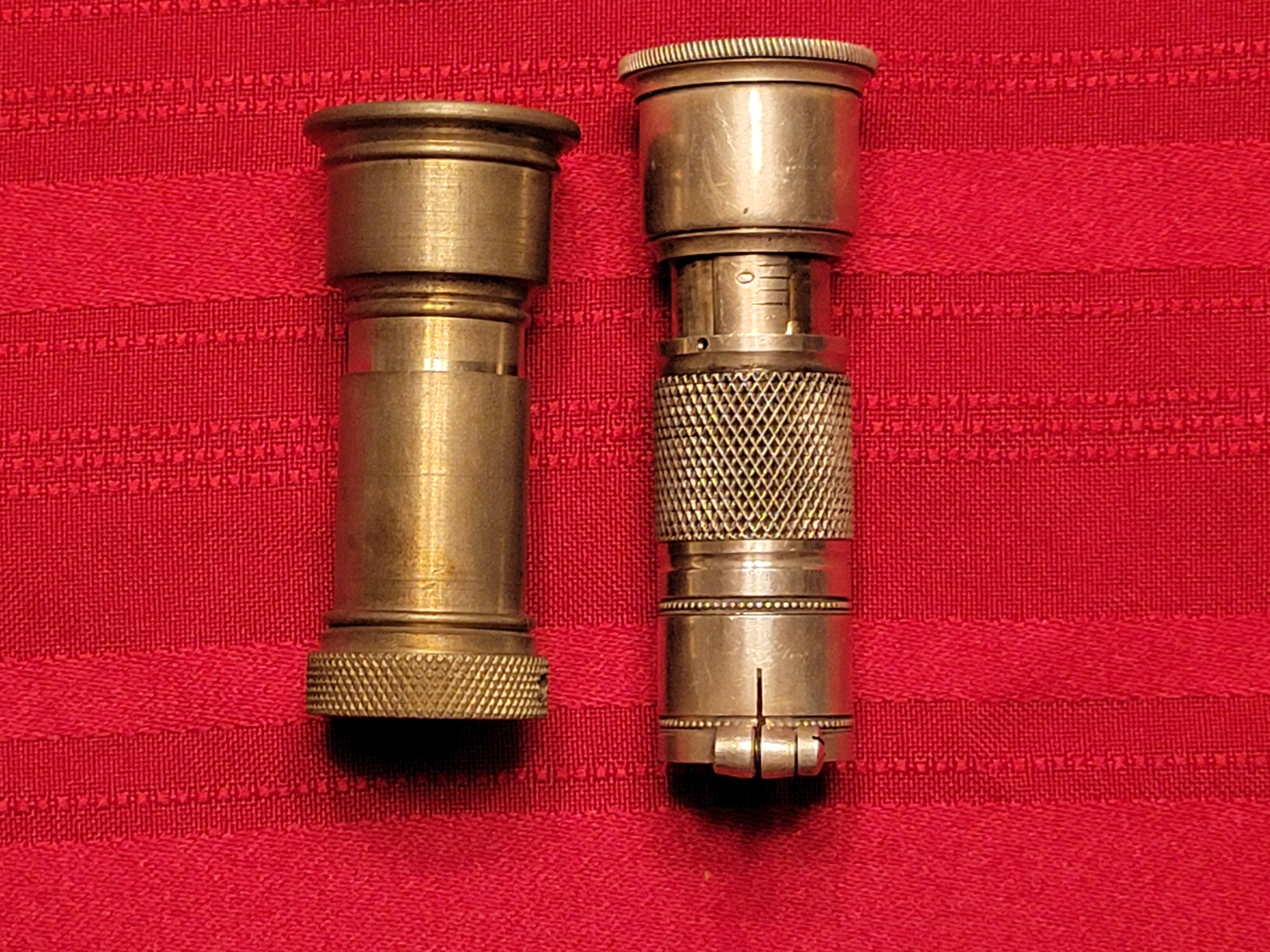
While this usual method is functional enough that practically all saxophonists use it to tune their instruments, the altering of the mouthpiece’s bore can cause some tuning issues between the octaves of the instrument or at the extreme ends of the instrument’s range, or can cause other issues such as uneven response across the range of the instrument and inconsistent timbre. What most microtuner devices do, in effect, is to make the volume of the mouthpiece a constant and to vary the effective length of the neck tube itself.
Saxophone necks that feature a microtuner have a length of the neck shaped as a cylinder rather than a cone. On the Conn style tuners, the cylindrical section happens inside of the large twisty bit and the end of the neck whereupon the mouthpiece is affixed is a rather abrupt cone. Others treat the last inch and a half or so of the neck as a cylinder such that a concentric piece of tubing can be slid in and out much like a tuning slide on a brasswind.



![The [De]Evolution of the Buescher “400” Alto Saxophone](https://nationalsaxophonemuseum.com/pub/media/mageplaza/blog/post/resize/400x/4/0/400_blog_header.jpg)

