
Buescher "400" 307538




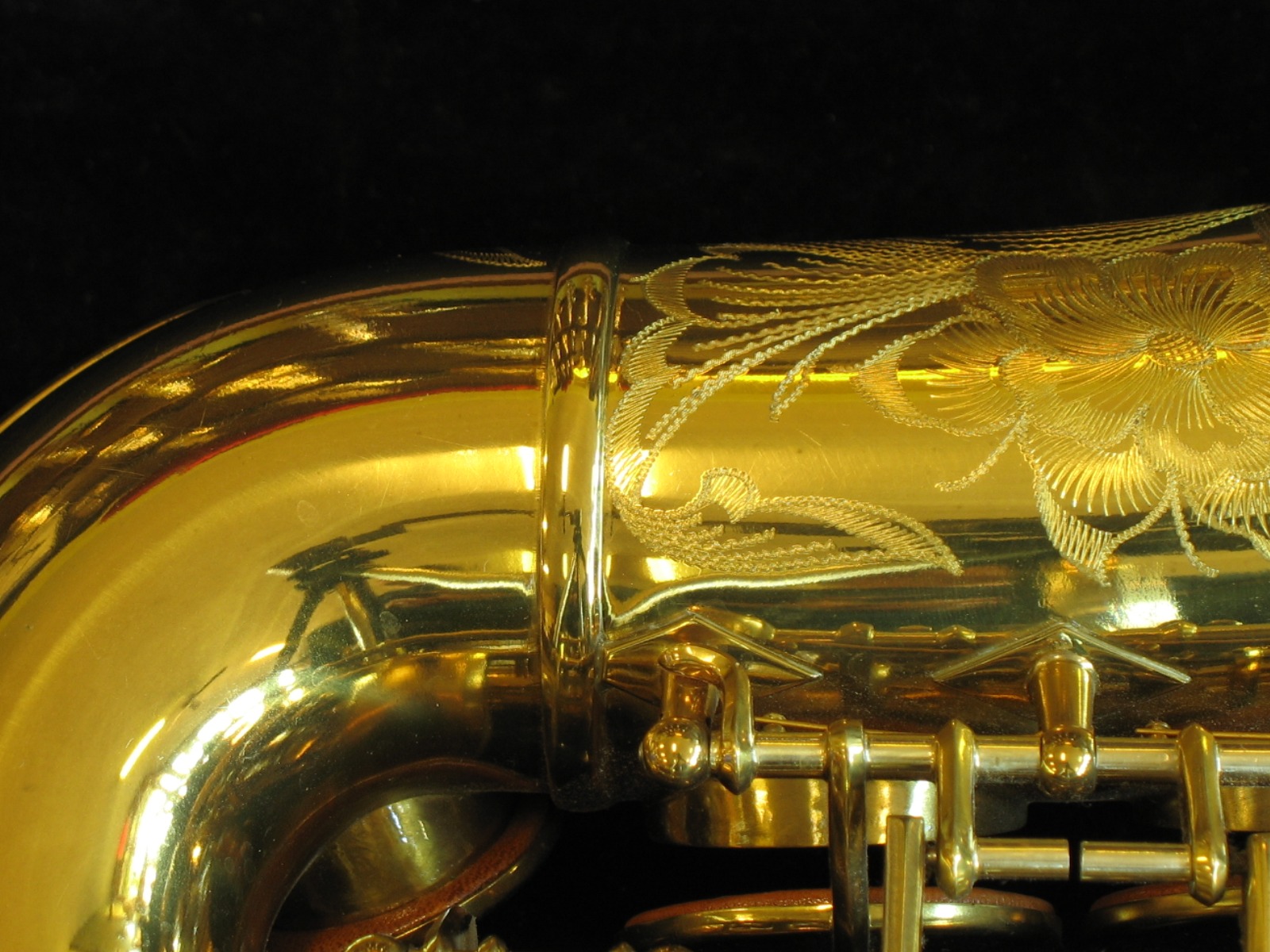

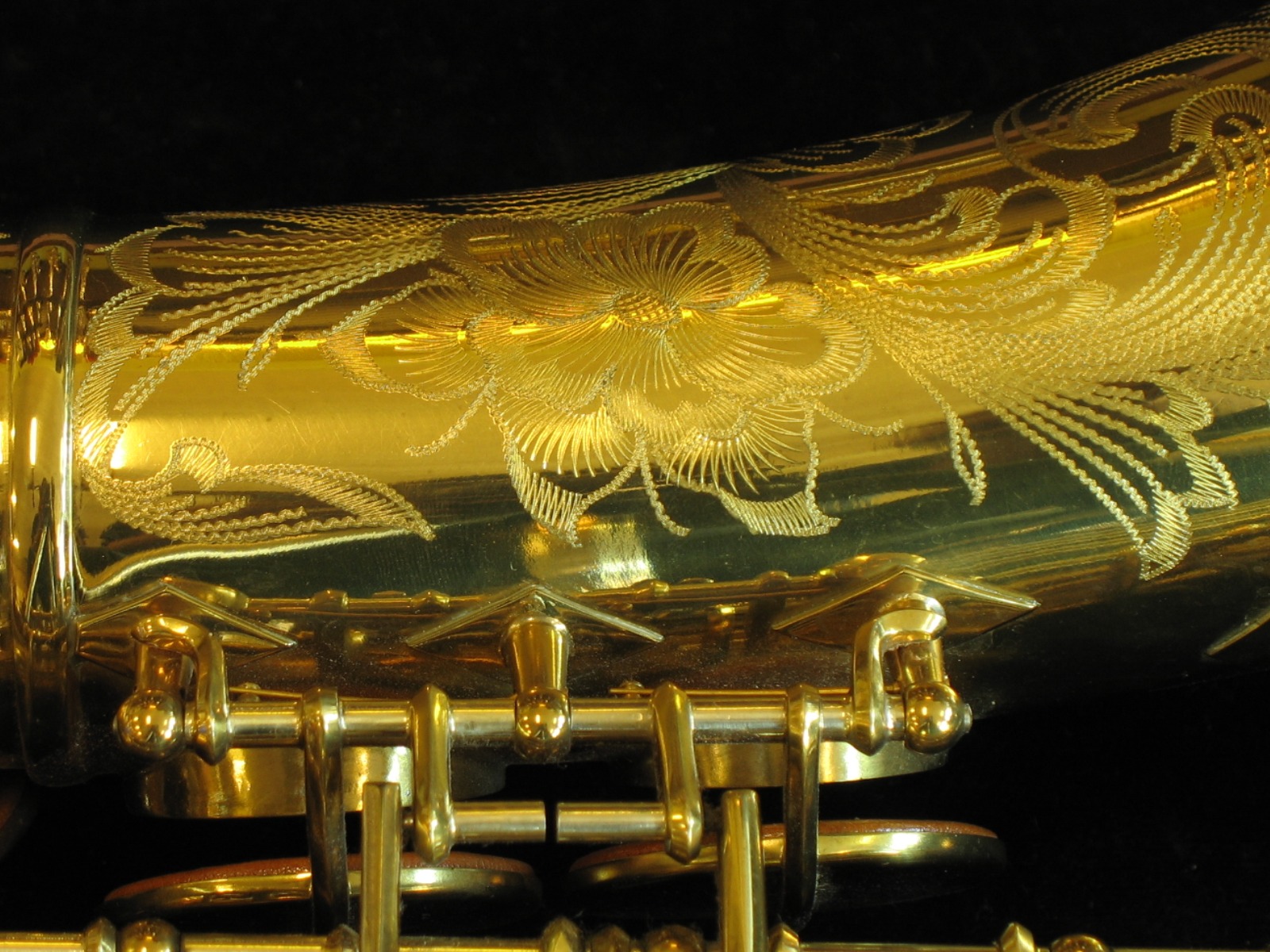
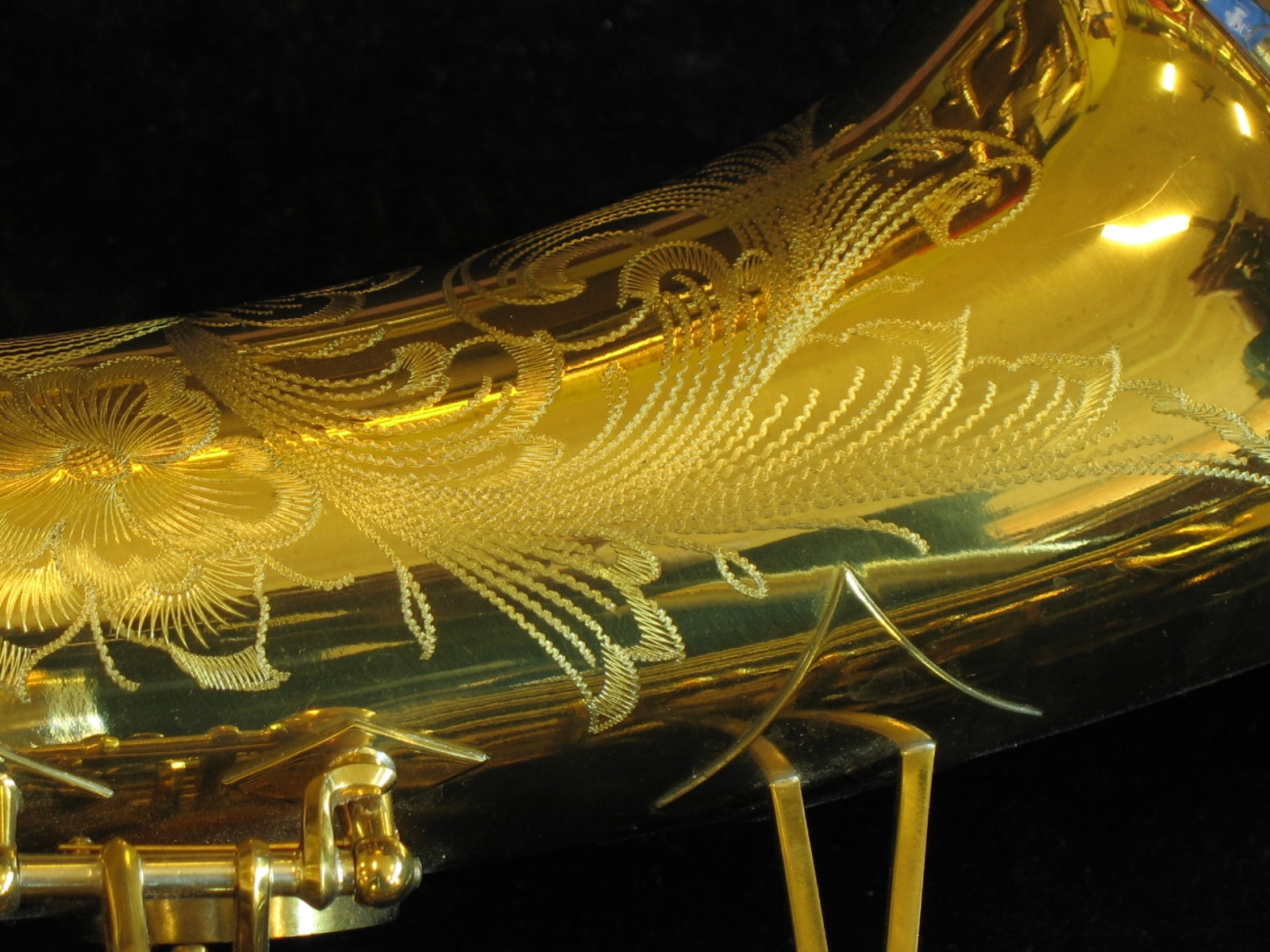
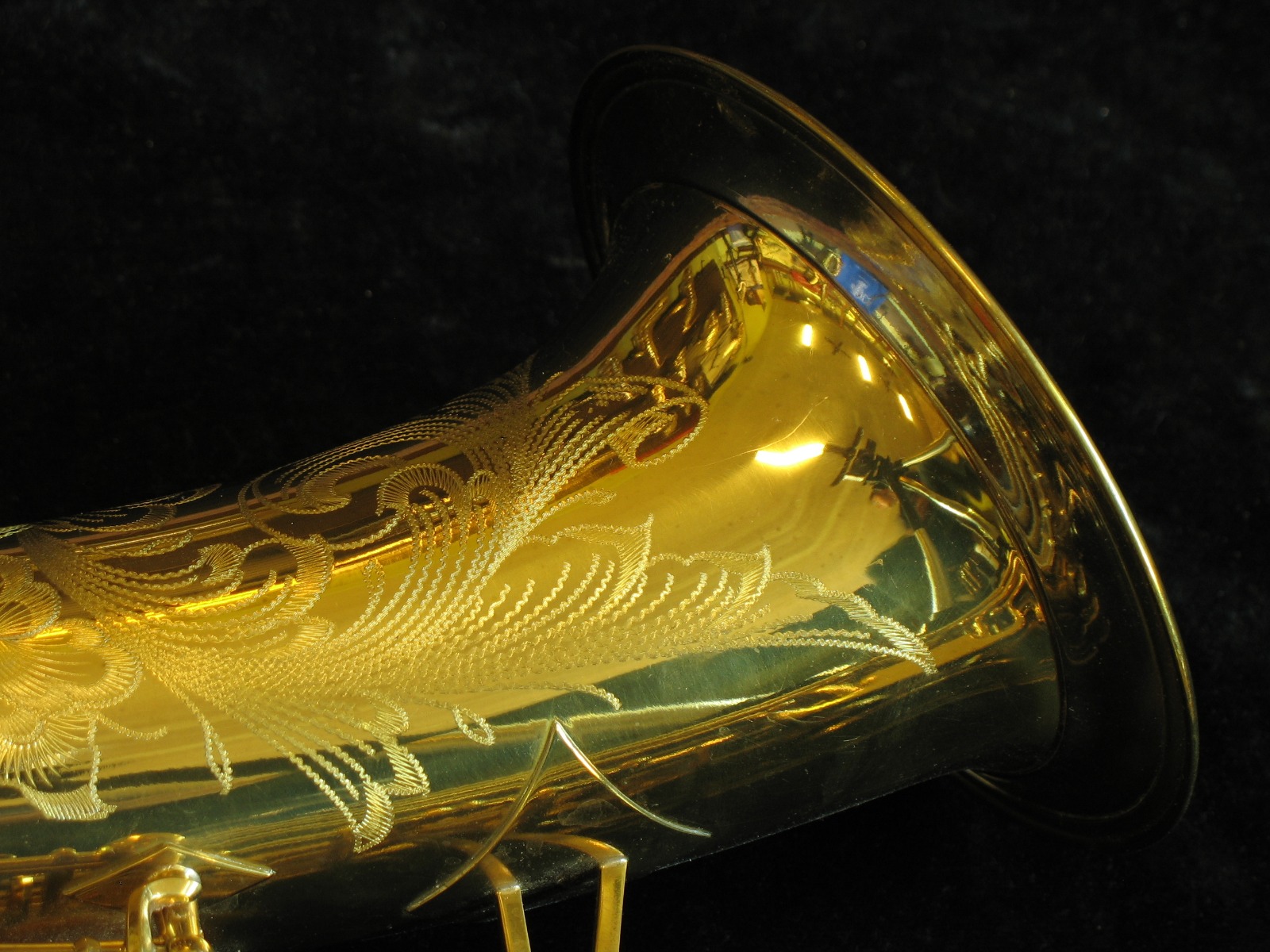


Buescher
SUMMARY: The Buescher “400” model B-7 was Buescher’s top-of-the-line alto saxophone from 1942 until 1955. It is well known for its behind-the-bell keys and “Top Hat and Cane” engraving.
COLLOQUIAL NAMES: 400, Super 400, Top Hat and Cane, TH&C
DATE: 1947
MANUFACTURER: The Buescher Band Instrument Company
PRODUCTION LOCATION: Elkhart, IN, United States
PRODUCT LINE: "400"
MODEL: B-7
TYPE: Alto
SERIAL NO.: 307538
FINISH: Lacquer, "Finish AG"
CATALOG NO.: BR307538EbAC
PROVENANCE:
On Loan From 
History
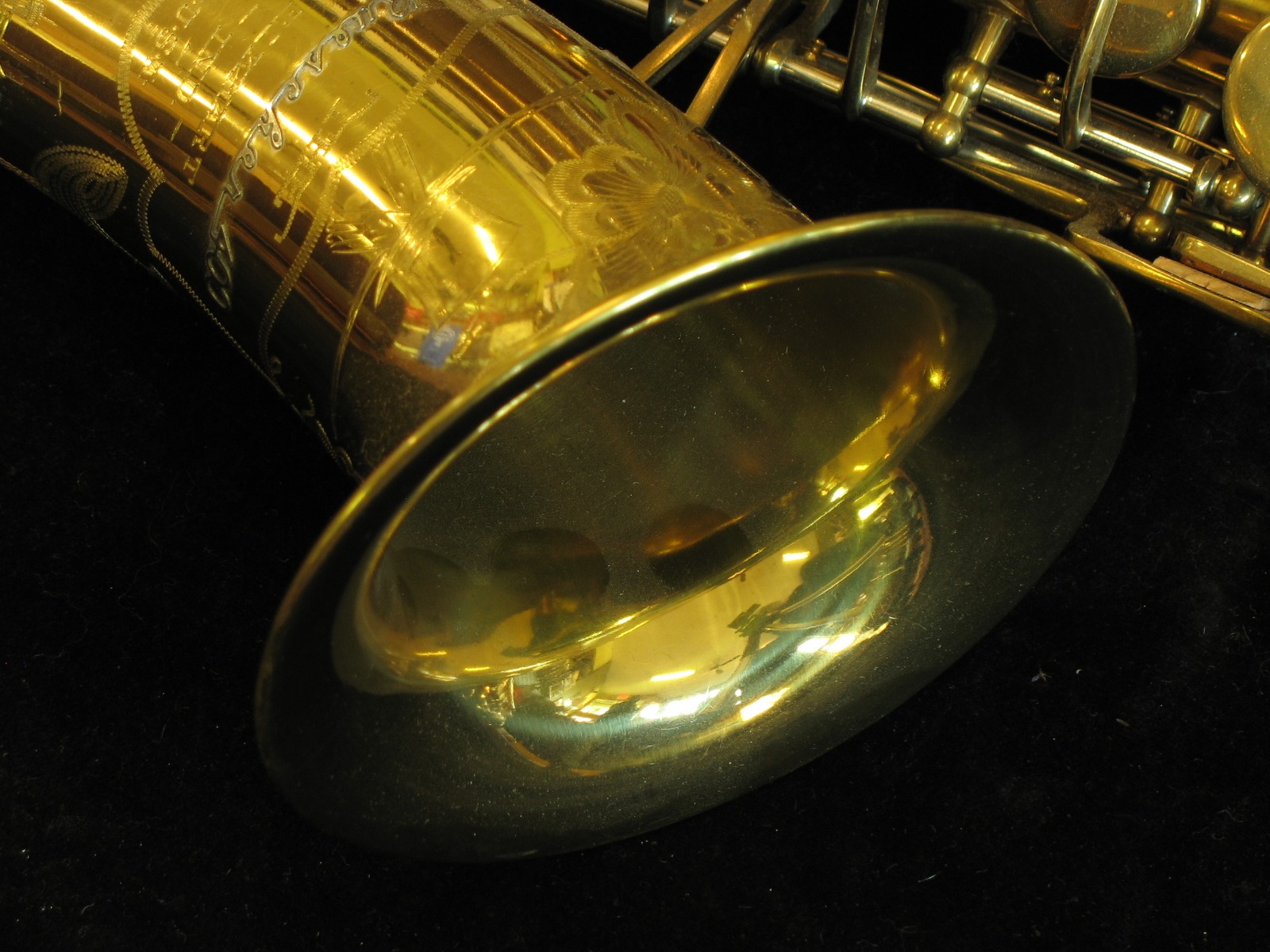
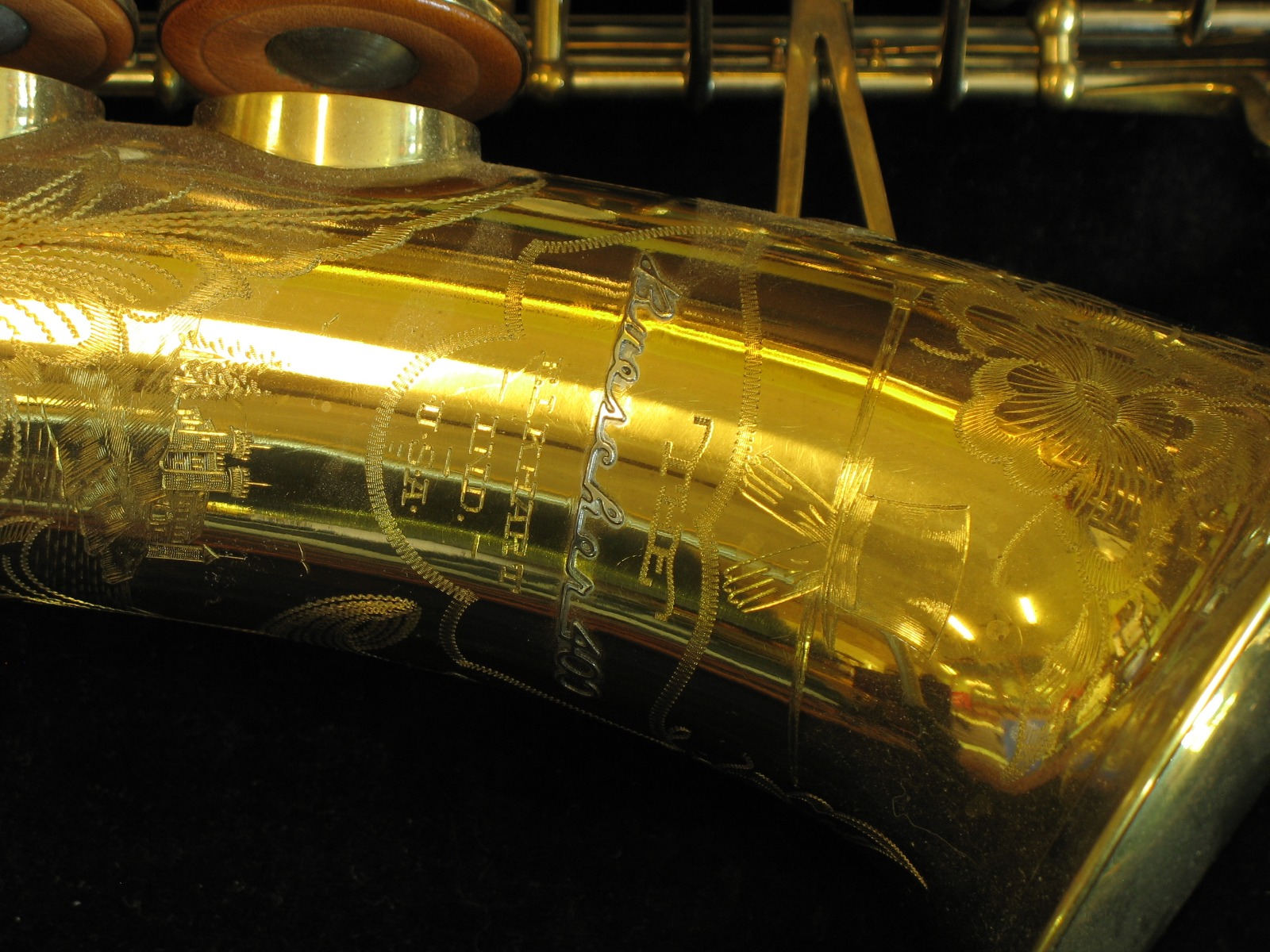
The “400” commonly known as the “Top Hat and Cane” (due to the engraving on the bell) was the Buescher Band Instrument Company’s highest quality line of saxophones. Beginning development in the mid 1930s, the “400” saxophones were debuted to the public in early 1942. This line of saxophones included numerous mechanical improvements and modernizations over Buescher’s Aristocrat line of saxophones. Artists who used the Buescher “400” saxophones include Johnny Hodges, Herb Geller, Shep Fields, Dave Young, and Sigurd Rascher.
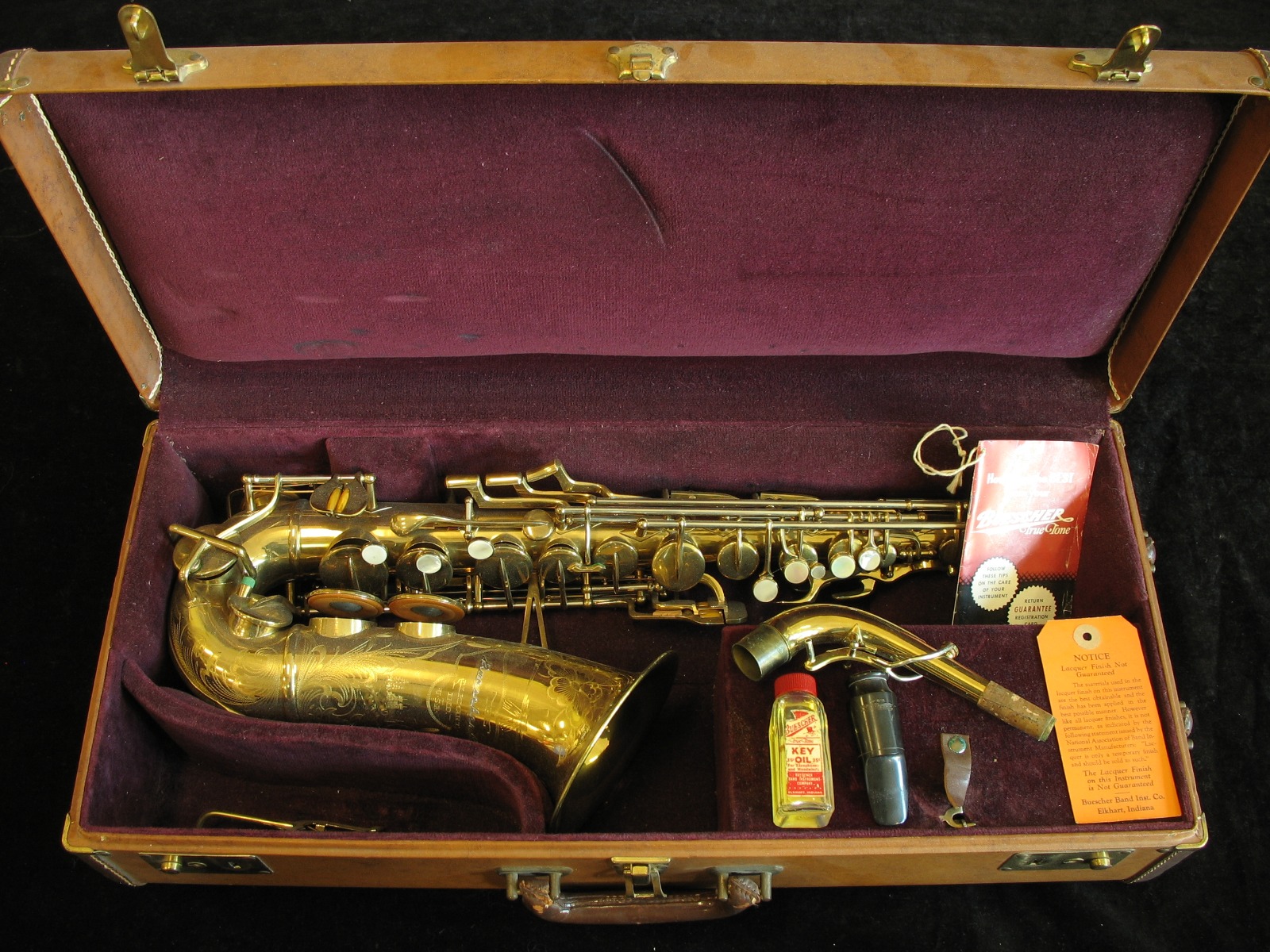
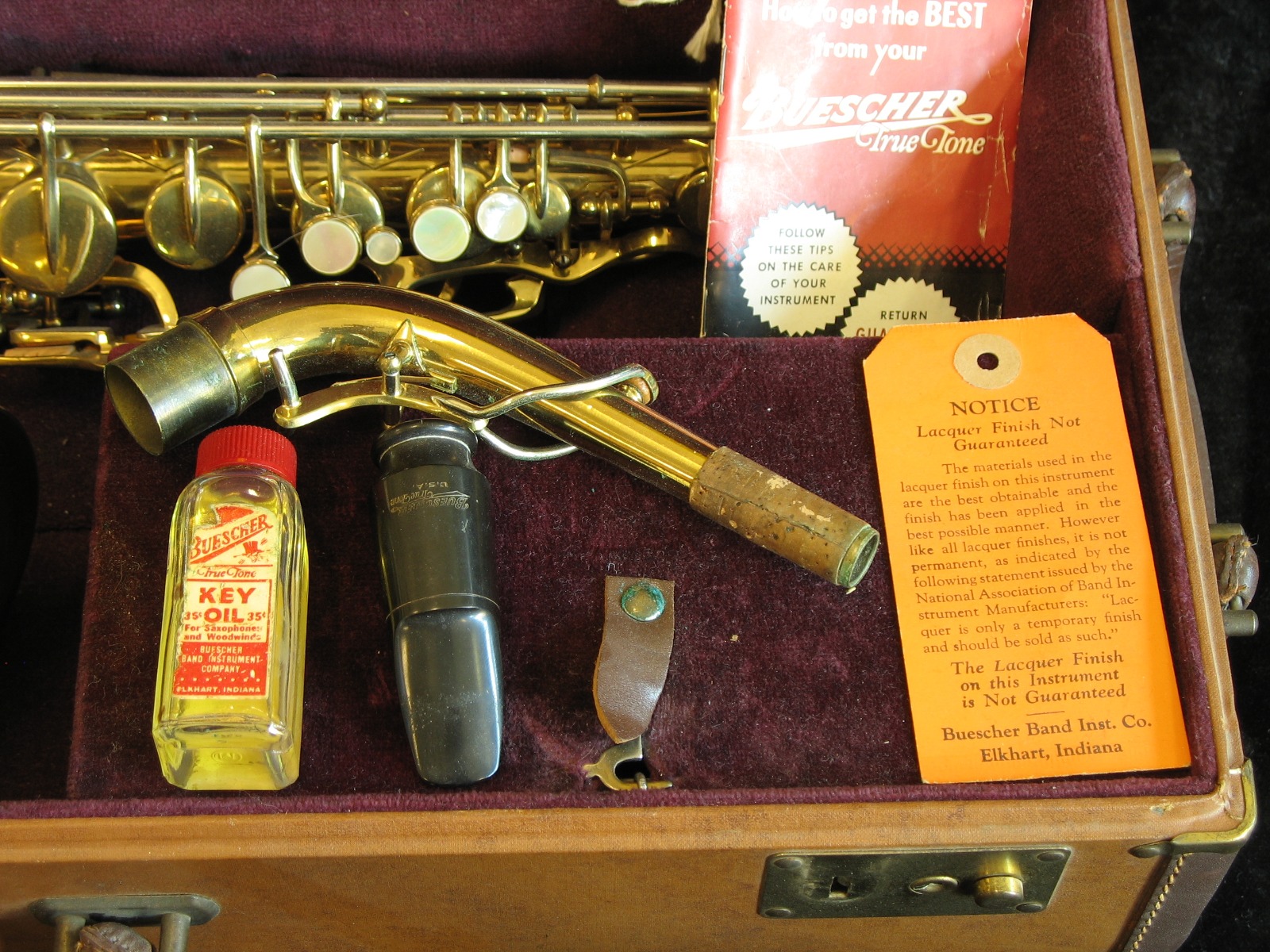
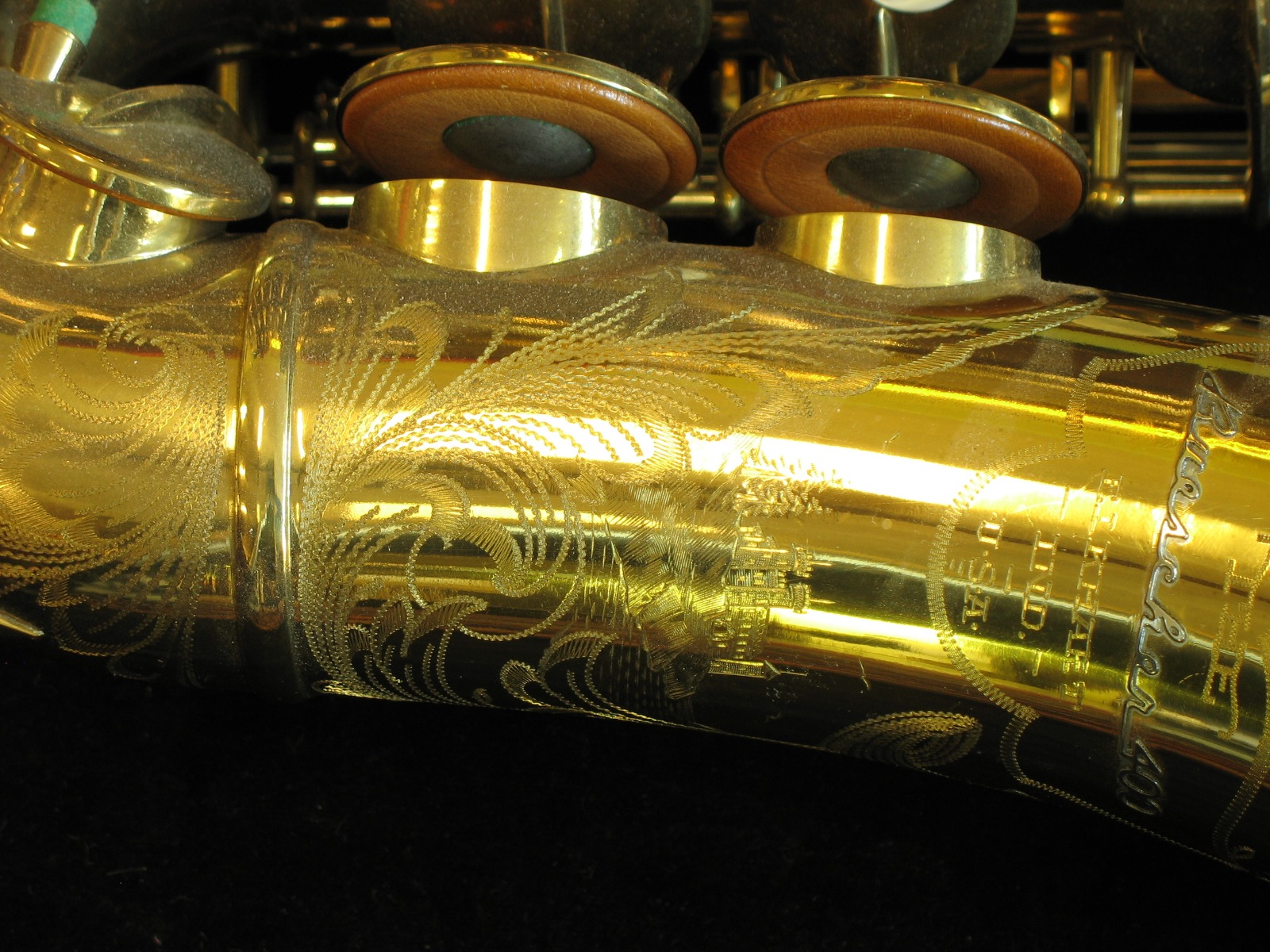
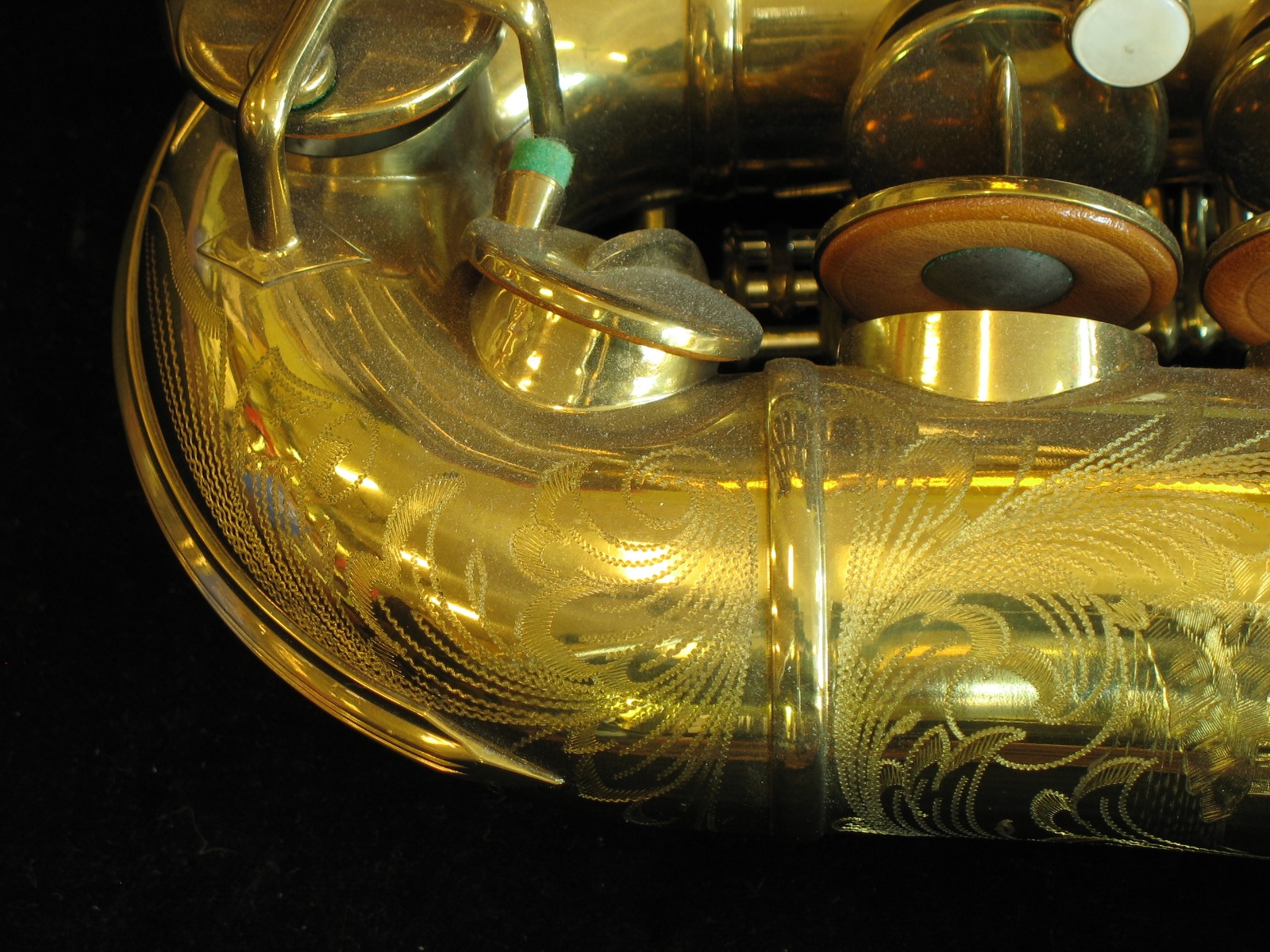
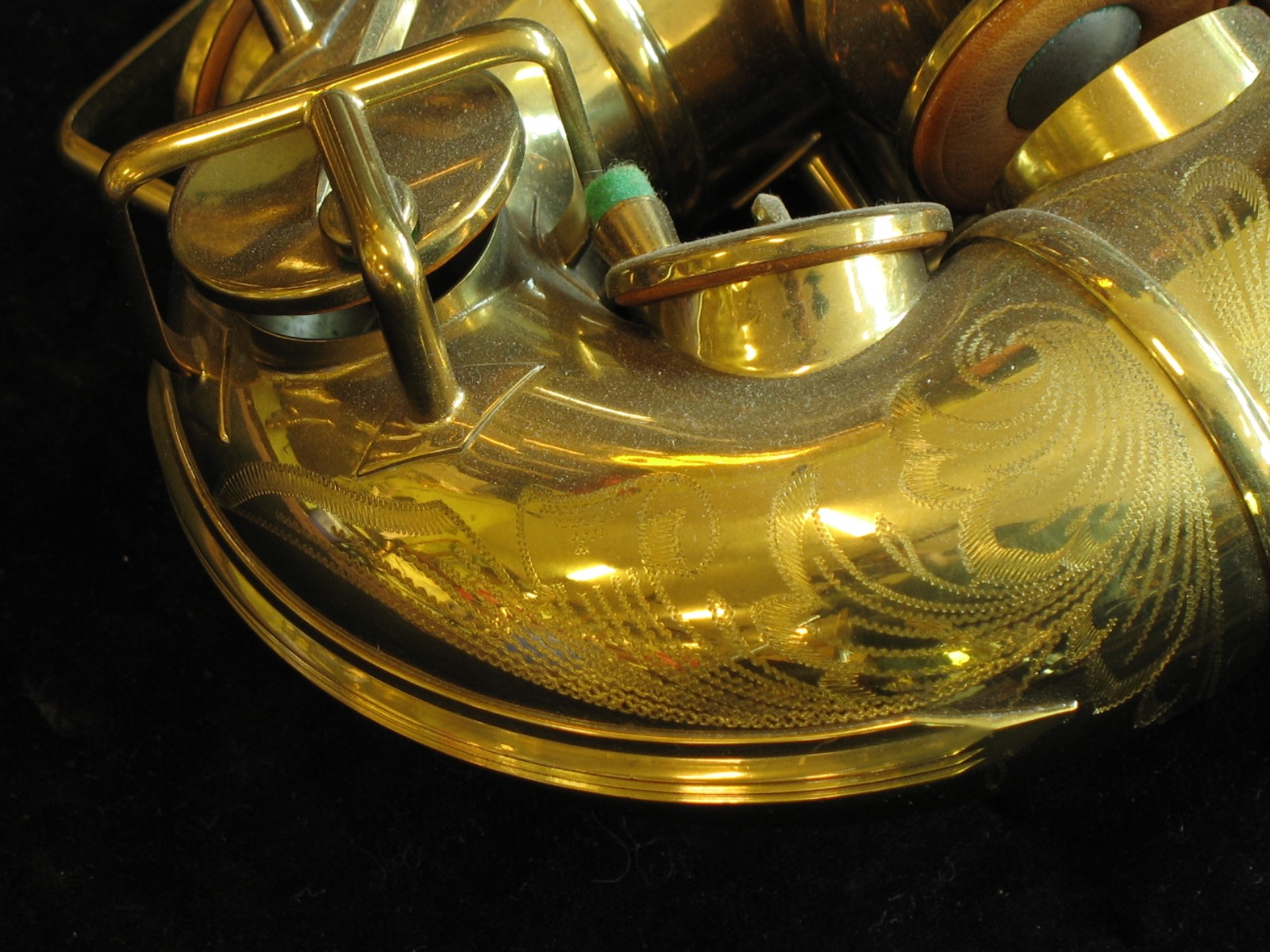
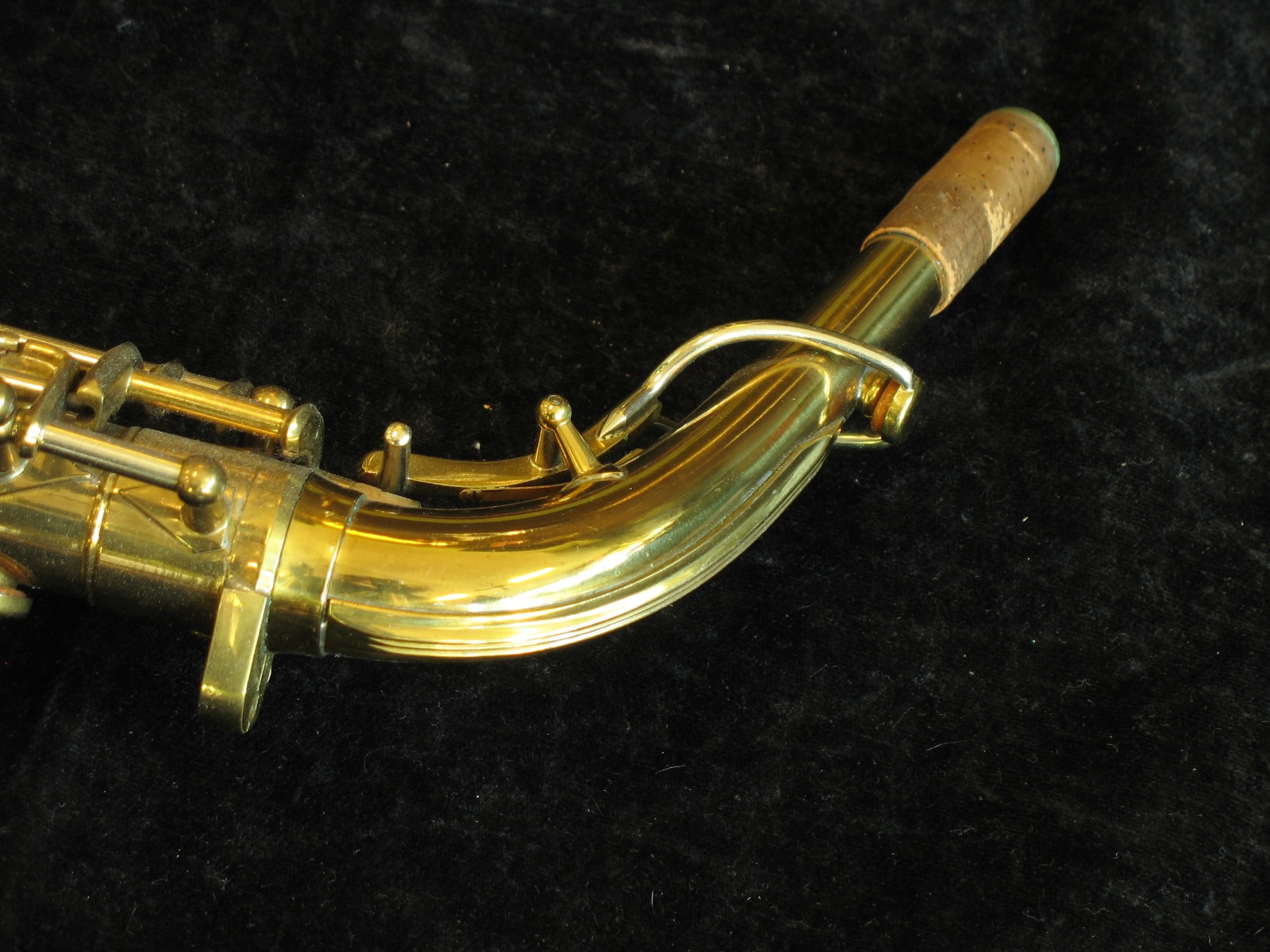
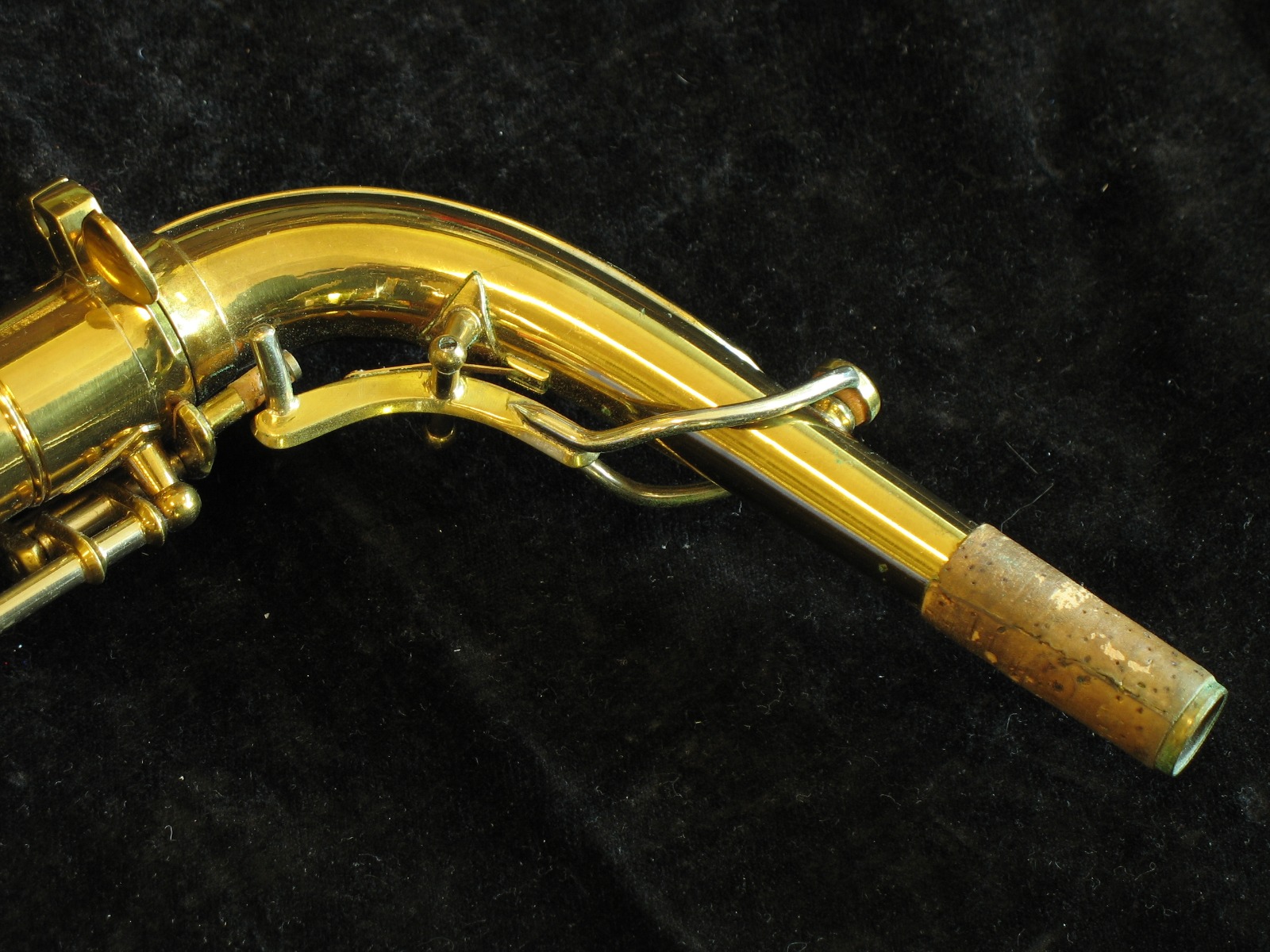
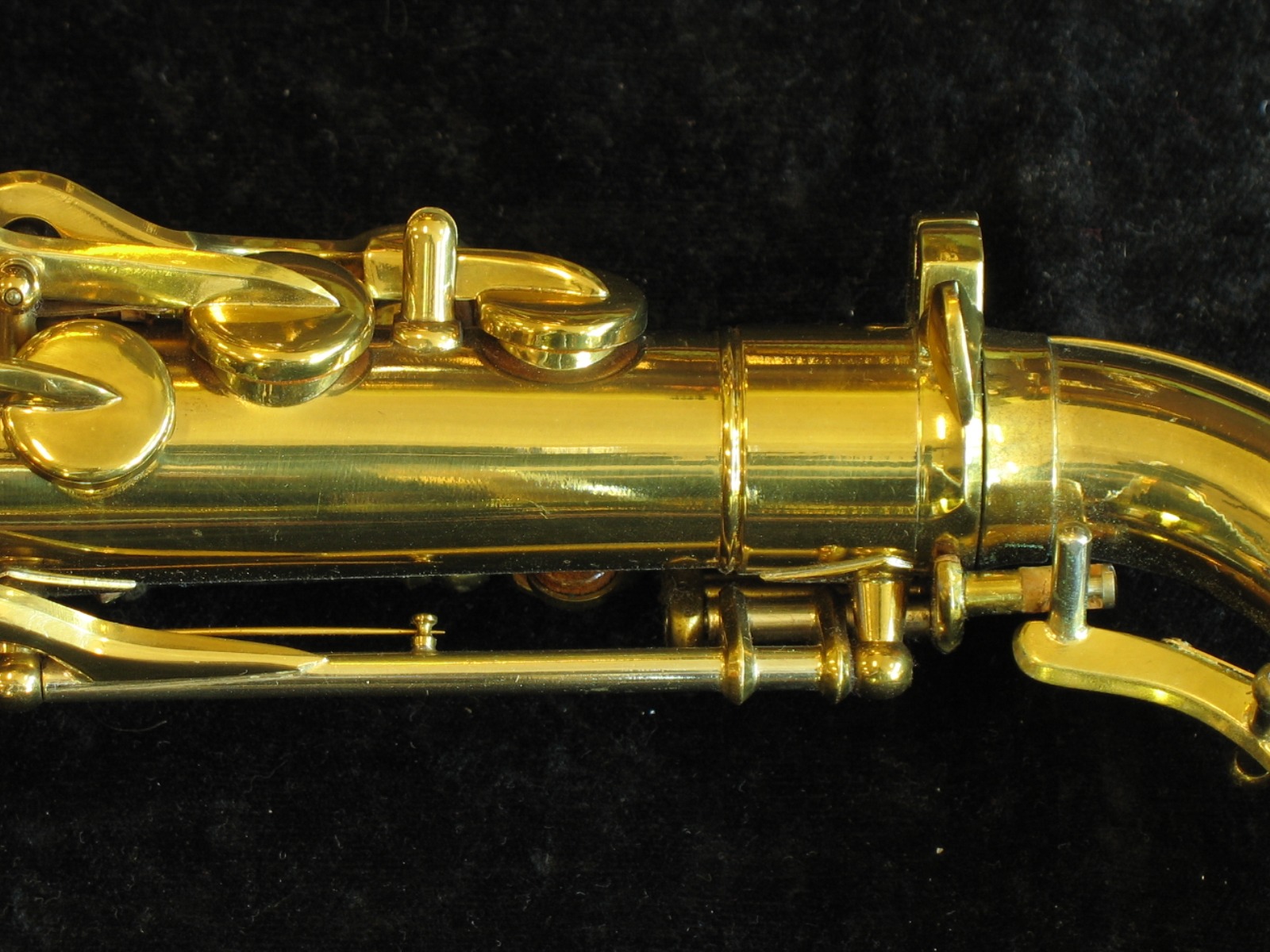
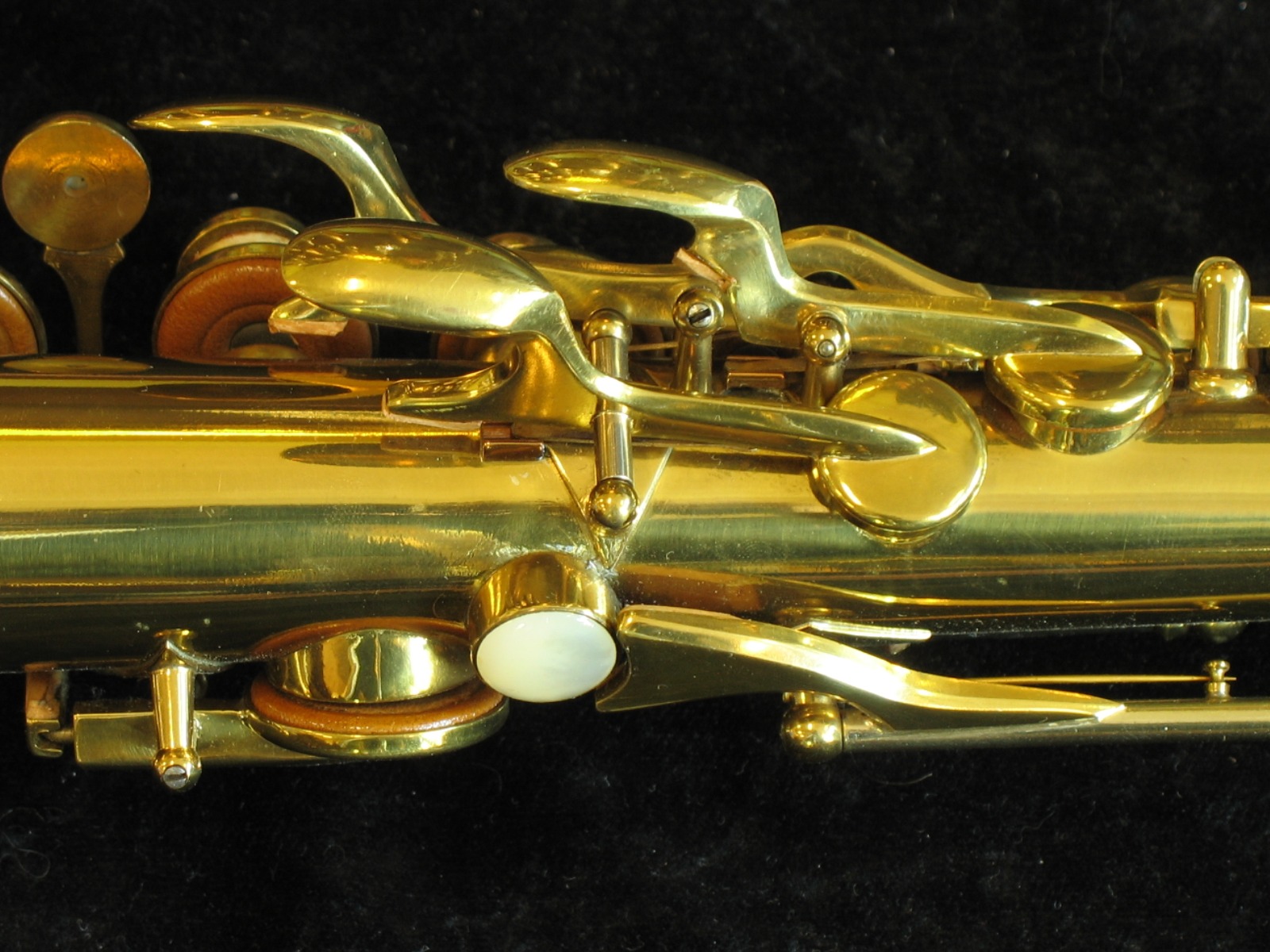
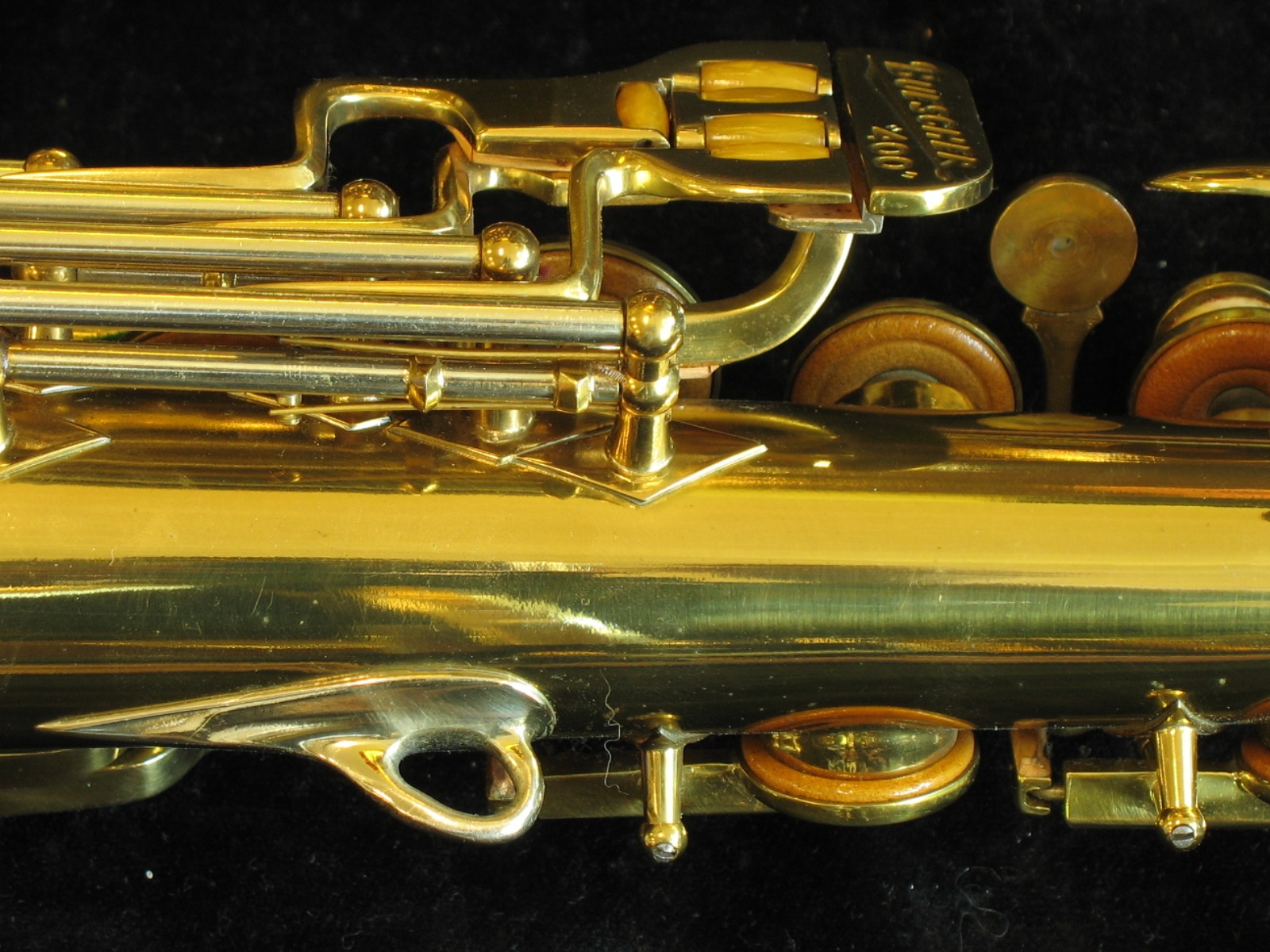
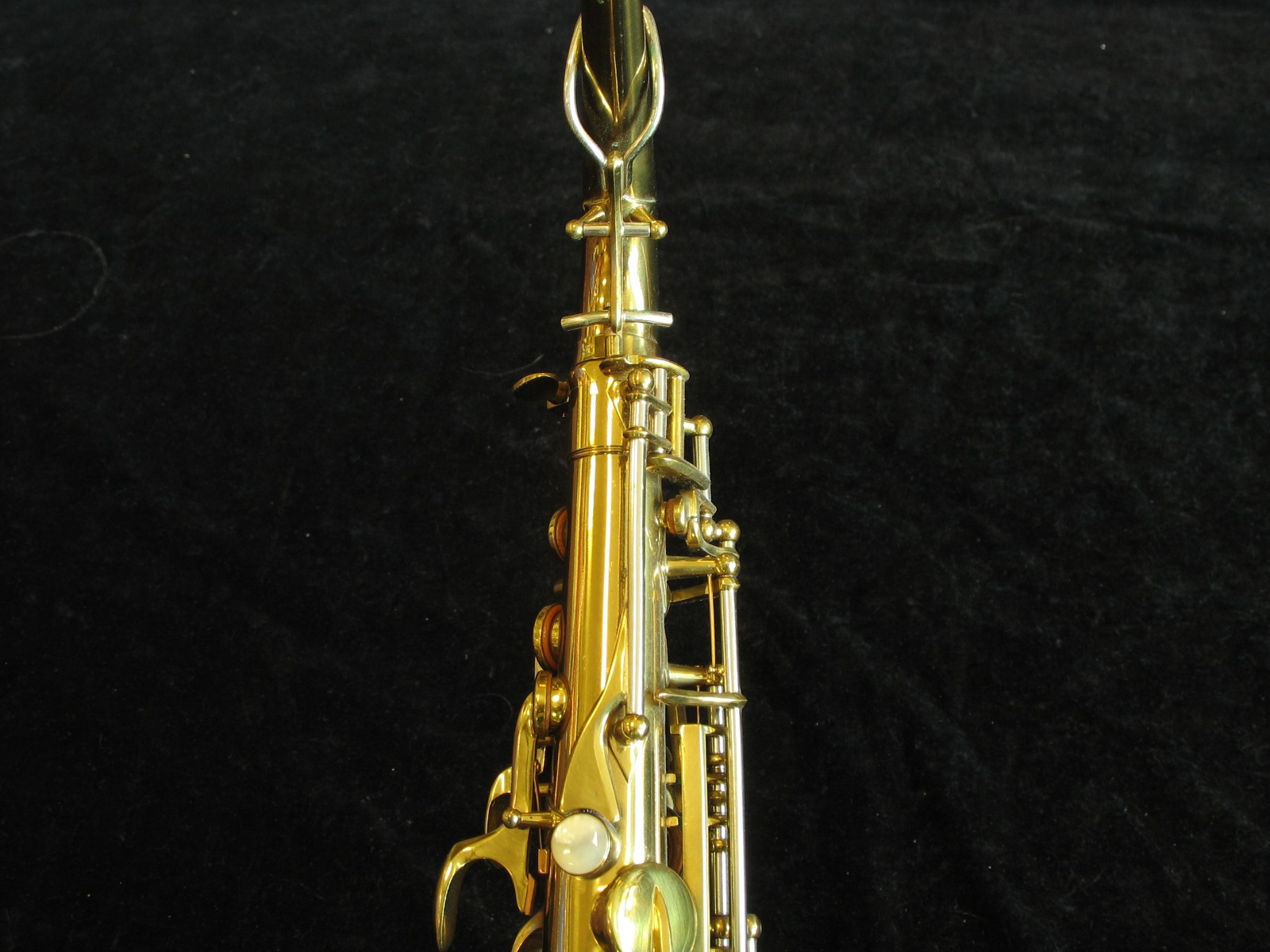
This example retains its factory original lacquer, pads, springs, and Snap-On Resonators. It is in its original case and most of the original accessories accompany it.
Features
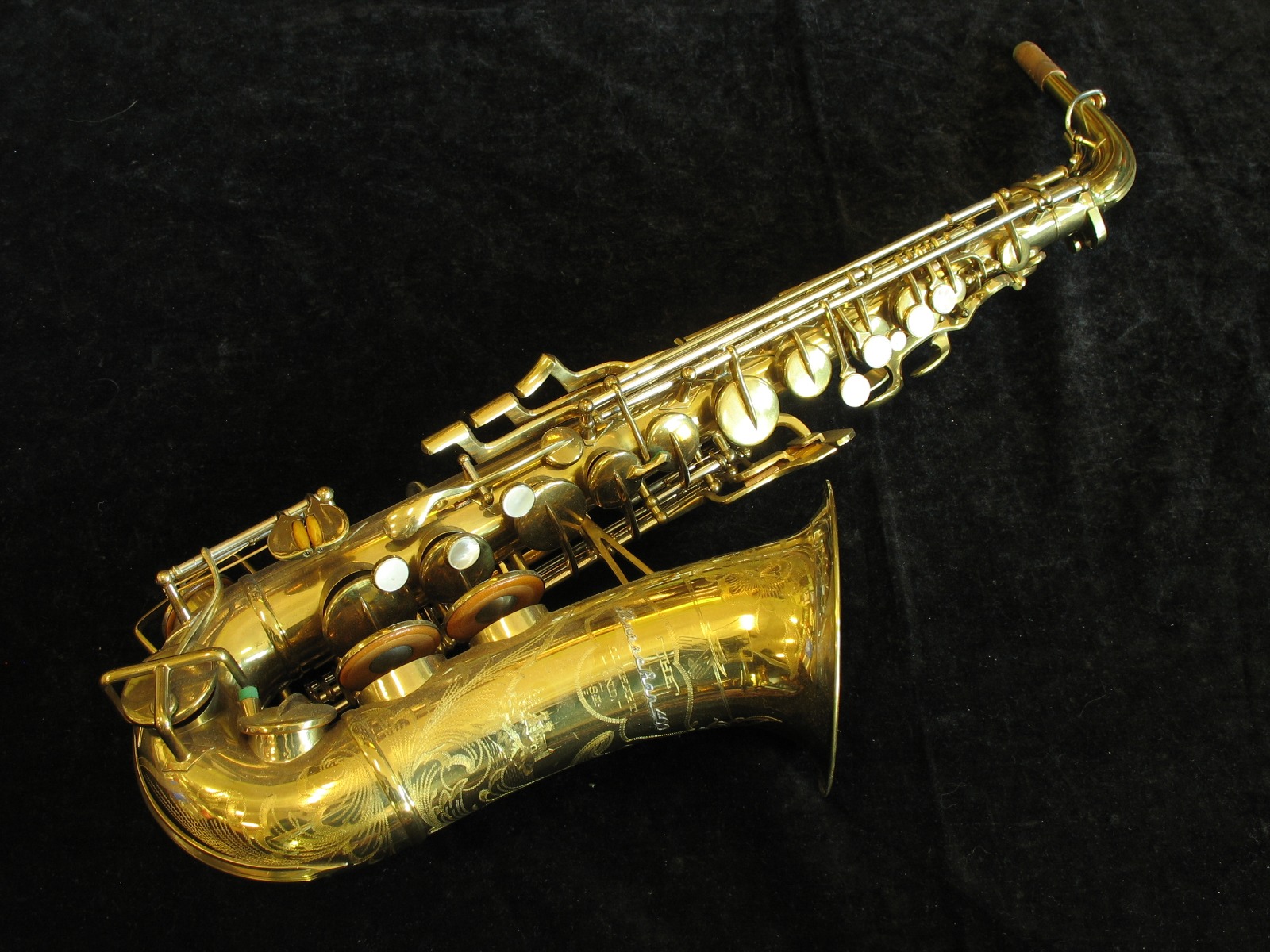
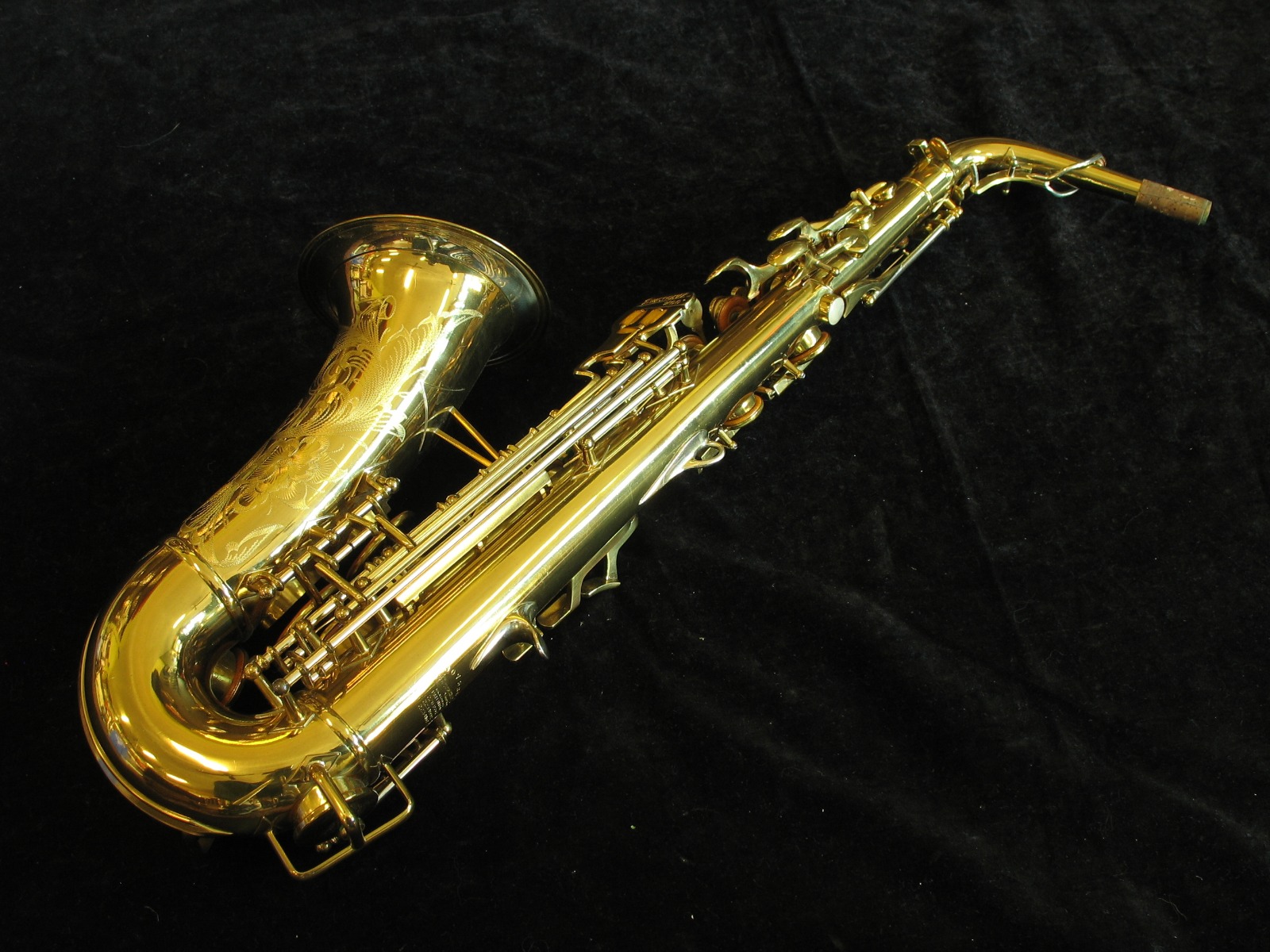
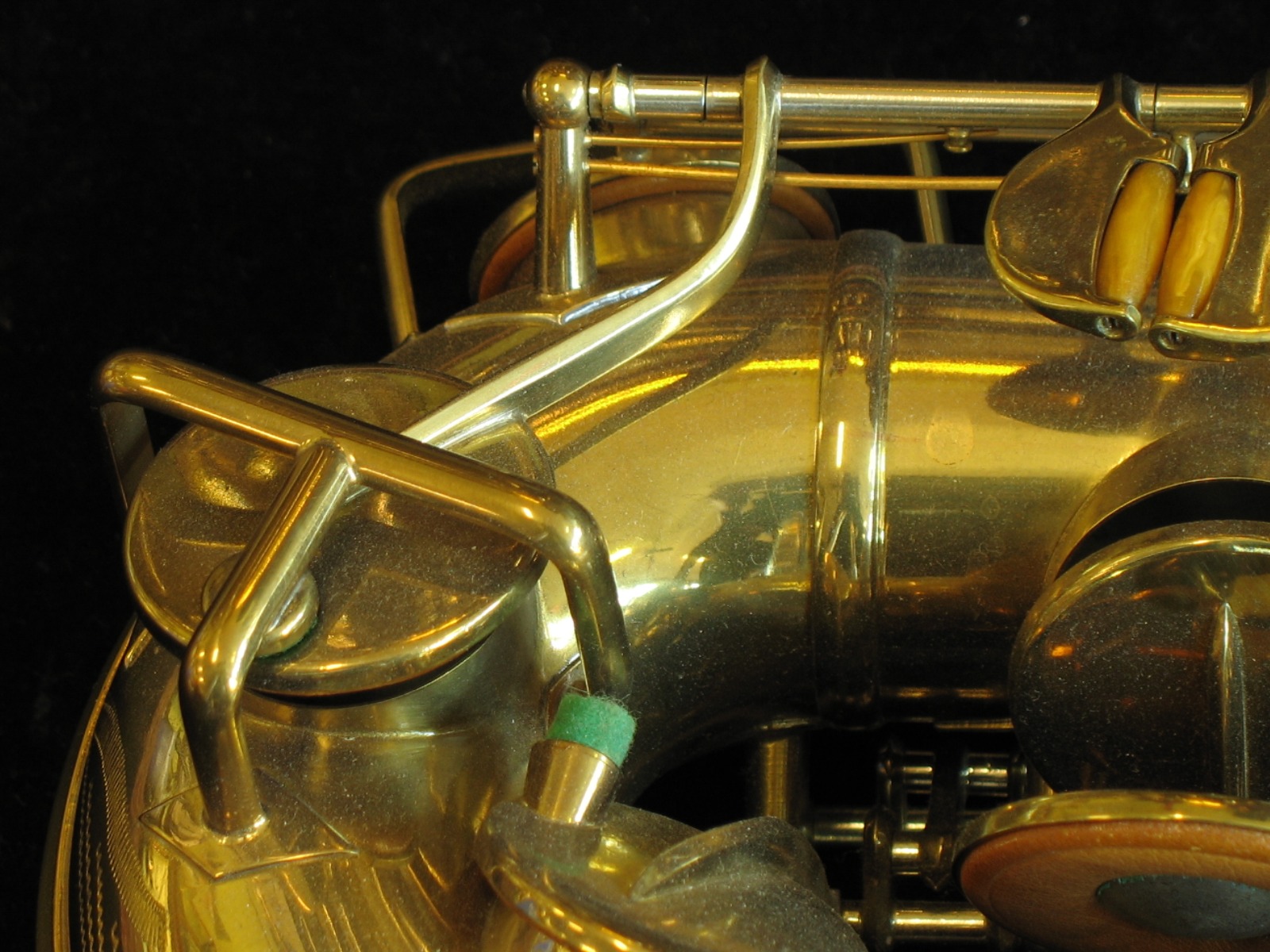
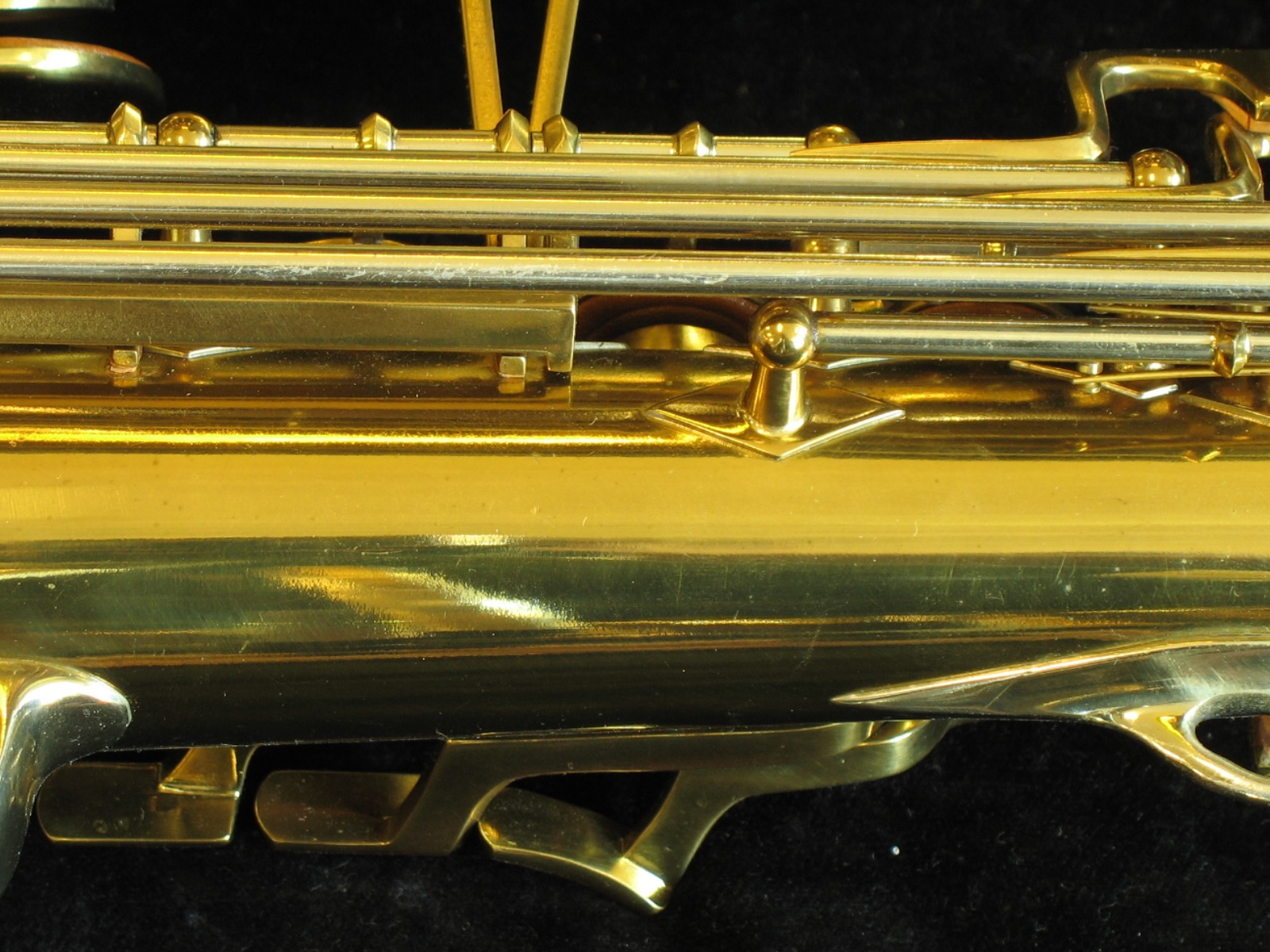
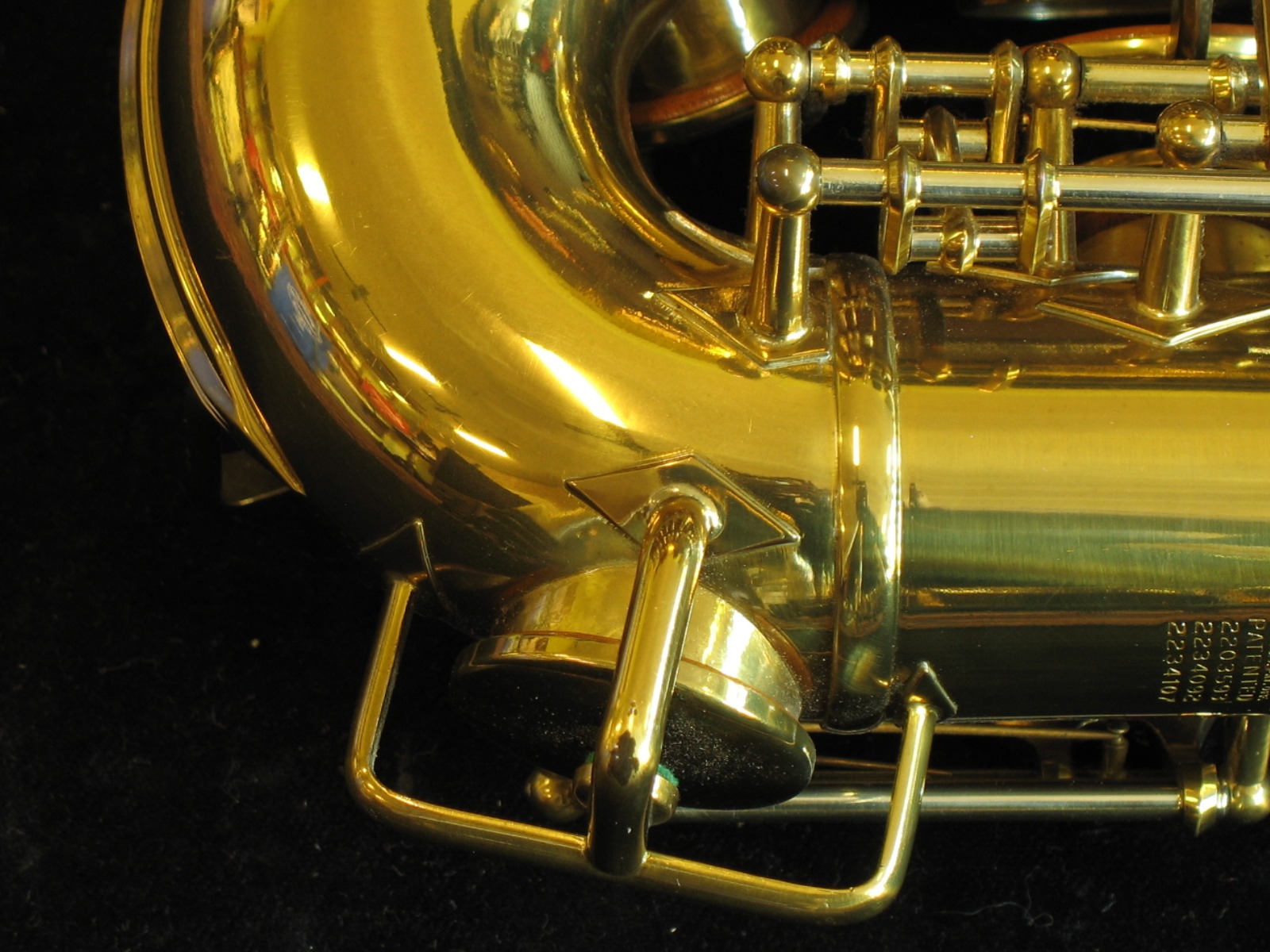
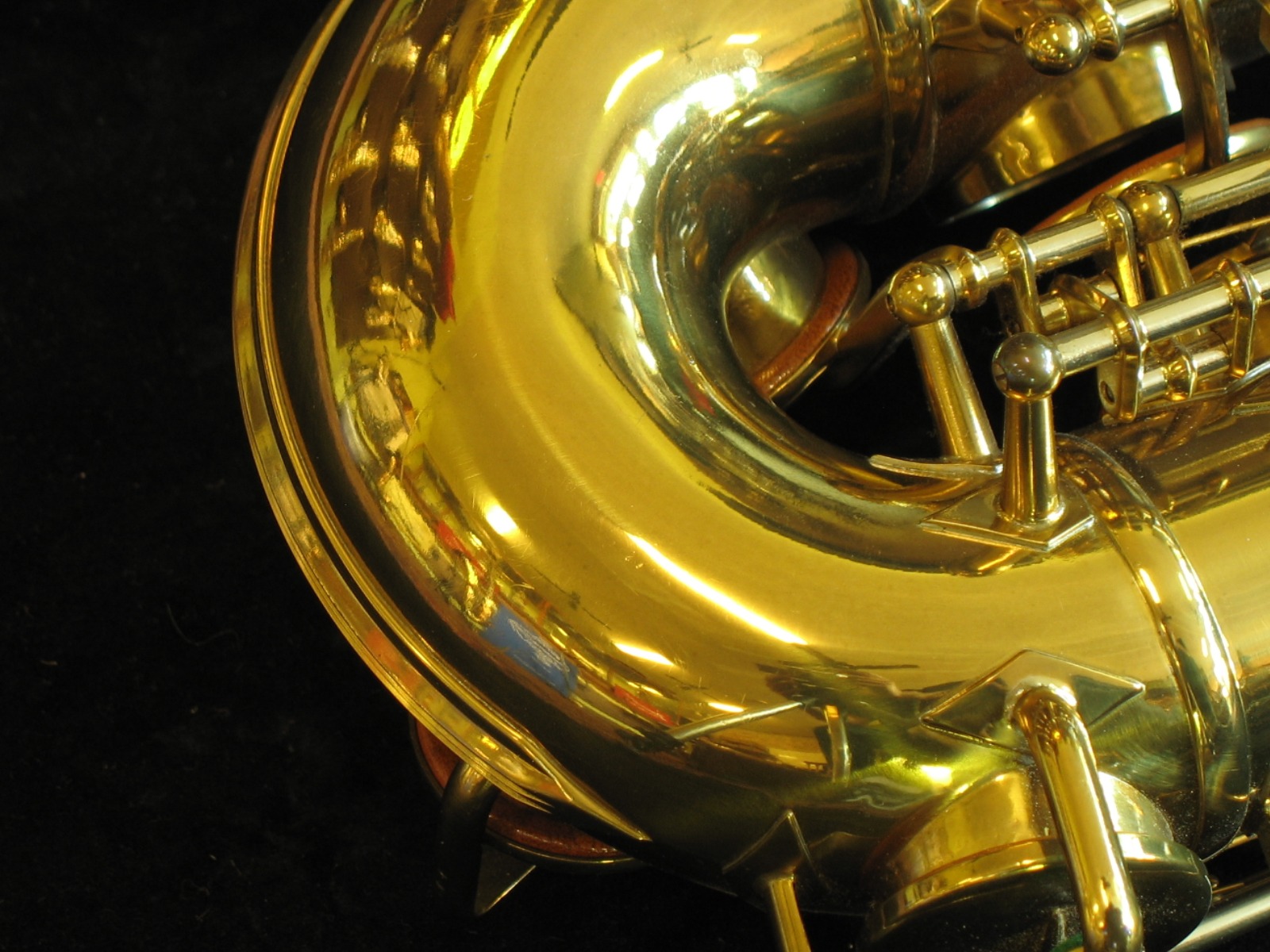
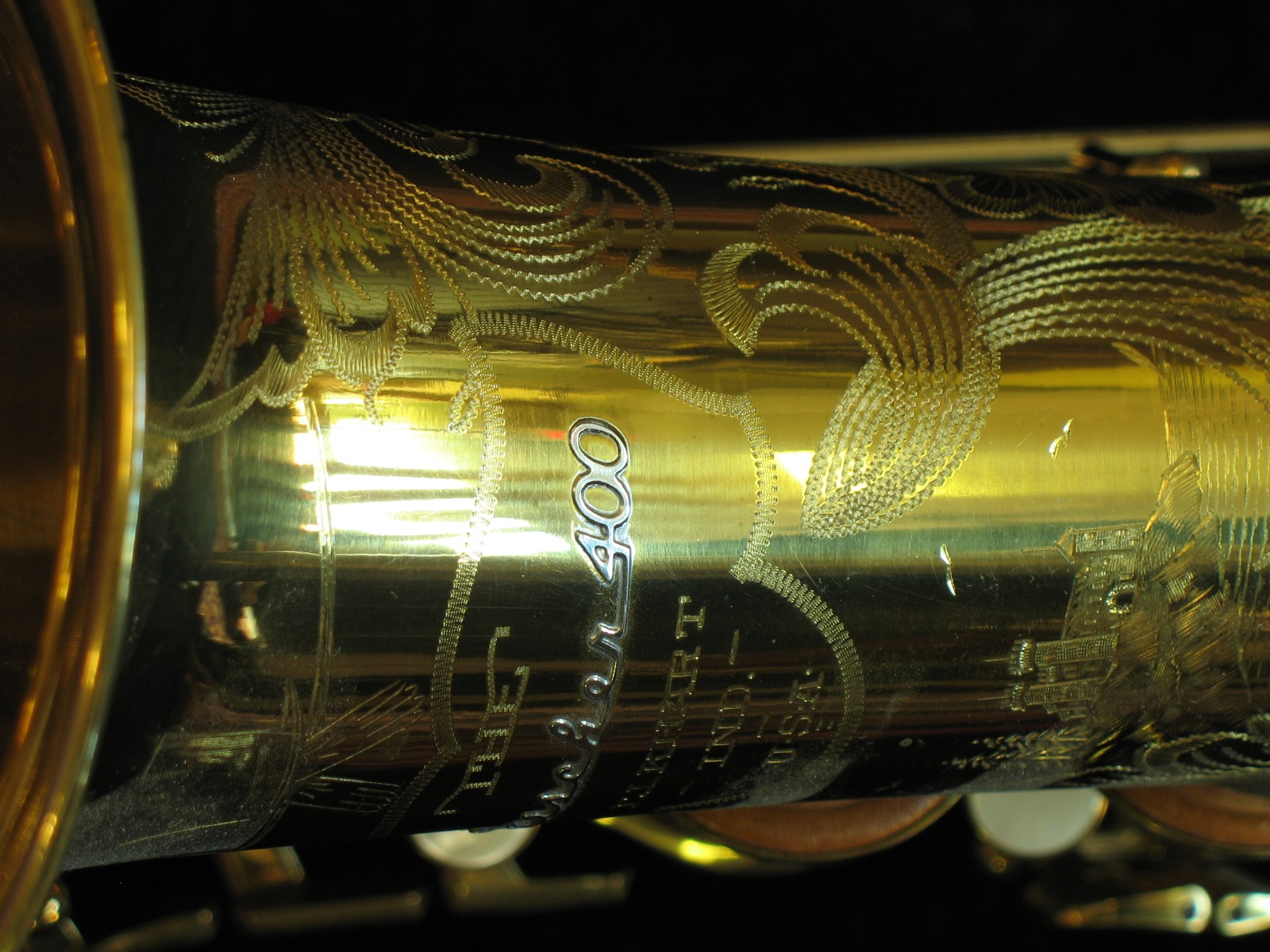
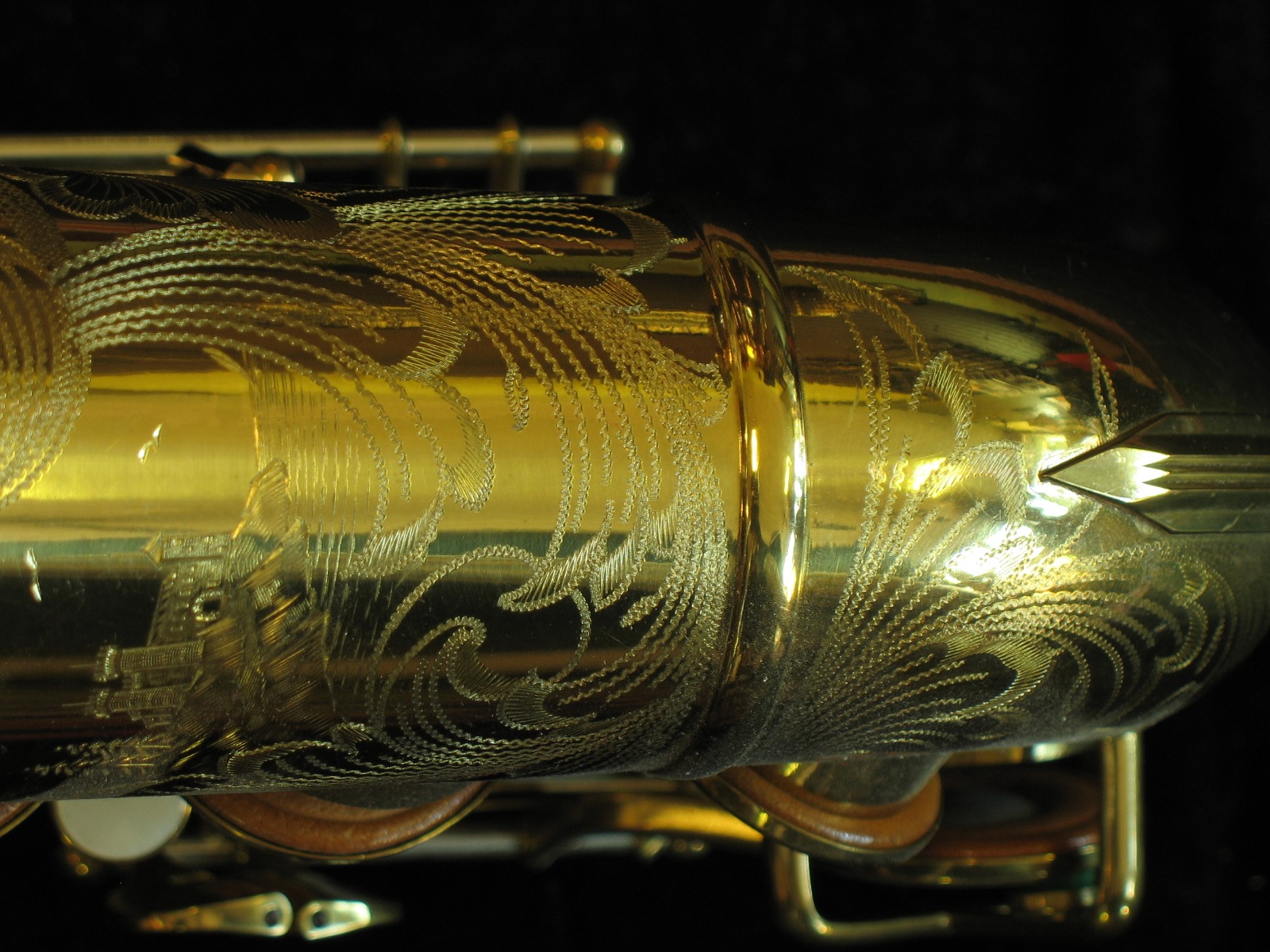
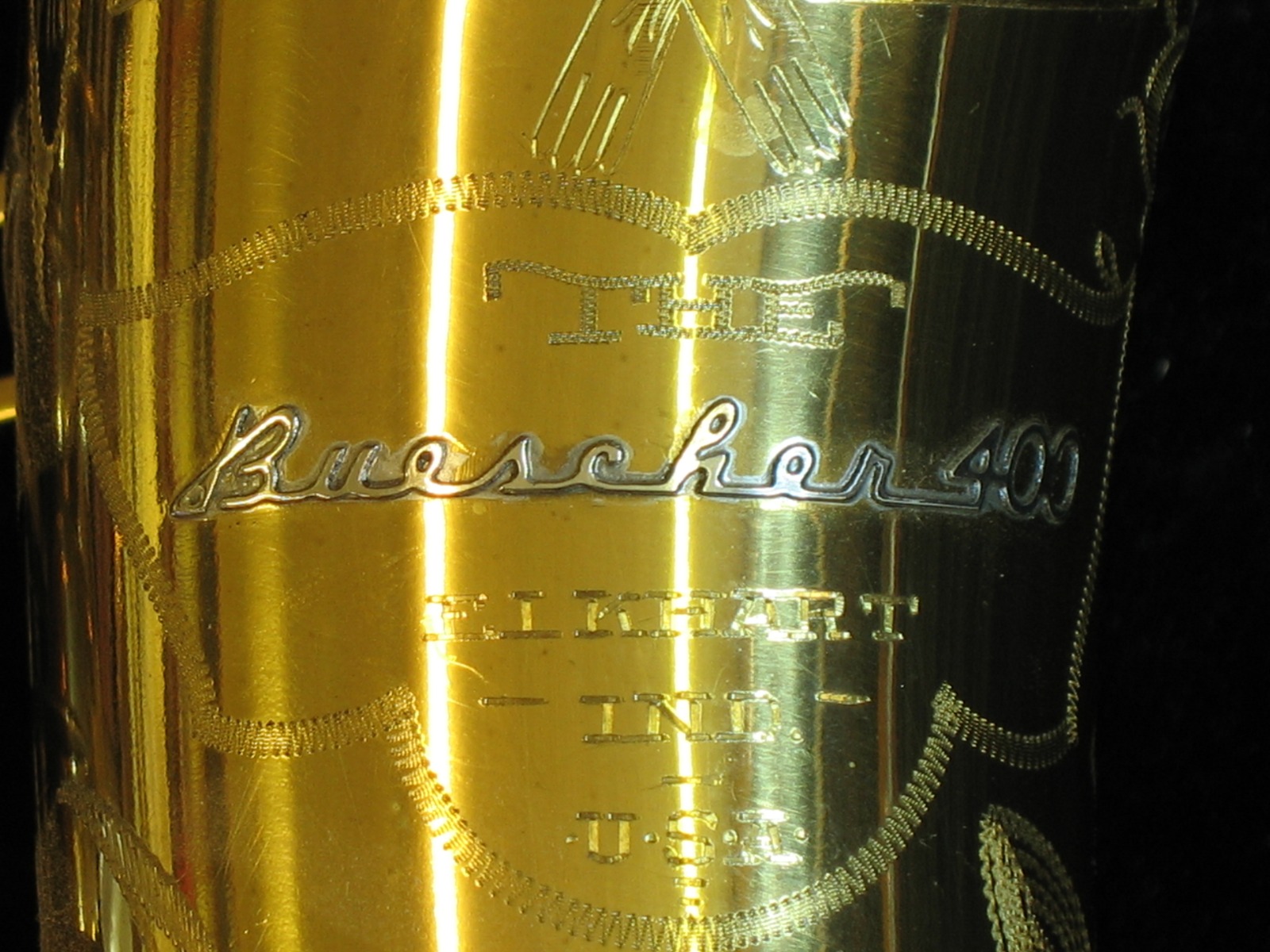
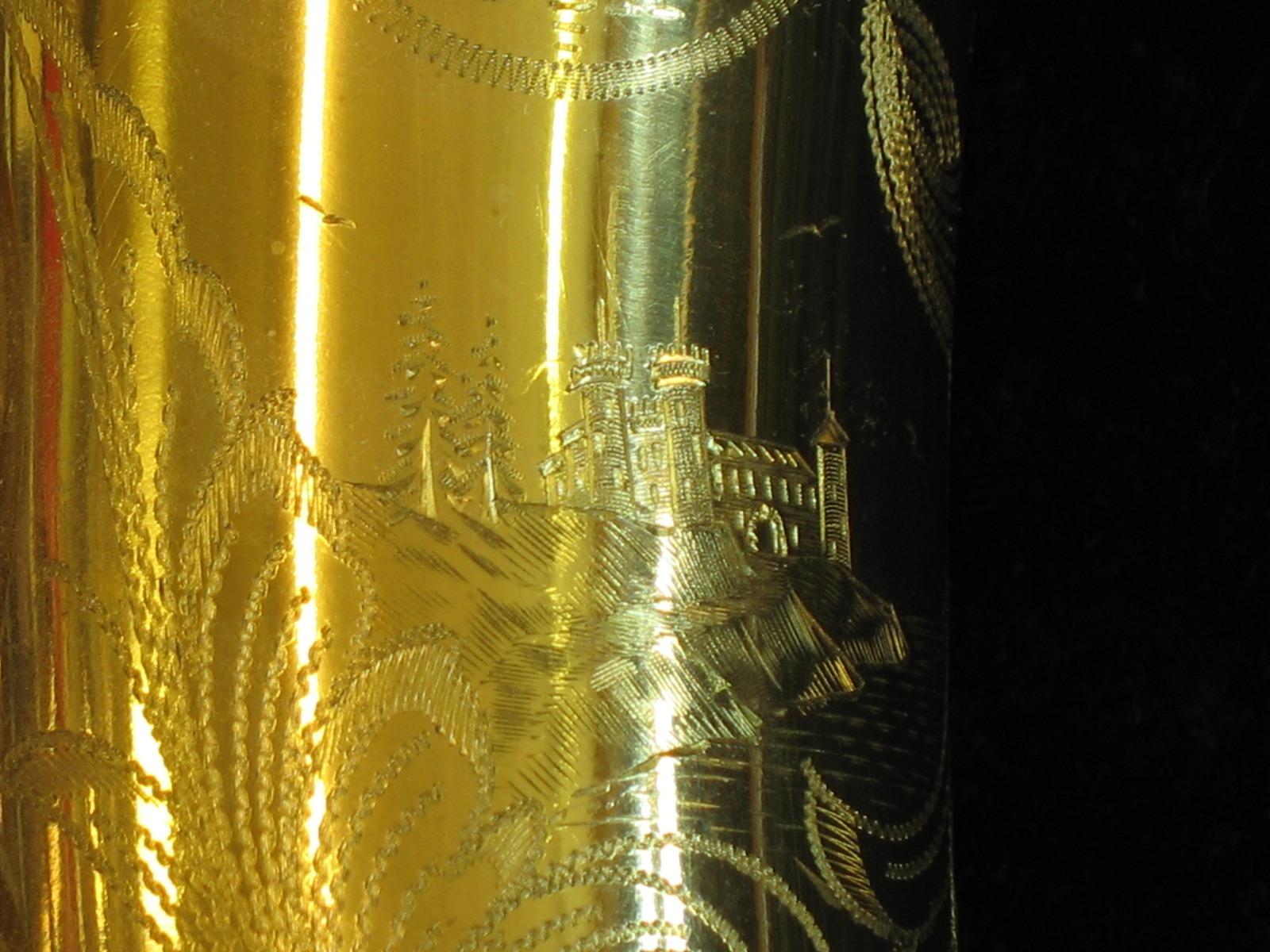
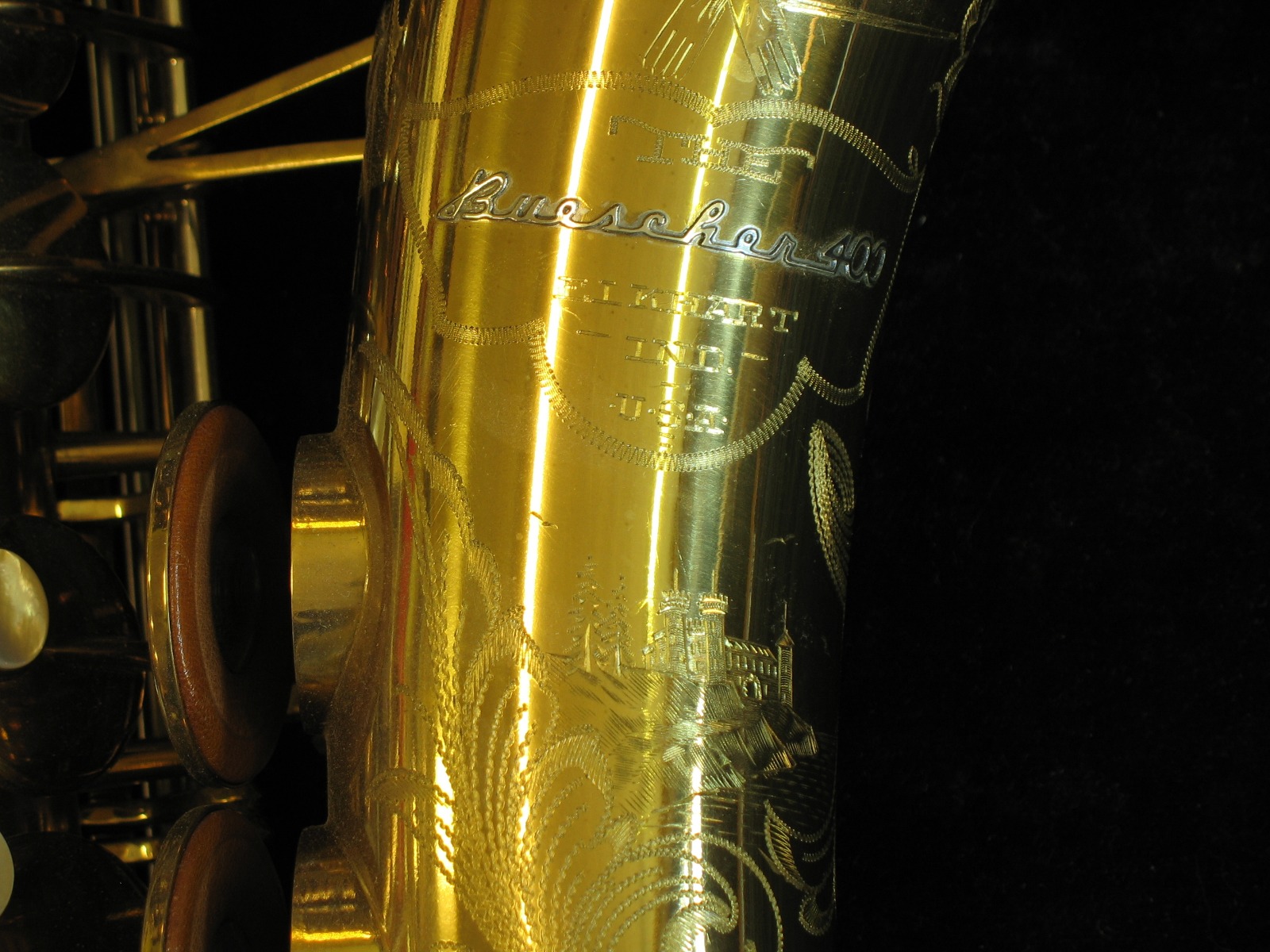
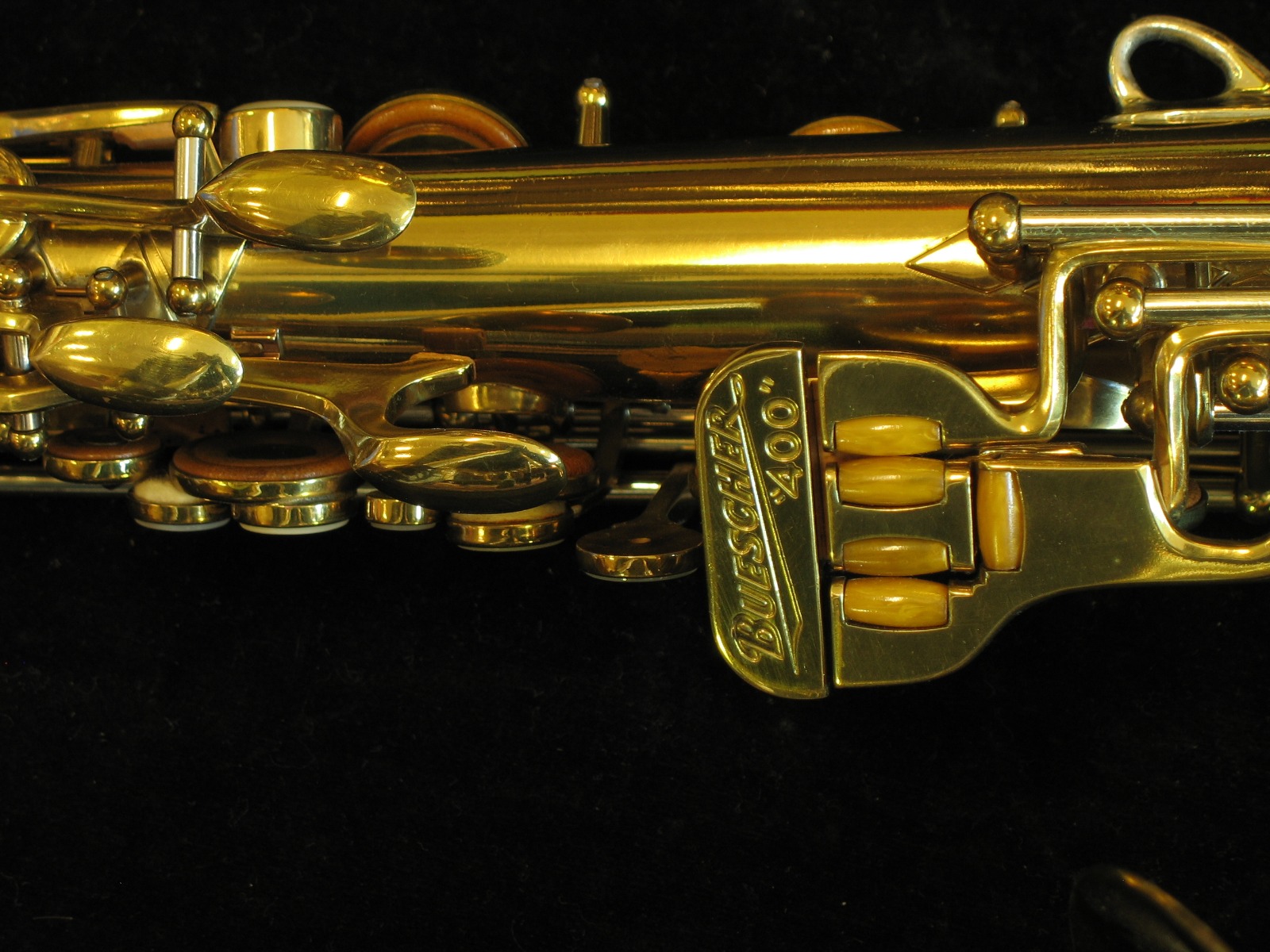
The Buescher “400” or “Top Hat and Cane” is perhaps most well known for its elaborate engraving of a castle on a cliff by the sea, surrounded by a floral design with the aforementioned top hat, cane, and gloves positioned above the raised Buescher 400 logo. This engraving pattern was created by Charlie Terlep. Beyond the engraving, the “400’s” most striking visual features are its wide-arc bottom bow, its abrupt and wide bell flare, and its behind-the-bell mounted keys. The “400” line retained Buescher’s proprietary Snap-On Pads and Resonators and Norton Screw-In Springs.
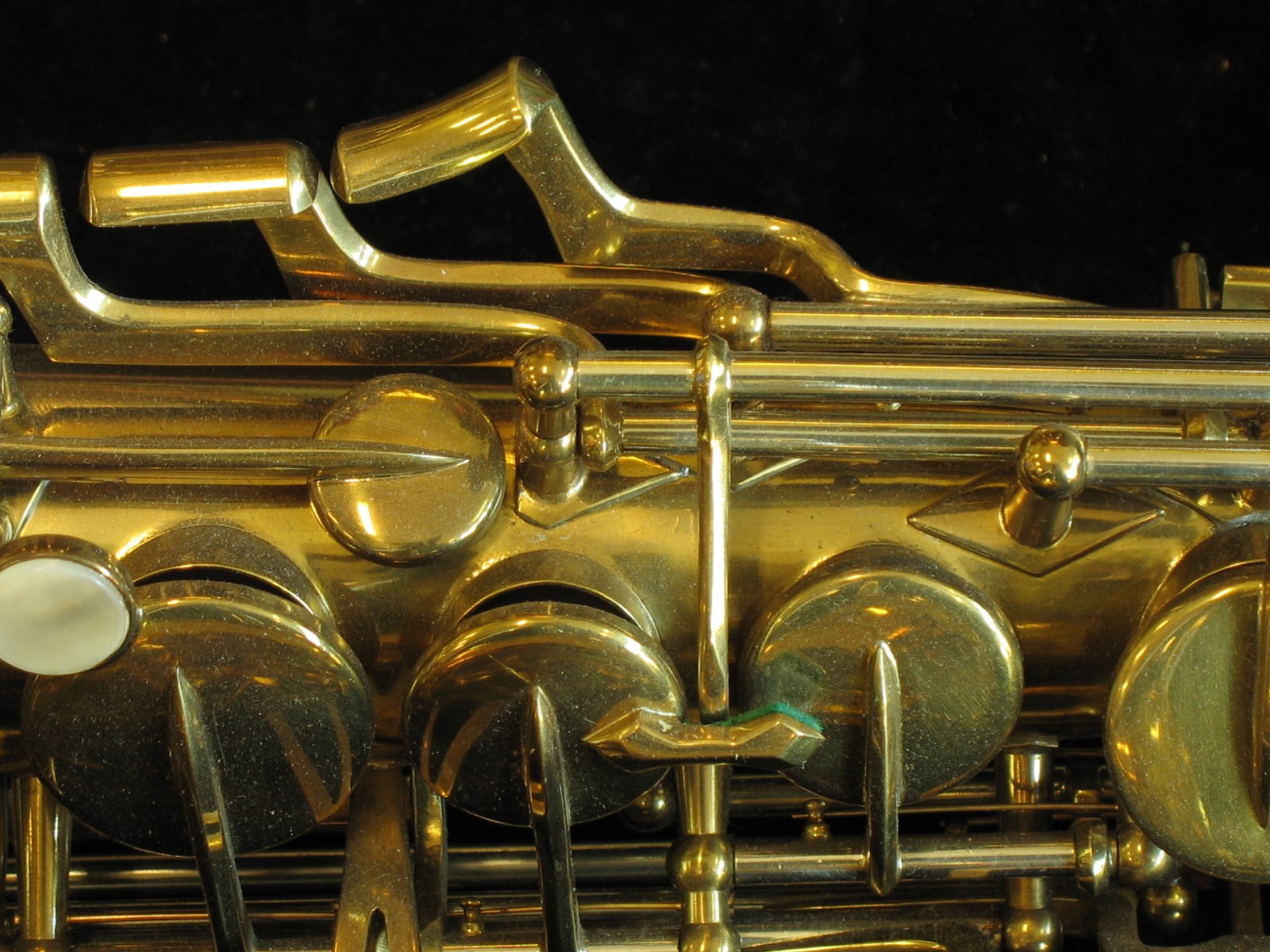
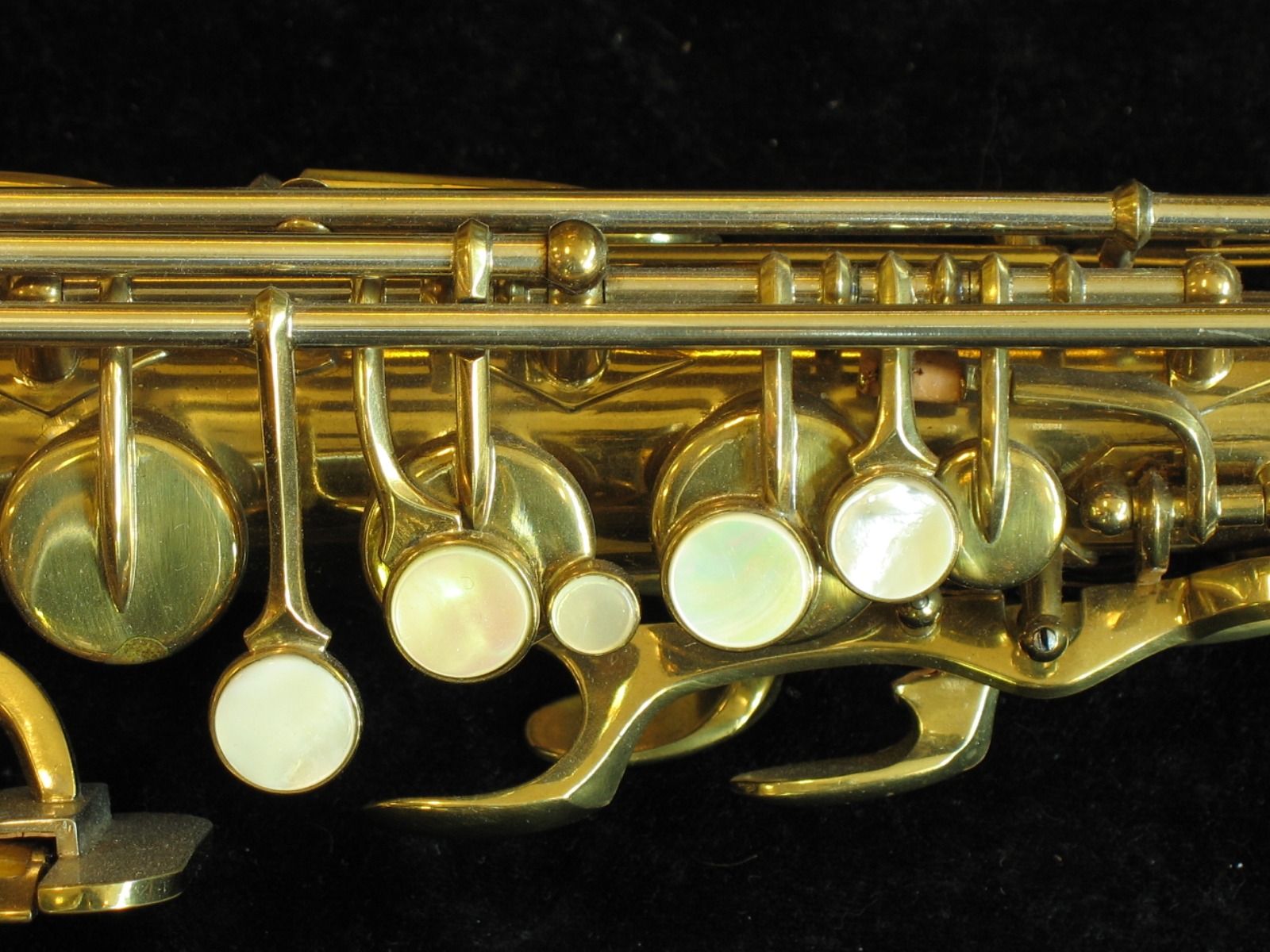
Buescher touted many mechanical improvements such as their “patented steel bearings” on the side keys and bell keys (US2234107A, US2203593A), nickel-silver hinge tubes, and taller key posts to improve tonehole venting. The instruments were available in all of Buescher’s standard finishes at the time.
Additional Resources
- The [De]Evolution of the Buescher “400” Alto Saxophone
- The Lost Stories of Three Unknown Artist Engravers
- Norton Spring Patent: US1572675A
- Snap-On Pad Patent: US1702692A
- Bell Key Bearing Patent: US2203593A
- Side Key Bearing Patent: US2234107A
- Hinge Rod Pivot Patent: US2234092A
- Loomis Octave Mechanism Patent: US1662196A